Showing posts with label Autumn. Show all posts

Saturday, June 6, 2020

2006 Yang Qing Hao Baisuixiang: Autumn Gushu


In reading the reviews a long time ago, I always found it curious as to why this 2006 Yang Qing Hao Baisuixiang ($170.00 for 500g cake or $0.34/g- a price which hasn't increased in 5 years) was always overshadowed by the 2005 Yang Qing Hao Cangliu which is a touch more money.  In drinking these two back to back I hoped to find out why…

The dry leaves smell of a very deep rich woody with slight honey odour.

First infusion leaves still haven’t opened but a creamy thin veil of sweetness over a leaf almost sour taste is emitted.  It has a cereal sweet finish in a watery sandy mouthfeeling.

2nd infusion has a woody onset with faint creamy thin veil of sweetness once again.  The light sweetness is longer but thin.  There is a leaf and wood base.   The mouthfeel is sandy in the mouth with the throat opening a touch in the upper throat.  The dominating note is flat leaf and wood with a bit of sweetness that trial through.

3rd infusion has a bit thicker woody, still not too thick but a long veil of sweetness in woody leaves.  There is the start of a maple syrupy suggestion in this infusion.  The aftertaste is simple and long creamy sweetness.

4th has a deep rich woody and maple syrup and vanilla onset that reminds me of a Scotch over a mixed in pungency.  There is a long maple syrup sweetness in the mouth.  This infusion is very very tasty.  The throat feel is mid throat and the mouthfeel is sticky and slightly sandy.  The aftertaste has a candy like transformation that is long in the mouth.  The Qi is mild and makes the body a bit heavy feeling and the mind slow.  The Qi has a light and airy feeling in the mind despite the heavy body feeling.

5th has a thick woody syrupy onset with a dense maple syrup sweetness with hints of vanilla and almost coco with fallen leaves.  The mouthfeel is sticky and throat opens medium depth which holds the thick deep rich flavours in place and offers a long faint candy sweetness barely detectable underneath along with faint pungency.

6th has an almost berry, deep fallen leaves, deep fallen woods but has an overall rich sweet maple syrup sweetness.  There is a rich coco finish that turns pungent into long sweetness.  The mouthfeel is nice with a thick powdery chalkiness that really coats the mouth.  There is this lingering camphor coolness with faint candy sweet breath finish minutes later.  The Qi is felt on the face, limbs heavy, mind is light, acuity sharpened with a free feeling Qi. 

7th has a coco fallen leaf onset with a back seat of less sweetness there is a low lingering pungency and muted sweetnesses.  The sweetness has fallen off a bit here and simpler taste are left which have a bit of a rich aged note as well as woody sweetness.  The mouthfeel is less here as well.

8th has a bitter coco onset with woody leaves and a faint pungency underneath in the upper throat.  It hold a very mild woody sweet aftertaste.  The mouthfeel is slight dry, chalky, and almost sticky.  The Qi is a bit relaxing and muddling in the mind.

The 9th has an almost sour brassy wood onset.  There is not much sweetness that can work its way through.  Mahogany woody base, leaves, aged taste, slight sour edge, slight bitter coco, hidden sweetness and pungency coolness.  The mouthfeeling is more dry/sticky and makes the lips sticky. 

The 10th has a rich woody almost syrupy sweet density to it after letting the cup sit 10 min.  There is a lot of wood taste here, slight bitter coco, pinned down/faint sweetness that tries to develop with pungent returning coolness.  Qi is heavy in head and body and eyes with a tiny bit of pep.

The 11th thick liquor pushed out with a woody almost coco bitter backbone with almost dark syurp not-that-sweet suggestions.  The taste feels really full but mainly full of woody and leaves and aged suggestions with not too much complexity or sweetness.  A nice Qi though, not overly strong but kind of complex with multiple body feelings.  Mouthfeeling is dry and slightly sticky throat opens at top only now.  On a very windy day I am strangely enjoying this puerh.

12th deep woods and nuttier suggestions of chestnuts and almond there is a slight sourness and slight coco bitterness in there.  The sweetness is buried in this one with edges appearing among fallen leaf and woody dominating tastes.  The liquor has a fuller thickness but not too thick and the mouthfeel is sticky and almost dry but not overwhelmingly so.

13th has a sweet woody onset with an underlying chestnut taste and subtle sourness.   The mouthfeel is more slippery but not overly stimulating here. 

14th has a mellow woody sweet almost leaf and dirt suggestion.  There is very restrained sweetness and pungency that is hard to find.  Qi is mellow here with subtle but heavy body sensations.

15th has a coco and woody fallen leaf taste with almost nutty suggestions.

Board with this one and in need of a big burst of energy, I put it into long steepings…

Overall this puerh has a strong and distinct Autumnal puerh feeling. I belive that it contains mainly Autumnal material.  I find it interesting that it is a blend because the taste is pretty stable and consistent.  There is a few infusions that are very very flavourful and quite satisfying to me but the engaging flavor drops into something more stable and narrow mid-session and never seems to recover.  These earlier infusions also have a deeper throat sensation.  The Qi is a bit complex and suggests blending because it does a lot of things.  But the flavor is solid likely mainly Autumnal puerh material.

To compare to the 2005 Yang Qing Hao Cangliu these are very very different puerh.  The 2005 Yang Qing Hao Cangliu is much more complex in both taste, mouthfeeling, vibrancy, and Qi.  The complexity of this blend is apparent.  The 2006 Yang Qing Hao Baisuixiang is a much deeper, richer, and more unchanging puerh.  In some ways it is stereotypically autumn gushu very solid, deep, and reassuring in this sense.  Some people who like deep and rich might even be more satisfied with the Baisuixiang, it definitely has its charms.  The main issue with this cake is that its gets too simple too early in the session which is too bad because I liked what I saw in the early infusions.  Due to the lack of stamina, other Yang Qing Hao options seem like better value but they are all more expensive.

Peace

Monday, August 12, 2019

2018 Yunnan Sourcing Autumn Ai Lao Secret Garden vs 2018 Yunnan Sourcing Autumn Nan Po Zhai


Shhh… don’t tell… it’s a secret… wait a minute… Yunnan Sourcing doesn’t keep things secret… limited… promotional video You Tube… quickly sold out of the 2018 Spring Ai Lao Secret Garden ….

This puerh sells for $88.00 for 400g cake or $0.22/g but was kindly gifted to me (Blogger premium) for review when I purchased a large amount of samples a month ago.  Thanks Scott for this interesting one…

Dry smell of creamy sweetness and layers of sweetness underneath with a lingering pungency.

First infusion is of a mellow fruity taste that is slow to evolve in the mouth but increasingly ratchets up in to an expanding mouthfeel of honey, potato, a mellow fruits, there is a deep slow lingering pungent and subtle candy finish.  The mouthfeel and throatfeel are full and come in like a wave.  This puerh is like a soft sunrise… and this is only the first infusion…

The second starts almost spicy and woody with a long slow evolving taste.  The mouthfeeling is really full and cottony but yet astringent.  There is taste of potato, some fruit, slow wave of underlying pungency, candy finish.  The throatfeeling pushes the saliva into the mid throat trapping it there with deep tastes.

The third infusion starts with a very thick cottony mouthfeel with a certain astringency to it.  There is a mellow fruity taste with intense returning creamy sweetness.  The stimulation in the mouth is quite strong and very stimulating.  There are notes of pumpkin, potato, woodiness, a fruitiness familiar to Ai Lao but that I can’t seem to explain.  The Qi is mellow and a bit relaxing in the mind.  The mouthfeel is a wonderfully intense experience.  There is a bit of astringency more than bitterness. The Qi is making me feel silly, and lax and a bit giddy.  I also feel a touch restless.  The astringency is felt on my empty stomach.  These early infusions show the signs of some space in the taste profile typical of Ai Lao but the intensity of the mouthfeel and interesting slow moving evolving taste give it a different kind of complexity.

The fourth infusion starts with a thick juicy fruit taste which crests with a mild pungency then a distinct creamy sweet then the complexity of woody, pumpkin, sweet fruits, play in mouth.  The mouthfeel is really a beautiful thing here.  Very engaging and involved deep mid throat.  Interestingly, not as much on the breath minutes later though.

The 5th start is a woody almost fruity thing then it dives into a distinctly sweet caramel returning sweetness.  There is some creamy sweet tastes that reveal themselves as the caramel receives, then there is a fruitiness then woody and bitter astringency, and more sweetness.  This has a long and engaging finish but minutes later is a touch rubbery on the mouth.  The mouthfeel is very thick and stimulating and focuses most of its energy on the throat.

The sixth infusion starts strong caramel sweetness pungency, mellow fruity orange taste, woody, astringent, slight bitter, fruity again.  The flavours come on strong and thick but take turns in the stimulating mouthfeeling.

The seventh infusion comes on quick with a thick orangey fruit soup with a returning sweetness of creamy sweet then potato, woody, fruity juicy tastes in a stimulating cotton thick mouthfeel. 

The eighth infusion starts thick orangey fruit, slight wood, faint pungent with a creamy returning sweetness.  The mouthfeel is less intense but still moderately thick.  The orange fruit taste lingers in the mouth.

The ninth starts with an interesting mix of pungency slight coolness and orange peachy fruitiness.  The taste evolves in the mouth and a quick returning sweetness delivers a creamy sweet, then long peachy orange notes.  The Qi is mild to moderate and makes me feel slightly relaxed and a bit giddy and physically restless.

The tenth infusion has a quick bitterness which turns into a mellow mild buttery orange fruit taste.  The orangey peachy sweetness lingers on.  The taste is less vibrant and intense here.

The 11th infusion has a bitter orange fruit start with a faint pungent which marks a small bump in the fruity taste.  The mouthfeel is drier here but maybe less astringent.  The Qi has a mellowing effect on my thoughts.  It also has a happy vibe to it.

The 12th infusion starts mild bitter then fruit than faint pungent then more orange then slight drying in mouth.  The throat feeling is slightly constricted here.

The 13th starts off bitter and quickly moves away to a smooth faint fruity slight woody orange fruit feeling. The mouthfeel is stickier and throat a bit lighter sticky here.  The Qi is mild, light, and happy.

The 14th infusion starts off a bit fruity and a bit bitter then goes orange and almost bitter orangy finish.  This puerh looses its finesse in these later infusions but the orange taste is kind of unique and interesting in and of itself.

15th starts a touch sour/bitter with mellow orange and slight peach underneath.  There is an almost unnoticeable coolness with bitter dry finish.

16th and 17th have a bitter sour onset with woody and orange tastes.  There is a dry scratchiness in the throat here and a muted orange aftertaste is noted.  I put this one into long infusions from here…

This Ai Lao is probably the best I’ve tired pegged with the name “Ai Lao” admittedly I only tired a handful from this region.  I understand that this producing region covers a very very large area so there is bound to be lots of variability here.  This Ai Lao has some characteristics that are typically Ai Lao which are a juicy fruity feeling and a more spacious taste profile.  Conversely these are also some characteristics I peg in a typical Autumnal puerh productions.  Its flaw is just the fact that it is Ai Lao, nothing more.  It’s slow evolving taste profile and strong engaging mouthfeeling and especially throat feeling in the early and mid session are real nice and make this puerh a nice treat.  The Qi is mild-moderate and relaxing in nature.  In later infusions they develop a tight dryness when the pot is packed as full as I did with this session. I’m not a big fan the dry throat but that will probably age out in time or can be steeped around.

To compare to the 2018 Yunnan Sourcing Autumn Nan Po Zhai this one is very very different in almost every way.  The strength of the Ai Lao is the long thick slow to evolve flavors of each sip.  The strength of the Nan Po Zhai is the mind melting and body busting Qi.  The weakness of the Nan Po Zhai is the strength of the flavor.  The weakness of the Ai Lao is that its dry scratchy throatfeel if over brewed or leafed heavy.  Overall, both nice Autumnal productions are unique and interesting to drink.  To lob another 2018 interesting Autumnal puerh in to the mix, I would say the 2018 white2tea Snoozefest is also pretty interesting to drink for its price but it is a bit cheaper and not quite as much going on as these.

Peace


Saturday, August 10, 2019

Highly Recommend This Bargain Bodyfeeler: 2018 Yunnan Sourcing Autumn Nan Po Zhai


I am writing up this post in haste in an attempt to get it out so readers can have a crack at getting this very good puerh at the lowest price possible…

It is in my opinion an extraordinary example of very clean single estate puerh with very powerful Qi sensation but particularly intense bodyfeel.  This type of bodyfeel and Qi sensation is rarely, if at all, found in a puerh with such a low price.  This 2018 Yunnan Sourcing Autumn Nan Po Zhai goes for $72.00 for 400g cake or $0.18/g.  Scott is going to raise the price of this one another 15% in his annual price increase in about a month and this weekend (5 day sale) there is a 10% off Yunnan Sourcing Raw puerh sale with the checkout code RAW10 .  Waiting till Black Friday isn't going to get you more of a deal on this one and as soon as the word gets out on this one it will be sold out even before the sale.  This is an extraordinary chance for beginner or veteran to get something with the profile and bodyfeel that is often sold for 4X this price from other vendors without even being as intense…

Let’s see why I hit this one hard with a hammer…

The dry leaves smell of very very intense minty pungency with a deep foresty sweetness.  It has an intense floral quality to it as well.  The dry leaf smell is the one you keep going back to the sample back to huff- very deep and aromatic.

The first infusion delivers a strong unnami and saline burst right off the bat.  I’m left distracted trying to think of a puerh that I’ve ever tried that was more savory…. There is a woody depth to this tea and strong minty pungent taste then long sweet with fresh cut floral smell.  The aftertaste is long and candy like.  The mouthfeeling is very quick thick and coating on the tongue and mouth.

The second infusion delivers more very salty and savory unnami.  The onset tastes like salted yarrow chips.  The mouthfeeling is very very thick and coating and the throatfeeling is deep.  This is a very strong autumnal production.  The Qi is starting to float the head and make me happy.  A long floral sweetness follows.  There is a calming and heavy body sensation that is immediately apparent.

The third infusion has an intense minty pungent and savory onset.  The mouthfeeling is really strong and intense with a deep throat feeling.  This is quite powerful.  There is some strong underlying bitterness on the tongue and astringency in the throat.  Long floral taste remains.  This puerh has a strong presentation of all 5 flavours: Salty, Sour, bitter, Bland, and Pungent tastes.  The most prominent being the Salty.  Very interesting and powerful puerh.  The body feeling is quite strong and I space out and float.

The four starts like a very dense salty saltine like sweetness with bitter and sour mixed in.  The sweet taste comes after a cool returning sweetness and brings a distinct taste of flowers and long candy on the breath.  The mouthfeel is very thick very strong and goes into the deepest to deep mid throat.  The head floats and the body has almost a shiver to it.

The fifth infusion starts with a very thick liquor of moderate to strong bitterness, strong intense saline and salty yarrow chips and layers of woods underneath.  The taste presentation is very dense and strong and thick.  The body feel is intense, with an unusual heaviness with arms floating and dangling.  The Qi pushes my mind far into a creatively opening spacy, very intense and wonderful.

The sixth infusion is smoother, almost finishes buttery and floral sweet.  The thick minty and salty saline tastes emerge first.  I let it sit a few minutes before drinking and it’s a bit less bitter.  The bitterness here is never off putting but is moderately strong.

The seventh is sweeter throughout again but it starts more bitter which stretches throughout the infusion the mouthfeel is strong and a long buttery aftertaste is found that turns to candy on the breath.  There is lots of nuance here.  My body is outside itself right now.  My mind is free and a bit spacy.  My breath slows and thoughts are clear.

The eighth infusion starts with layered taste of bitterness with salty and minty tastes underneath.  The long sweetness comes in like an undulating wave as the bitterness recedes.  My mind and body is overpowered by the Qi.

The ninth infusion starts with a dense soup of salty unnami thick taste of woods and some sweetnesses underneath a pungent mint and a sweet rolling floral sweetness.  Qi is very floating in the head and has a nice body floating sensation.  The mind is free and relaxed.

The 10th starts with a thick sweeter woody briney onset.  It has a soup and broth like taste here.  The aftertaste is sweet with some florals.  There is a minty nuance in there as well throughout the infusion.

The 11th has a thick onset.  A brothy and dense taste that is thicker in the broth than it is on the tongue now.  The tongue is slippery and almost sandy.  The floral nuance lingers on the breath.  Mind is super relaxed.

12th this tea I mellowing out here.  It is quite sweet, buttery, floral tasting with a moderate-mild lingering bitter taste.  The taste has a juicy sweet feeling to it, it’s a touch brothy but the saltiness is much reduced now.  A lingering floral sweetness and mild coolness lingers.  In the body the Qi feels strangely at home and not aggressive but in the mind, mouth, tastebuds, and throat it’s a different story.

13th has a bit more punchiness bitter initially but then a thick soupiness takes hold the taste evolves interestingly throughout the profile

The 14th has an incredibly clear orchid aroma and taste to it after the slight sour and bitter move quickly into a long rolling sweetness.  The mouthfeeling is sticky and strong and the throat opens deeply.

The 15th and 16th deliver then soupy flavours of mainly sweet tastes, the thickness here is of note, the bitter is much less and there is more astringent and sour bitterness that moves quickly.  I am pretty spaced out…

Overall, this has some really powerful Qi sensations.  I don’t recall ever drinking a single estate puerh this cheap with such strong body sensations.  This puerh really punches above its weight in this department.  The taste is alright, a very nice taste actually a bit of a unique very savory taste mixed with some Mengku charms.  This one is all about the intensity of the bodyfeeling and overpowering effect on the mind.

Just yesterday, I started to doubt that my experience was this positive so I used up the rest of the sample which was about 2/5 less leaf than I normally use.  This session was very salty and savory tasting which is a very interesting taste profile- I don’t have in any puerh in my possession with this profile right now.  But the Qi was almost more intense than I remembered it- It really ran me over.  The power and strength of this puerh is such that I don’t even need to leaf it as much.  This is really a great bargain for those who love intense body sensations and mind exploding Qi.  This is the one.  I would even say it’s close to but not quite as intense as the 2018 Zheng Si Long Gedeng I purchased a few months ago at almost 4x the price.

Scott only pressed 99 cakes of this puerh, it is extremely limited but why hasn’t it long sold out if it’s as amazing as I’m making it out to be?

I think it lacks the “cool factor”.  It’s one of those crazy amazing puerh that is just sitting unnoticed because..

1-      It’s autumn production.  I used to also snub autumnal puerh so I don’t blame those who do this but, to be honest, you are overlooking some puerh that may be much better than spring productions.  This one doesn’t have that vacuous taste profile which plague a lot of autumnal pureh.  Tasted blind, I doubt even a highly educated pallet could identify this one as Autumn.

2-      It’s not from Southern Xishuangbanna.  If its not from Southern pureh producing regions then it won’t age well or is in some way inferior.  I also can’t blame people for this one either because I also favor the South.  But readers know I also love Menku area puerh and am pretty familiar with its awesomeness.

3-      Its not from a famous puerh producing region.  Where is Nan Po Zhai???  I’ve actually never heard of this region before until reading about it on the Yunnan Souring site.  Why?  Because its actually the closest region to the 3rd most famous puerh producing region, Bing Dao.  Scott explains in the video tasting of this one that it almost always gets falsely sold as Bing Dao and no one really markets this stuff as Nan Po Zhai… but that’s great news because Bing Dao is famous…

4-      Scott listing the KG of his productions rather than number of cakes pressed.  The average person doesn’t probably do the calculation to see how many cakes are produced from the KG of raw material that Scott usually lists.  I noticed that the 2019 productions now list how many cakes are produced which will clue some people in to how limited some of Yunnan Sourcing productions really are.

5-      Wrapper.  Ok this wrapper is pretty cool but not as cool as most of his other ripe or spring 2018 Lucy themed wrappers.  In in the end if the wrapper isn’t cool and I can’t personally identify with the branding… then how could the puerh possibly be any good?

6-      Scott presses way too much.  I honestly should not be complaining about this but really I think it is a wonderful thing.  But the average person just simply can’t navigate and sample that many productions in a year.  Easy for some to fall through the cracks especially considering the above.  I emailed Scott specifically to recommend me a very specific qualities of puerh irregardless of price or region and he supplied me a crazy long list of recommendations. I personally narrowed them down then sampled a bunch this one really stunned me (lots more reviews to come).

7-      Anti- Yunnan Sourcing bias.  There is something that some people find not cool about Yunnan Sourcing.  IF you don’t identify with the branding you are restricting yourself for superficial reasons and will miss out.

8-      Unusual taste profile.  This puerh has a really unusual taste profile that has to be one of the most savory puerh I have sampled before.  It almost tastes artificially salted at times.  I think this unique taste profile as well as the heavy Qi could be overlooked in some people who are putting more weight into the taste of the puerh rather than the feel of it.

In the end, I purchased more of this than any other single estate production I have ever bought- over a tong of this stuff.  After sampling this I watched the You Tube video of Scott drinking this puerh and he claimed that he had not tired it since pressing it.  In that video he honestly seems a bit stunned as well at the power of this one.  If this one stunned Scott and me, I can almost guarantee it will stun you too.

Peace

Wednesday, July 17, 2019

2016 Zheng Si Long Autumn Mang Zhi Dragon Balls Vs 2016 white2tea We Go High


It feels odd that I’ve never tired puerh in a dragon ball form ever.  Back in the day, it just wasn’t a thing, it didn’t exist back then.  I wonder who was the first to form puerh into a convenient ball size?  It has the same idea as the coin or minis idea … a modern incarnation of a coin.

This one is from the Mang Zhi region, an autumnal production (see Zheng Si Long Spring 2016, 2017, and 2018).  I recently mentioned that I am enjoying these productions of the famous Mang Zhi region.  The dry ball of puerh smell like slight woods with a candy fruit cherry sweetness.  I received it as a free gift when I placed my first order from Tea Encounter a few of these 2015 Zheng SiLong Wa Long.

I did a 30 second rinse and then put the lid on the pot for five minutes to break up these tight balls…

First infusion is still light and airy from the tight compression.  Watery and woody water with light floral and sweet sugar nuances.

The second is still just starting to unravel with icing sugar taste, slight dry woods, almost wildflower florals.  The mouthfeel is mossy and throat sensation starting to get stimulating.

The third infusion starts off with dry wood and icing sugar sweetness.  The sweetness is trapped in the deeper throat feeling and has a mild strawberry nuance to it.  The mouthfeel and throatfeeling are very soft but show signs of being quite full and deep.  The Qi starts to pool in the head.

The fourth infusion starts off dry wood and with a nice fluffy cotton candy nuance.  There is a fruity middle and nice throat stimulating and throatfeeling.  The throatfeeling is deep and opening.  It makes you want to clear your throat.  The tastes are light and airy, sweet and woody.  The Qi is reasonably strong and heady.

The fifth infusion starts off with an unpretentious sweet woodiness that turns into a sour taste then into a mellow vegetal sweetness.

The sixth infusion has a sour woody and barely sweet nuance that transforms to floral wildflower and dry woodiness.  It is not very sweet but has a sour sweet edge to it.  The wet leaves are predictably aromatic and have a menthol like odour.  Qi has a mild but noticeably stuffy sensation in the head.

The seventh infusion starts with a plum fruitiness to it.  There is a menthol woody undercurrent throughout which turns into a noticeable wildflower nuance.  The throat feel is reasonably deep and mouthfeel sticky and mossy.

The eighth starts juicy almost sour like a mango like taste mixed with grapefruit.  The mouthfeel is mossy and the throat feel is pretty deep.  After the juicy sour fruit fades there is a woody dry nuance left in the mouth.  The qi has a mild headiness to it.

The ninth infusion has a sour fruity onset with an astringent woody finish.  The mouthfeel is mossy on the tongue and the top of the throat opens a bit.  You can almost detect some wildflower nuances.  There is a bubble gum nuance left on the breath minutes later.

The tenth infusion starts fruity and woody and sour.  The mouthfeel is becoming sticky and there is a lingering cotton candy nuance in the breath.

The eleventh infusion is full and nuanced fruity layers of sweetness arrive with mango, and grapefruit being most obvious.  The liquor starts to thicken up here and deliver a nice thick woody fruit with decent depth now.  The aftertaste is lingering faint candy.  The Qi is mild in the head.

The twelfth infusion delivers a dense liquor of nice thick fruity woody tastes.  The flavours are sweet, barely bitter, and significantly sour.  The woody taste is the deepest and the most ethereal is the lingering candy sweetness.  My mind saunters in a nice place from the Qi.

13th is a dense licorice, fruity and woody presentation in a thicker liquor.  They fade into a long candy like sweetness.  Nice meandering mild spacy qi.

14th infusion has that nice dense onset with simple but thick flavours that fade easily into a candy-like faint finish.  The 15th has that candy sweet taste in the initial now alongside fruits and slight wood.  The bitterness and sourness continue to recede with each infusion.

15th has a nice dense fruity onset with dry wood underneath.  A wave of sweet fruity tastes comes and goes and leaves a slight woody taste with the breath of candy.

16th is less sweet, more woody very interesting lingering sweetness.  17th is more sweet, dense liquor, fruit.  The mouthfeel is mossy and sticky in these later infusions.  Candy long fait aftertaste.

18th here we go into a woody apricot like sheng type of sweetness.  Nice long candy finish.  A creamy sweet finish.

It was coincidence that I had just drank another 2016 Autumnal production that was similar in some ways to this one, the 2016 white2tea We Go High.  I found these 2016 Zheng Si Long Mang Zhi Dragon balls similar in tight compression, in its thick fruity and woody tastes and textures.  2016 white2tea We Go High has a bit broader profile and complexity.  Although the Qi is actually quite similar, We Go High is a bit stronger.  2016 Zheng Si Long Autumn Mang Zhi has a more intense long candy aftertaste and deeper throat feeling.  Each had good stamina and are both nice examples of autumn puerh.  In my first sampling of 2016 white2tea We Go High I suspected that some Gua Fang Zhi or other Yiwu like material comprises a small amount of the blend.  Maybe its closer to Mang Zhi than Gua Feng Zhi?

This was a fun session.  I wonder if Tea Encounter will offer these?

Peace

Friday, February 1, 2019

The Best of the Cheapest: 2017 Yunnan Sourcing Impression & Scott’s Blending Skills


In the Western puerh scene white2tea’s Paul (Twodog) is known for his blends, certainly they can be quite delicious.  Then along came 2017... 2017 was a watermark year for Yunnan Sourcing puerh blends.  In the lest two years they have developed a good reputation for not only these two famous yet very inexpensive blends, but some of their other lab tested, pesticide-free, shut blends as well.  The 2017 Rooster King Shu, sold out quick- the quality really surprised me.  The other, this 2017 Yunnan Sourcing Impression ($27.00 for 357g cake or $0.08/g) has been very popular since its Autumn 2017 release (Edit: this tea was later found out to be released in Spring 2018).

It seemed the hype for this cake reached a climax at Black Friday this year with a few great articles featuring this full 357g sheng blend.  I don’t think I could add any more than this post on the topic really.  I wonder how many of these guys flew off the shelves on Black Friday?  I’ll bet that this was the single biggest seller this Black Friday.  I have been eyeing them for quite some time so ended up buying a handful of them to make it worth the shipping.

Many have championed this 2017 Yunnan Sourcing Impression as Scott of Yunnan Sourcing’s best sheng puerh blend to date.  I had pretty much sampled the whole Yunnan Sourcing Brand puerh selection from 2009-2011 and some of the 2012 but have never tried any of Scott’s sheng blends before, this will be a first for me...

Dry leaves are scented with a very vibrant tropical fruit odour over dry woody layers, peat, and moss.  The quality is immediately apparent in the vibrancy here.

First infusion starts with a soft fruity lemon and pineapple note, it transitions to a swelling creamy sweet taste.  There is metallic tastes as slight wood in the approach to the long creamy aftertaste.  The mouthfeel is sticky in the mouth.

The second is more sweet and full.  The initial taste is of stones and sweet vegetables, there is a lemon note in there as well.  The taste has a nice cool finish in a stimulating throat feeling.  There is a honeydew melon flavor lingering in the throat.  Lots of interesting notes playing out here.  Soft bitterness, slight sour, soft astringency in throat.  Creamy sweet with fruity sweet and even a vegetable sweetness.

The third infusion starts a touch spicy with sweet yam and creamy sweet notes followed by a metallic taste with makes the mouth sticky and nicely stimulated the throat.  The taste is long and creamy and almost cucumber in the aftertaste.  There is a lot going on here.  The cheeks are sticky as are the lips, and the mid throat opens to embrace the creamy and fresh aftertaste that also has notes of metal, yams, and even suggestions of wood.  The Qi makes my face flush and a heat sensation emerge. I feel it in the eyes which seem heavy.  I feel simultaneously sleepy as well as relaxed.

The fourth infusion has a juicy sweet taste to in now initially then a nice creamy sweeping aftertaste.  The mouthfeel is sticky and dense.

The fifth infusion has a nice burst of fruit but mainly creamy sweetness initially then it slowly rides into a long sweet creamy aftertaste in a full sticky mouhtfeeling.  The mouthfeel has a cotton like feel in the mouth and throat.  The creamy sweet taste is long with a touch of faint cooling.

The sixth infusion has a juicy fruity vibe, creamy sweet, softer sticky mouthfeel.  This tea is fading a bit here.  The mouthfeeling is nice and creamy fruity taste is fresh and vibrant in the mouth.

The seventh infusion has lots of those creamy sweet notes but the sweetness has a simple and very pure and fresh feeling to it.  You know that tropical sweetness, banana, pineapple maybe.  It’s yummy and the aftertastes take it along nicely.  Almost like an artificial banana candy taste, I like that.

The eighth I add 10 seconds to the flash infusion add it pushes out a bit more complexity in the flavor.  Green beans, banana, yam, moderate sticky/ dryness.  More of a vegetable fruit sweetness.

The ninth infusion I add 15 sec to flash and get a slightly chalky, dry wood, and creamy taste with vegetables underneath.  This infusion is a touch more bitter, it makes the sweet tight aftertaste pop but it is overshadowed by the woody/biter taste.  There is a butterscotch taste in the aftertaste.

The tenth infusion I add 20 seconds to flash infusion and get a thicker, richer taste of woods and beans with sweeter tastes retuning for a pop in the aftertaste under quilted bitter woods.  There is not too much complex taste in these leaves in the late infusions and the stamina of these leaves is not the greatest.  The sweet taste sure pops with that bitter astringency but then goes back to bitter quite quickly here.  The qi is pretty strong heavy, dopy, make me feel sleepy type of qi sensation.

The eleventh I add 25 seconds to the flash infusion and get a really dark chocolate delicious tasting thing with fruity notes in the distance and bittersweet coco up front.  This is yummy and right when I think about throwing in the towel with this one.  It is a Laoman E type of note even though you can be sure there is none of that in here.  The body qi of this blend is really harmonious and this puerh could easily be consumed now because it lacks a certain harshness in the body.  It actually makes the body feel warm and soothed, I like that.

I go for a 12th at 30 more seconds than flash all of the sweet taste is pretty much gone here.  Nothing but bitter left.  So, I end the session.  I steep this tea overnight and get a rich broth of flavors the next morning.

The flavours in the first few infusions are the best of the cheapest- complex and interesting.  The Qi is also the strongest so far- is offers a big relaxing dopy effect, if that’s your thing.  But the stamina is weaker than the other cheap budget puerh I have sampled.  I felt I had to add more time to infusions much earlier and the tea ends much quicker than the other budget options.  To me, stamina is really important because I really steep my puerh to the very end.  A tea that finishes at 12 infusions vs 20 makes a big difference in value.

This 2017 Yunnan Sourcing Impression is the same actual price per gram as 2018 white2tea Snoozefest ($0.08/g) .  They are actually similar in many ways- the most obvious being that they are both multi area Autumnal puerh blends.  To compare the two I would say that mouthfeel is better with Snoozefest by a little, flavor snoozefest is more high notes but Impression has more depth of flavor and more interesting flavor by a bit.  The impression also has a deeper feeling tea liquor- there is a certain thickness in the tea liquor that is the biggest flaw in the 2018 Snoozefest.  The stamina of Snoozefest is better as the late infusions are a very pleasant and enjoyable sweetness where Impression is more bitter in the end and peters out faster. I like Snoozefest’s tighter compression as well.  The Impression is lab tested pesticide free and the Snoozefest doesn't feel as pure to me.  This 2017 Yunnan Sourcing Impression is the winner out of these similar priced things, for sure.

All in all this 2017 Impression is probably the best for how cheap it is, I don’t imagine finding anything cheaper and this enjoyable.  However, with this said, I would gladly pay double and get 3x more value i.e the 2018 white2tea Splendid.  There are probably no fresh puerh in this lower price range that taste as good.  Also, I still tend to go for 2018 Essence of Tea Bamboo Spring for drink now sheng puerh consumption over any of these budget options.

You’re paying almost twice as much for the 2017 Yunnan Sourcing Impression but the winner is still 2018 white2tea Splendid for the best of the cheapest sheng puerh.

Rats!  I just checked the website when I was adding the hyperlinks to this post and found out it has just sold out.  This exercise of finding the best of the cheapest feels a bit silly if we are just comparing Sold Out puerh, doesn't it?  Conveniently, the 2018 Yunnan Sourcing Impression was just released with a beautiful koi fish wrapper design.  I thought the 2017 wrapper was stunning!  I wonder if it is comparable in quality to this, now famous 2017 Impression?

But wait, I have a late entry in the quest for the Best of the Cheapest fresh young sheng puerh…
Dogleg Sean's (Dead Leaves Tea Club) Tasting Notes

Char's (Oblong Owl) Tasting Notes

John B's (Tea in the ancient world) Tasting Notes

Steepster Tasting Notes

Peace

Tuesday, January 29, 2019

2016 white2tea (When They Go Low) We Go High & Spending More on Young Puerh


I remember returning to the puerh world in the winter of 2017 and being completely blown away by the political nature of white2tea’s 2016 puerh wrappers and names.  It was an election year in the USA, one that will go down in history as probably one of the most interesting, and, as far as touching on the feeling of the people, these wrappers and names captured the collective conscious of Western puerh drinkers at this time.  It was everywhere and everything that year. Puerh is really interesting because it is like a living reminder, a repository of memories from a certain time and place.  In 2016, the US election is what history will remember.  So why not intermix the two? Brilliant Paul.

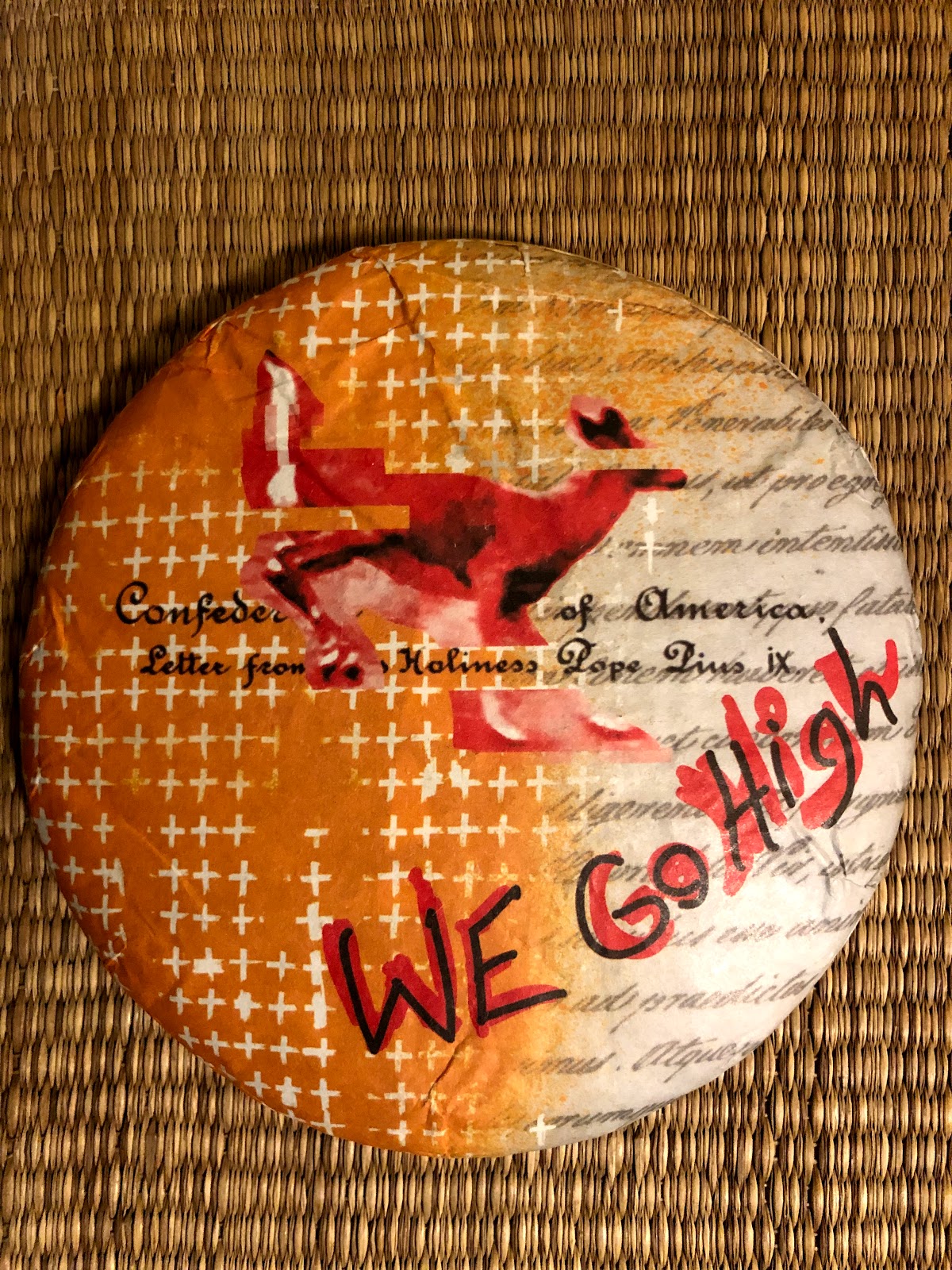
Names and wrappers like Post Truth, We Go High, and Teadontlie are filled with political innuendo and novel quotes from that election.  I think 2016 white2tea “We Go High” is not just a political statement but also is descriptive of the qualities of the puerh cake as well as a statement on the larger philosophy of white2tea (see here for a more historical interpretation of the name and wrapper).

The name seems to match the description of We Go High on white2tea’s website states, Sweet and soft, elegant soup. Weighty flavors appear in later steeps with a soft entry.  This sounds to me like a highnoted tea possibly with lots of good Qi to make you feel high?

The name also speaks to the philosophy of white2tea offering tea at a higher standard to other more unscrupulous puerh vendors who openly lie about tree age or provenance of their products.  This is often parroted as the reasoning white2tea doesn’t make origin or tree age claims.  They can pat themselves on the back for taking the moral high road here.

For me personally, the name of this cake also has meaning because at $0.73/g this cake is the highest I’ve ever paid for a puerh cake, I think … I went high … as in I went to a higher price bracket of puerh buying (although I have sampled more heavily from higher price brackets over the last few years).  It was easier with this one because of my preference for iron cakes (link) and some great reassuring reviews (see below).  But I wonder if the price is worth it…

The dry leaves smell of deep fruits, a dense sweetness presents itself within a woody almost barley and distant floral odour.  The smell of plumb and distant papya come to mind and wildflowers.

The first infusion starts slow with a very mellow sweetness of honeydew melon that has a faint woodiness to it.  The aftertaste is very mild a mix of honeydew and almost watermelon tastes.  There is a soft background returning cool sweetness.

The second infusion starts with an almost creamy soft rolling sweet onset, very mild, there is an almost peanut or cashew base to this tea.  Then comes a nice wave of returning sweetness and long drawn out aftertaste.  There is a really soft wood base underneath it all.  Minutes later an intense watermelon and floral as well as almost grape taste emerges.  Almost candy like and bubble gum tasting but not so upfront.  These tastes stretch into the very long soft aftertaste.  The tea is very smooth and transitions with a harmony not found in too many young puerh.

The third starts with an almost oolong taste, it is fragrant, soft, and sweet.  It has a tapioca pudding taste along with woods.  The aftertaste is very elegant, complex and long.  This tea is very soft.  The mouthfeel is a bit sticky, soft but feels nice and full and there is no signs of bitterness or astringency.  The throatfeel is very deep pushing saliva into the throat and holding it there where a complex interplay of sweet and evolving tastes emerge.

The fourth infusion starts almost like a Risling with a white wine like initial taste that expands slowly in the mouth and throat.  It throws off smooth, rolling candy like sweetness and wildflower florals. The sweet notes are not overly high but more like they reside in a lower level of the tea and don’t just dissipate quickly, they linger. The Qi is strong and heady, a levitating body Qi, Spacy, heavy, strong slowing the mind type of feeling.

The fifth starts off like a wine and fruit apple/grape juice blend kind of taste the base is of cashew and almost wood. The mouthfeel is very sticky and dense.  The flavours just stick right in there.  Lots of interesting but not overwhelming deep perfume floral almost like ylang ylang with and interchanging candy like taste.

The sixth starts with a very fruity almost like canned peaches type of taste with a chashew base.  The mouthfeel is very full in a sticky way the throat feel is very deep.  The aftertaste is very long, gentle and complex with and interplay of wild florals and candy.  But nothing overly sweet and deep long taste.  The Qi is pretty nice- it makes me very high.  Floating away… almost giddy.

*I place another order of this cake in the middle of my first tea session.  I have had the opportunity to taste some quality and pricy stuff from some tea vendors over the last few years but, for the price, this tea is more enjoyable for me than many of the others I have tired.  I order more here…. And go back to my tea session…

The seventh infusion has a heavy perfume fruity onset there is lots of canned peaches with syrup tastes the aftertaste is long dense and interestingly sweet.  The mouthfeel is deliciously sticky and the throatfeeling is deep.  The returning sweet aftertaste goes on and on.  The Qi is very very nice.

The eighth infusion has a syrupy canned peach taste with mild heavy perfume florals underneath.  The mouthfeel, throatfeel, and Qi continue to impress.  The returning sweetness is very smooth, rich like sweetness.

The ninth infusion delivers much the same with more base of woods noticed underneath and the initial taste much less sweet.  The cloying sweetness aggregates in the returning aftertaste.

The tenth infusion is bursting with deep sweet syrupy tastes initially the wood is still more noticeably but creates a balance with the sweet flavours.  The rich sweetness ebbs and flows slowly over the throat and mouth then evaporates in the throat.  The body Qi is very harmonious with this tea, it feels neither warm nor cool in the body and could be consumed fresh without injury to the Spleen or Stomach Qi.  Floating body sensation.  The Qi of this tea sharpens the senses (notice my improved writing skill?).

The eleventh infusion has a nice almost woody soapy less sweet taste.  The aftertaste has tastes of spinach and okra with a subtle sweetness to it.  Light wildflower essence.

The twelfth infusion starts almost lightly pungent with woody notes and distant deeper fruit notes as well.  The cooling sensation in the aftertaste is more prominent.  The headiness of the qi is notable.

The thirteenth infusion is more woody even grainy and sweet potato taste initially the returning sweetness and a pungent coolness as well as glimpses of candy.  The mouthfeeling is starting to get slightly astringent and pucker but mild and is still more sticky and astringent.

The fourteenth infusion starts with a woody and sweet potato taste.  The true sweetness is elusive and deep in the aftertastes in this steeping.

The fifteenth is woody almost savory and dried leaf like taste initially.  The mouthfeel is almost dry and sticky now.  The aftertaste is long and almost woody barely sweet.

The 16th I add 15 seconds to the flash infusions and this seems to push out a bunch of deep fruit and wildflowery notes in this tea once again.  The tea has that almost juicy/ syrup canned fruit taste which shares space with woody notes.  The aftertaste is long and sweet almost candy and peach.  The Qi is still just as strong in a very relaxing almost sedating way.  I am drinking this at work and, well, I don’t feel like working much at all.

The seventeenth infusion I add 15 sec to flash and it has a nice fruity approach still and woody still the initial sweetness is deep enough still.  The aftertaste is very perfume, floral, and long.

The 18th infusion is another 15 seconds one.  More woody and sweet, long aftertaste.  This tea has decent stamina.  The long smooth aftertaste and throatfeeling are the key here in these later infusions.

19th is steeped for 30 seconds and pulls out a very grainy taste that continues into the aftertaste.

I put this one into an overnight infusion.

I think this is a pretty good tea and the fact that it is autumnal suggests to me that it is probably of very quality material.  I would guess that this has some Banzhang-like but not really Banzhang material blended in.  Sort of like an anutumal take on 2016 Tuo As Fuck maybe?  Sometimes I think that this is autumnal from Gua Feng Zhai.  There is some nice material in there, guaranteed.

There has been some criticism that this puerh is pressed too tight.  First of all, I have had a lot tighter pressed tea and this is only machine pressed not over the top iron pressed.  The second thing is that I feel that Paul did the right thing by pressing it tight.  It is super light fragrant and autumnal material.  All these things point to a good tight pressing for me- this is what I like and expect from this sort of tea for it to age well in a variety of storage situations.

I like this one for the price and I have purchased 2 cakes so far.  I’m not sure if I’ll buy more and I keep psyching myself out about if I paid too much for this one.  I’ve had a chance to drink this one a few more times since typing my first impression above in this post and really enjoy the qi in this one.  It meets Mr. Kim’s standard (mine as well) as being excellent to consume immediately but likely to improve in various storage conditions.  The ability to drink now is probably from the warm autumn energy in this cake and lack of bitterness. 

The body Qi is interesting as it sometimes makes me hold water especially in the early infusions due to its lack of bitterness.  You can feel the qi in the Kidneys.  It kind of makes me feel similar to the way 2006 Yang Qing Hao Qixiang makes me feel but they are really different puerh all together.  I had a few sessions of these back to back for a few days to compare the qi but Qi Xiang is much stronger in a relaxing sort of way and We Go High much more subtle. 

I still haven’t made the decision if I will buy this one in greater volume, but for now I’m enjoying it for what it is.  "Going High" is not as easy as it seems.

Peace


Peace