Showing posts with label Da Xue Shan. Show all posts

Sunday, January 9, 2022

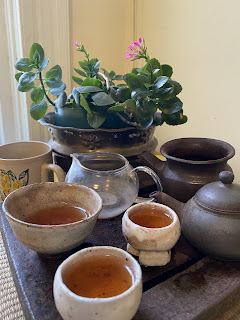
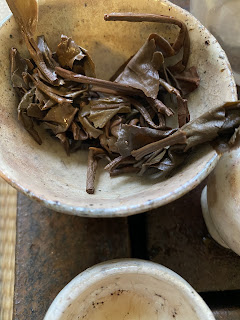
2008 Xizi Hao Diangu: Minty Cardboard Perfume Heartbeats!

I picked up this 2008 Xizi Hao Diangu sample at Liquid Proust last year.  I think it was a comparative set along with the 2009.  He has done lots of options with Diangu on his site over the years including offering this full iron cake version.

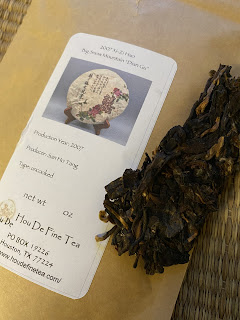
Dry leaves smell of cardboard and a sweet creamy woody odour.  Not any piercing nectar like the Houde 2007 but same cardboard like odour which is interesting because I thought it was a storage odour and maybe it comes from the same collector and is…

First infusion has a woody, cardboard onset cherry and turnip earthy tastes.  It’s a smooth and a bit watery with a thin full sandy mouth and unique hints of fruit I can’t describe.

The second infusion has a perfume onset with notes of tart rosehips and almost grapefruit pith fruity bitterness.  There is a movement to a creamy berry sweet taste that slowly emerges and expands in the aftertaste.  There is a sweet tart perfume taste in the mouth even minutes later.  The lingering aftertaste is long.  Qi is focusing and happy with a bit of chest Qi.

The third infusion has a woody perfume cardboard bitters onset.  There is a subtle hong cha note and an emerging minty perfume taste in the aftertaste.  Tastes a bit soapy floral almost creamy.  It has a soft thin sandy but full feeling in the mouth.  Spacy and floating Qi takes hold of my mind with some Heart beats.


4th has a woody bitter cardboard with a soapy floral perfume note that is a bitter minty taste.  Not as condensed, perfume, or bitter as the drier stored 2007 from Houde.  Strong initial presentation of flavour then develops a bit more cardboard minty taste.  Long aftertaste of initial flavours.  Steady strength from the Qi totally spaces me out while I can feel strong Chest pounding.  The cooled cup has a more tart woody cardboard fruitiness, less bitter-mint, and nice long creamy and smoother sweetness.  A touch harsh on the digestion from being a bit young maybe.

5th has a medicinal cherry cough syrup onset with that minty bitter edge to it.  It has an emerging creamy sweet note in there that comes out as the more bitter notes recede.  Soft full thin sandy mouthfeeling.  Nice Chest Qi sensation with floating mind.

6th infusion has a sour rose hip and cardboard taste.  There is some bitter floral tastes a touch woody and sort of minty.  The fine full soft sandy mouthfeeling is prominent.  Nice relaxing floating Qi.  Vs   2007 this one is much less condensed, powerful in taste, aroma, and Qi.  Its maybe 1/2 as good.

7th has a root turnip, floral perfume, carboard onset with a carrot creamy sweet finish.  Nice soft full fine sandy mouthfeeling.  This infusion has more of a root veggie taste which did not appear in the 2007.

8th has a bitter metallic woody body floral cardboard and sandy mouthfeeling.  Cooled it is more creamy sweet and minty with lesser bitter cardboard wood.  Nice lingering sweet floral breath.

9th has a cardboard woody floral taste to it.  There is a bit of minty almost root veggies edges to it.  Still lots of medium bitterness that comes with a woody flat taste.  Nice decent chest expanding and uplifting spacy feeling.

10th infusion has a bitter woody root veggies floral taste initially then has a metallic like finish along with woody bitterness.  This infusion has much less sweetness.  More of a flat taste in the mouth.

12th is a more creamy woody cardboard floral onset that ends more sweet that woody.  The 2008 is way less perfume.  Nice thin full fine sandy mouthfeeling.  Nice uplifting Qi.

13th has a woody almost watery bitter flat woody taste with edges of sweetness.  Mouthfeeling is a bit more gripping and has not much sweetness, a bit of perfume.  Nice Chest pounding and uplifting more energizing Qi than the 2007s stupefying Qi.

14th has a woody cardboard root veggie kind of flat taste with not really any sweetness left.  A flat dry puckering mouthfeeling.  Uplifting Qi.

Although this 2008 is still pretty enjoyable, the quality gap between the 2007 from Houde and this 2008 is very significant.


Peace

Friday, January 7, 2022

2007 Xizi Hao Diangu: Drinking Power Perfume !?!

This past week I took 3 days to sample through Xizi Hao’s Diangu offerings 2007, 2008, and 2009. Due to my always way too long tasting notes I will break them into separate posts with the 2009 post having a bit of an overview.  It ended up being a crazy life altering week… because Diangu is kinda like that…

The first is my last sample from Houde.  It’s a 100% Houde Houston stored cake.  The 2007 Zixi Hao Diangu sold out last yearfor $495.00 for 450g large cake.  It is a much talked about and beloved cake of Shah8 so, it’s something we’ve all read about for years…

Dry leaves have a strong cardboard odour with a piercing nectar odour.

The first infusion has a vibrant powdery talc and perfume floral odour to it with a base of hongcha nuance similar but not exactly what you could taste from Tea Urchin’s storage perhaps? There is a metallic almost bitterness underneath and some nutty tastes.  The creamy sweetness is fluffy and cotton candy tasting thing.  Long creamy sweetness with a tight full and loosely salivating sensation.  Complex full dump of taste in its brilliant dry storage.  Nice focusing energy.

The second infusion has a very thick perfume talc and woody presentation.  The mouthfeeling is strong and puckering fine sand.  There is this floral talc cherry very perfume presentation.  This is a very unique tasting and feeling puerh. There is a strong heavy chest bodyfeeling and a wandering, unhinged mind feeling.  Nice wood perfume and floral finish over a talc and creamy sweet base.  Strong deflating balloon bodyfeeling.

The third infusion has a metallic perfume dense and thick layered woody presentation with heavy, essential oil based, perfume fragrances, flower shop taste.  There is a bitter base taste and a woody vegetal base.  Strong Qi makes me feel like I’m leaving my body.  This is a really strong tea that needs more aging still.  It’s a bit rough on the Stomach still.  There is a bitter woody floral talc taste in the mouth many minutes later.  Strong Chest heaviness and Heart racing with out of body feeling.


The 4th infusion is left to cool… it gives off a very dry woody, kind of weedy bitter, but heavy perfume-floral finish.  There is a cooling almost minty rosehips and woody base.  That minty woody taste extends into the aftertaste.  This is a very unique and unusual tasting puerh.  The mouthfeeling is a sticky fine sandy pucker.  The Qi is full of strong bodyfeelings in the Chest and Heart and a floating mind, unhinged feeling. Powerful Qi.

The 5th has a strong woody minty onset with a heavy thick perfume presence.  There is a heavy bitter minty woody perfume dense onset that keeps its form even through the aftertaste.  There is almost an overly soapy perfume taste to it like eating a bar or perfume bar soap.  Strong Chesty Qi bodyfeeling and some face sensations too- very strong. 

6th is left to cool… it has a strong red tea note with woody minty bitterness.  The mouthfeeling is gripping.  There is less perfume but still quite a bit.  A tingling tongue sensation is very nice.  Long profile throughout.

7th has a woody sour rosehips perfume woody bitter onset.  The taste comes at once initially then just stays long on the breath without returning, changing too much.  Like being hit by one big wave of flavour.  Qi in Chest and Heart.  Nice floating mind feeling.

8th has a cherry perfume woody bitter vegetal onset there are some faint spicy notes in there a bit this infusion.  A flat wave of dense flavour that goes straight to the aftertaste.  No returning sweetness or ebb and flow to it, just a wall of tastes.  Soapy perfume nuances as well.  Dry full mild gripping mouthfeeing.  Flat single note with no separation of initial tastes, secondary tastes, coolness then returning sweetness.  That along with the insanely strong Qi feels maybe more like a wild tea or Mu Shu Cha type or varietal than standard puerh type of thing to me.

9th has a woody almost medicinal minty bitters woody perfume taste.  The dense taste holds into the aftertaste. 

10th is left to cool and gives off a medicinal minty soap- floral bitter heavy perfume wood taste.  There is some red tea note in there.  The mouthfeeling is flattening out and is a dry slight puckering slight fine sandy feeling.  The Qi is still in the Chest and floats the mind but less strong now.  The Qi has now pretty much rendered me useless and staring at the walls… stupefying Qi knocks me out hard…

11th is left to cool and offers a woody bitter floral experience.  The taste of this puerh is dense but narrow and steadfast in its consistency and shows its single origin pedigree.  Nice flat full thin sandy slightly gripping mouthfeelng.  Nice spacy Qi now.

12th has a more perfume taste with less bitter woodiness.  There is a more floral feel to it here with some orange peel tastes in there as well.  Nice floating feeling.

13th has a bitter woody floral perfume onset.  Nice full, flat fine sandy slight gripping mouthfeeling.  Some minty medicinal tastes in there as well.  Nice floating.  Nice full fine sandy slightly gripping mouthfeeling.  There is a more vegetal type of bitterness in here.  This tea has good stamina and feels like it could just go on forever like this…

14th has a rich bitter woods floral perfume taste.  There is a bit more richness in this infusion … bitter woody perfume floral … so consistent and still very intense… strong Chest Qi here.


Wow… a really good start to the tasting

Peace

Tuesday, June 29, 2021

2011 Legend of Puer Da Xue Shan: A thin Veil…


2011 Legend of Puer Da Xue Shan: A thin Veil…

I purchased this sample a while ago from Tea Urchin and just tried it this spring.  This 2011 Legend of Puer Da XueShan (Snow Mountain) goes for $64.00 for 200g or $0.32/g.

The dry leaves smell of vegetal dry leaf… nothing too exciting here.

The first infusion has a mild dry woody almost but not that mint-pungency with a faint distant floral.  The mouthfeeling is empty a faint moss on the tongue and the throatfeeling is slightly opening in the upper- mid throat with a dry sandy-sticky feeling in the mouth.  There is a candy faint aftertaste minutes later and some mild mouthwatering effect.

The second has a nice floral and candy onset over a mild mossy mouthfeeling that evolves into something stickier.  There is a very subtle vegetal and coolness but mainly this is just a long floral coolness in the mouth.  It then expands for minutes in the mouth.  Nice long perfume floral and candy with not much other tastes to restrict or complicate these nice top notes.  The mouthfeeling is interesting as it thickens in the mouth as the flavor expands.  Nice dry storage on this cake.

The 3rd has a floral vegetal sweet perfume onset with and expanding candy floral finish.  This puerh has really light pure flavours that really expand in the mouth with little base flavours to distract from the single estate high-noted feeling.  The mouthfeeling continues to thicken as you swallow.  Nice dry storage allows for nice expanding and very long candy and floral initial, mid, throat, then aftertaste.  There is a mid-throat opening and very long profile.  The Qi is very subtle and focusing in the mind and clear in the body.


The fourth has a very incense perfume onset with a vegetal and candy finish.  The mouthfeeling is more dry sticky and the long uninterrupted candy and floral nuances are slightly muted by these other notes.  There is a bit of astringency now with a slight drying pucker with no more saliva producing effects. The Qi is really soft and almost light in the body and focusing relaxing mind.  Very harmonious Qi.

5th is a vegetal syrupy floral woody onset.  There is a subtle sour taste that pops with the initial tastes and moves fast.  There is a subtle cool throat then some candy expands on the breath.  The mouthfeel is soft and sticky the mid-throat opens a bit.

6th has a vegetal sweet syrupy floral taste there is a candy like sweetness that emerges and returns with a faint cool subtle throat opening.  Nice soft mossy coating.  Slight focusing mind Qi.

7th is much the same with a subtle incense note and much longer pronounced candy taste that is long on the breath.

8th has a floral perfume onset with a touch of vegetal underneath there is faint very faint woodiness and the mouthfeel is a bit puckering and dry with a bit more astringency to this infusion.  The few infusions with more astringency, although subtle, also have a tighter pucker mouthfeeling and less candy and sweetness throughout.  These infusions can also be felt on the empty stomach.  Qi is really mild in the body with a focused mind.

9th has a woody floral kind of watery onset with some vegetal slight rubber that comes up.  There is a faint deep throat cooling then a returning faint candy taste.

10th has a juicier fruity sweet onset of mango, with a slight floral and slight tart nuance to it.  The sweet mango tastes is long in the profile and stretches onto the breath.  The mouthfeeling is soft and mossy with a mid-deep open throat feeling and focused Qi feeling.

11th has a woody, flat almost bitter-astringent floral fruit. The mouthfeeling is a bit more gripping.  There is a slight puckering mouthfeeling with a more pronounced cooling in the throat.  Nice focusing Qi.

12th is a cooled cup and more of an orange peel taste comes up initially with subtle sweet and fainter bitter note that returns as a candy-like coolness on the breath.  Focusing Qi.

13th I add 10seconds to the flash infusion and let it cool down… the results is a faint fruity almost woody bland taste with very little returning sweetness.

I go to the mug steepings and start pushing this one hard…


It is pretty much spent now with a bit of bland woody, slight earthy incense.

This is a really pure and simple but still refined offering of Da Xue Shan from a producer know for its smooth puer - Legends of Puer.  It offers a clean and pure highnoted floral sweetness and a nice long cooling candy finish.  The Qi is unimposing and harmonious.  The dry storage on this sample has done these qualities well.  Very nice in its pure simplicity very easy to drink.

Peace

Tuesday, March 26, 2019

2010 Essence of Tea Da Xue Shan Wild 1KG Brick (What’s Not To Like?)


I have to admit, I was excited about this 2010 Essence of Tea Da Xue Shan Wild ($0.26/g) right from the start…

What’s not to like about this?

It’s from one of my favorite vendors, the Essence of Tea.

It’s of yesheng material and I do like wild tea.

It’s very tightly machine pressed, exactly the way I like high noted tea.

It’s stored on the drier end of the spectrum, most often optimal for wild tea I suspect.

It’s material is from Da Xue Shan, an area which I always seem to enjoy.

And last but not least,

It comes in an over the top 1KG Brick!

Really, it checks all the boxes for me.

The oily purple hued dry leaves give off a delicious odour…

The first infusion starts with a watery, empty taste with a slight vegetal, slight turbid\ barnyard taste there are just glimpse of juicy fruity, barely there as this compression needs to release more.  What is most noticeable is the long breath cooling and faint almost cotton candy sensation.  This wild will be quite nice, I think.

The second starts with a subtle smoky and mainly juicy fruits and subtle sour onset with layers of almost tobacco and woody notes.  There is a long cool lingering returning undulation and creamy sweet breath, slightly talc with almost cherry tastes left on tongue.

The third infusion starts off with punchy tangy fruity tastes with a nice astringent feel.  Then there is slight woody layer, tobacco and slight smoke then long cherry returning taste with decent cooling.  The slightly forest, slight wood, slight creamy taste is long.  The mouthfeel is nice and astringent but not overly so.  It’s mainly felt on the tongue and cheeks as well as mid throat.  Nice full feel for a wild tea for sure.

The fourth has a woody, juicy fruity taste with very mild smoke then to a building pungent cooling in the throat.  There is more of a full onset with woods and fruits layered in.  The mouthfeel is nicely simulating for a wild tea, much more full than even the better yesheng I’ve had.

The fifth infusion becomes very thick right from the onset.  The liquor is quite viscus and denser layers of wood, slight sour, barely noticeable barnyard/turbid taste, thick dried fruits, slight juicier fruits which stretch into the aftertaste and breath.  The long ring of cooling pungent taste makes this wild special as well. Very refreshing.  The throatfeel paired with the sour slight astringency pushes saliva into the throat along with the deep, dense, layered flavours.  The Qi is very floating but my mind feels quite sharp, a very nice qi.

The sixth infusion starts off in a vibrant soapy guy (Thrills gum) taste and turbid/wild/slight barnyard taste with woods and fruits under this almost grapy sweet soapy taste.  The long pungent returning kicks in and rolling creamy talc sweetness.  The mouth/throatfeeling are nice and do a nice thing with the saliva.  I feel so floaty but clear in the head.

The seventh starts layered, dense, complex with layering of woods, sweetnesses, chalk, forest, fruits, juicy, and is capped with a strong pungent coolness and long creamy, talc sweetness with mild dancing fruits in the distance.  The sweet taste is quite strong and long.  The throat does a capturing of taste with the saliva even minutes later.

The eighth infusion is a thick dense onset.  The thickness of the liquor and mouthfeel really make the complex interplay of flavours hold.  Instead of coming one at a time flavours come all at once.  The Qi makes my heart pound with a certain intensity but I feel slightly spacy.  Like I have lots of energy but don’t know what to do with myself.

The ninth infusion is sweet, almost juicy smokey, dense, onset, with creamy menthol sweetness long on the breath.  The taste is barely sour, faintly astringent, long dense sweetness, long cooling. The interplay and complexity of this wild make it special, I think.

This tenth and eleventh infusion is more watery fresh almost fruity juicy type I’m more familiar with.  There is a mild juicy fruity taste throughout.  The deeper tastes and rolling pungency seems less here.  This is more like a solid and more typical wild presentation but this one is especially nice.

The 12th is smooth fruity and woody to start plumb and blackcurrents come to mind.  There is a wave of menthol coolness then a long woody and subtle sweetness.  I would say the wood note is the dominant here.

13th has a slight sour tart onset with a choke cherry like initial taste there is more of a slightly sandy and dry mouthfeeling now.

13th starts woody mainly with fruits underneath capped by a menthol taste.  Some sweetness and fruit in the aftertaste.  14th is much the same.

The 15th is brilliantly fruity and long the mouthfeel is a touch slit-like.  The Qi pushes me into a sweat.

I end up long steeping this one for a few days and get brilliantly viscous fruity flavors.  It goes for a few more days like this and I quite enjoy it.

Overall, this wild is really enjoyable, it really does have everything I look for in a wild tea.  So will I be buying up a few bricks? I’m afraid not.  Why?

The reasons are many but are mainly personal reasons.

Firstly, despite what you read here on this blog, I only drink wild tea/ yesheng infrequently.  I only go for it maybe once a month, that’s it.  The other times I’m downing puerh.

Secondly, I already own over 3KG of wild tea probably enough to last me a lifetime considering how infrequently I consume it.

Thirdly, I just picked up a KG of a very similar wild from Teapals, a 2003 Shuangjiang Mengku Da Xue Shan Wild 250g (very compressed) brick for($0.16/g).

Fourthly, although I consider this 2010 Essence of Tea Da Xue Shan Wild one of the finest example of wild tea but I have a very similar tasting (although admittedly inferior) dry stored, very tightly compressed, factory-esque feeling, and similar Qi pattern.  Mine is maybe ½ as delicious, though.

Overall, this has got to be one of my favorite Northern Xishuangbanna wilds…

I just can’t rationalize buying more…

Peace


Friday, February 22, 2019

2003 Shuangjiang Mengku Da Xue Shan Wild Puerh 250g Brick


KL Wong of Teapals makes a bold claim about this 2003 Shuangjiang Mengku (Rongshi) Da Xue Shan Wild ($39.15 for 250g or $0.16/g).  He states, “If not better, it’s as good as 2006 Mengku Rongshi Qiao Mu Wang.”  This is the line that hooked me on this tea because personally I feel that the 2006 Mengku Arbour King brick is one of the best productions that Shuangjiang Mengku has ever produced.  This is coming from someone who has also tried a lot of Shuangjiang Mengku.

Ok, let’s go back a bit.  Since, returning for my onslaught of puerh buying, this has been my only purchase that I have been tipped off by a kind email (thanks friend).  He no doubt flagged this wild tea down for me because it has a lot of qualities that I look for in a tea.

First, it’s from one of my favorite factories that is known for cheap and good quality puerh.  Shuangjiang (Rongshi) Mengku is also well known for pressing wild tea and have been doing it for a long time before any of the other factories.  Secondly, I like wild tea though drink it infrequently. The Shuangjiang Mengku Da Xue Shan wilds are some of the most famous factory production wild/ yesheng out there.  This is a very early version of these.  Thirdly, I highly value very tight/ iron compression which these bricks are.  Fourth, as stated above I’m a big fan of the 2006 Shuangjiang Mengku Qiou Mu Wang.

Seems, like this completely Malaysian stored brick has everything I like… so I ended up ordering the last 4 bricks but the big question is…

Is it REALLY better than 2006 Shuangjiang Mengku Arbour King???

Dry super compressed leaves smell of the dry leaves is of vibrant fruits in wood and slight dirt.

Slightly watery, fruity, distinct date and plum skin onset with cooling light finish on the breath.  The mouthfeel is a bit vacuous in this first infusion with a touch of barely noticeable dryness in the throat.

The second infusion starts off more earth peat mixed with date and overly ripe cherry.  It has a watery and almost tart quality reminiscent of wild tea profile.  There is a slight bready finish with moderate cooling on the breath.  The mouthfeel is sticky especially the lips and this throat mildly opens to the obvious cool menthol.

The third infusion starts with pops of dense and thick syrupy fruity vibrancy, cherry and plum initially then is swept away by a moderate cooling returning yeasty bread sweetness.  There are mild layers of wood underneath.  This infusion excites me.  The qi is starting to kick in the upper neck, down the spine effect is felt as if the head is wobbling on a swivel.

The fourth has a woodier and cherry and rum like taste, a bit like rum and raisin flavor and dried cherries.  The woody taste is not as prolific as the fruity.  There is a wave of cooling and beadlike sweetness and even dark chocolate covered dried cherry aftertaste.  The profile is pretty long and reasonably complex.  It tastes like a drier storage, I wouldn’t have pegged it as typical Malaysian.  There are lots of crispness, woodiness, and fruitiness in here more typical of drier storage.  This is likely due to the iron like compression on the brick.

The fifth infusion starts off with a yeasty bread like sweet and sour dominating with sweet fruits layered under that and wood notes even deeper.  There is a mineral taste in this one as well before cooling and converting into a long fruity and bread like sweet taste on the breath.  The mouthfeel is slight tart and astringent enough to give the layers of wild flavors traction.  The qi is powerful in the mind, spacy.  Do I still even have a neck attached to my head, I wonder?  The tart mouthfeel forces the saliva to retreat deeper into the throat.

The sixth infusion starts off strong, dense, thick fruit, wood, cooling,  The taste is real full and strong here. The Qi is real strong in the head too.  I almost feel like I can’t think straight.  I can feel qi pooling in my eyes and spine.  This is a powerful wild tea.

The seventh infusion starts with a pungent fruity bready taste, it’s almost bitter here and more woody with a more pronounced cooling throat action.  The sweeter and fruiter tastes are less.  The eighth infusion is identical with a touch more bready sweetness.

The ninth infusion has more of a sour fruit onset and strong pungent coolness to finish.  There are long bready sweetness and fruits in the breath here.  The Qi is very powerful almost dizzying.

The tenth infusion is a nice balance of dry wood and date/cherry it has a tartness underneath.  The pungent coolness reaches deep into the throat from the astringency here.  I can feel the qi beating in the chest now.  The Qi of this tea is very nice.  I clear out some pieces that have clogged my teapot filter a bit and things change…

The eleventh infusion has an almost floral sweet fruit approach, slight tart, much less bitterness and astringency and a smoothness to it.  It has a talc mineral nuance to it as well.  A subtle mineral soil taste, like licking a rock.  Still distinct coolness and long sweet bready and fruit aftertaste.

The twelfth infusion has that same floral and berry taste now.  It is somewhat refreshing in these infusions, cooling and replenishing feeling but warm in the body and face.  The aftertaste is pungent cool and long fruity breads.  This tea feels very clean and pure in the body.  My mind melts under the Qi’s presence.

Thirteenth infusion is of mahogany wood with layered fruits underneath.  Deep rich dried cherry, cooling pungent.  My energy explodes in my mind and I break into a sweet.

The fourteenth is beautiful cherry florals with a Saskatoon berry taste.  It tastes like Saskatoon berry pie with the pastry bready edges now.  A sweet fruity mineral aftertaste is enjoyable.

The fifteenth infusion is more berries and wood and mineral.  A pungent fruity long aftertaste.  The sixteenth is still at flash and delivers.  The sixteenth is fruity and long cooling pungent it is simple now but the qi is still strong and the sweet fruit note is predominant.  The seventeenth is sour, fruit, woody base really tastes like younger wild tea here.

The leaves are still very tightly rolled at this point as evidence in the picture.  This is the kind of tea that easily gets steeped for 2 days in my house.  The overnight steepings are surprisingly woody, a touch bitter, and a bit brackish.

Conclusion: I have had a chance to sit down for a few good sessions with this one.  I have found a lot of variance in session to session with this wild.  This is due mainly to the amount of dry leaves used.  You actually get the best result when the session is leafed a bit on the lighter side.  If you use too much leaf it can get bitter and astringent and turn out more woody and less fruity.

The best sessions, like my first session in the above notes, are close to the brilliance of the 2006 Shuangjiang Mengku Arbour King but really the teas are so different it’s hard to compare.  Other than the same factory and compression, the material and harvest year gives off completely different taste, feel, and energy.  I really like this 2003 wild, a wonderful tea for the modest price tag…

 With that being said, I still don’t think it compares to the brilliance of the 2006 Arbour King.

Peace


Wednesday, February 20, 2019

Any Tea Can Be Aged, I Suppose


In Korea many years ago it occurred to me that any type of tea can be aged into something different and potentially interesting.  I came to an understanding that it doesn’t even have to be the typical type of aged tea or hei cha (puerh, liu bao, liu ann) to be aged.  I came to this revelation earlier than some, influenced by the different types of tea produced in Korea many of which can be aged.

I also remember that others were also coming to the same conclusions.  I remember this article in A Tea Addicts Journal, where Marshal’N pretty much reaches the same conclusion about Darjeeling Second Flush- it actually ages quite well.

The Chinese Tea Shop in Vancouver was early out of the gates selling aged white tea.  The first in the western market, I do believe.  I think, it was an early influence on Char of Oolong Owl who is an avid drinker and ager of white.  I ended up sampling a bunch of this stuff from them in 2010.  I ended up buying up a couple KG of fresh Yunnan white teas at that time to age.  Actually, they were a year old and discounted heavily because at that time, people didn’t understand the aging potential of white tea.  I ended up giving most of it to a family member who loved white tea and drank some of it up.  In the end I didn’t even have any left to age out.

Times have changed especially over the last few years.  For tea dealers there has to be a market for this stuff before they can sell it.  Nowadays due to various market forces, aging of white and black tea seem to have taken hold.  But for dealers to offer this tea in the first place a certain groundwork has to be laid.  First, people have to be aware of the fact that they can age a particular type of tea.  However, once there is a public understanding that a certain type of tea can be aged, then there is room for the tea vendor to sell more of it compared to a tea that must be consumed fresh.  They can sell some to customers for current consumption and to others for later aging or maybe to the same person willing to both drink now and age.

Currently, white2tea is effectively pitching this to tea drinkers and backing it up with some white and red teas that people seem to be excited about.  This is, no doubt, in response to the increasing price of puerh, mainly, but also, I believe, to changing tea drinking trends in mainland China.  The last year or so white2tea have been focusing on pressing white tea.  Pictured above is a complimentary sample of 2018 white2tea Turtledove Mini that I received in my Black Friday order.  Turtledove uses material from Yunnan.  I wasn’t a big fan of it but to be honest but I haven’t sampled pressed white tea enough to make a real educated option.

This year white2tea has also put an emphasis on red tea (aka hong cha or “black tea”) even in pressed form.  I haven’t tried any from white2tea this year but pictured below is an interesting hong cha from the Essence of Tea.  Most of these Hong cha are using Xishuangbanna puerh material but are processing it as lightly oxidized hong cha.  This 2018 Essence of Tea Spring Da Xue Shan Wild Red Tea which I received complimentary in my Black Friday order is rather interesting though (pictured below).  The material is yesheng/ wild material but processed as hong cha.  It is very vibrant, intensely fresh aromatic and has a smooth very complex fruity body.  I highly recommend it for those looking for something different in red tea.  Too bad it wasn’t pressed into a cake.

For me, in the end, white or red tea doesn’t come close to puerh.  Sure, you could age it, but really it has a different energy to it, a different qi, and effects the body differently.  Well, really, you can age any good tea- I certainly have some really interesting aged tea in storage.  Even some crazy expensive green teas that were selling for $1.60/g in 2006 … who says you can’t age and re-roast green tea?  But will it ever be as complicated, nuanced, harmonious, and feel as good as aged puerh…

I doubt it.

Peace