Sunday, September 25, 2011

Is Jukro's 2011 Ball Shaped Cake "Tong E Cha" Uricha The Same As Its Loose Form "Bal Hyo Cha" Uricha???


Balhyocha (Korean yellow tea) pressed into a bell/ball form cake is a rather new trend in Korea these days. Even a few years back, the bell shaped balhyocha couldn't be found in Korea. Joytea was perhaps the first in recent times to offer the tea in this form. Ever since Joytea's bell shaped balhyocha won some international tea awards more balhyocha has been popping up pressed into the bell shape.

Over the last year or two, famous tea producer Jukro has began to offer its balhyocha in a 100g ball shape. It is packaged beautifully in a wooden box with two cakes per box. It retails for 120 000 Won (approx $120 for 100g x 2) for the boxed set or 50 000 Won (approx $50 for 100g) for a single ball without the fancy packaging. The Jukro site lists this product as "Tong E Cha" or "cake tea".

Jukro has traditionally offered its balhyocha in loose form only and continues to do so. One has been drinking this tea for ages now and it is consistently touted as one of the best (see here and here). It retails for 50 000 Won (approx $50) for the 100g box or 25 000 Won (approx $25) for the 50g bag. The Jukro site lists this product simply as "Bal hyo cha".

Ever since the introduction of Jukro's ball shaped bal hyo cha ("Tong E Cha"), one has wondered how the change of shape and variance in production impacts the experience of this classic Korean tea. The following post will examine the question of whither these two teas are the same or are different and will look at how they differ.

Readers may have noticed that there have never been side by side cuppings here on Mattcha's Blog. This will not change today. Although multiple cuppings reveal much about two similar teas under the same conditions, this method also has its disadvantages. If you are drinking two teas at once how can you determine the qi of one tea from another? How can you note how a teas flavour, fragrance, and mouthfeel compounds throughout a tea session? Also certain subtle nuances of one tea can always interfere with the nuances of another if you are drinking them together. In the rare instance that a close comparison of two teas is warranted, one usually compares them over a few days. Drinking tea A one day one, tea B on day two, then a complete session with tea B early in the day followed by a session with tea A that same day.

With the Fall Equinox signaling the perfect time to consume balhyocha what better time to compare these two teas. The loose balhyocha was purchased with this years tea order from Korea and a ball cake sample was kindly gifted by Pedro for this comparison. Throughout this post the loose balhyocha will always be pictured above the ball cake balhyocha. So let's look at the dry leaves...


The loose balhyocha's leaves seem a bit larger and have more of a blue green sheen to them that can even be seen in the picture above. The loose balhyocha leaves are coated in a dusty film that the ball shape does not have at all. The ball cake's leaves are smaller in size and are a deep dark brown-black colour. Appearance aside, the odour of these two leaves is also markedly different. The loose balhyocha smells of more subtle roasted nuts and light cereals with more of a creamy chocolate finish, even slight wood notes can be sensed. The ball cake's odour is of very deep chocolate odours that lean to a more brisk, deep, bitter dark chocolate.


Both pour an identical deep gold-yellow and share the most distinct chocolate tastes. The first few infusions of the loose balhyocha have distinctly creamy-nut and chocolate notes. The ball shape has less of the nutty notes and has a slightly richer, smoother, mellower taste and feel. The chocolate taste of the ball shape is barely more sour and bitter in these earlier infusions. These differences are very subtle. Both share the same long mellow chocolate aftertaste that slowly parts from the initial flavours.


At around the fourth infusions, the loose balhyocha has a slight juicer edge to it. The loose balhyocha also shows more woodiness here among its creamy nutty chocolate base. The ball shape now comes closer to the loose forms slightly more nutty taste. The differences are barely noticeable, so slight. The mouthfeel is also very similar with the ball shape having slightly more presence in the throat and the loose balhyocha perhaps having a juicier edge, both exhibit a very soft, mellow, velvet mouthfeel.

The later infusions suggest that the loose balhyocha has slightly less stamina- this makes sense when referencing other cake teas such as puerh as the leaves take a bit longer to awaken from their pressed posture. Compared to other balhyocha both have excellent stamina.

As a result, the loose balhyocha seems to flirt with woodier and citrus notes among its milky-nutty flavours earlier than the ball form. The bell cake only reveals these nuances in the last few pots and remains slightly more mellow and rich in taste and feel.


The qi of these two teas also shares very subtle differences. The loose balhyocha has slightly stronger qi in the body and is just a bit more warm and active especially in the middle of the body. The ball cake has a more mellow presence. Both are strongly comforting and slightly warm and have a reasuring and relaxing affect.


In the end the differences are barely noticable and could simply be caused from storage and the slight differences in production.


Peace

Edit: The loose "balhyocha" is currently available from CoreaColor (see here).  
Le Palais Des Thes was the first company to offer the loose Balhyocha to the Western audience and still does (see here).  
TeaMoutain made a recent addition to the Korean teas they sell and is the only Western dealer to stock Tong E Cha (see here).

Double Peace


Edit (Jan 22/2012): A representative from Jukro confirms that there are slight differences between these two very similar teas.  Both of these teas undergo around 3 months of aging before released.  The loose balhyocha undergoes an oxadative fermentation rate over 80% and is less bioactive than the cake Tong E Cha because it is sealed in an airtight bag.  The cake Tong E Cha has an oxidative fermentation rate over 95% and is more bioactive because it is not packaged airtight and can continue to ferment as it interacts with the air.  This no doubt explains the slight differences in these two teas.

TRIPLE PEACE!!!

Saturday, September 24, 2011

One of Korea's True Master Potters Calls It Quits- Thank You Sel Young Jin

One of Korea's best potters has stopped making wares. David Louveau passed this information on with kind words and a gift, a beautiful teapot, a few weeks ago. David Louveau studied under Sel Young Jin- heavy influences of this master can be seen in his work.

Sel Young Jin specialized in erabo style and his pieces were some of the most stunning of any modern potter. He infused a Zen mind with that of a potters mind and made them one in his works. Drinking from his cups and tea bowls you can taste this mind- peaceful and still within the contrasting raw and natural texture of his works.

According to David Louveau, Sel Young Jin has taken to deepening his meditation. One takes solace in knowing that he is still sharing many cups of tea with family and friends at his tea table.

Thank you Sel Young Jin.

Peace

Click here then scroll down to see some of his beautiful teaware.

Double Peace

Thursday, September 22, 2011

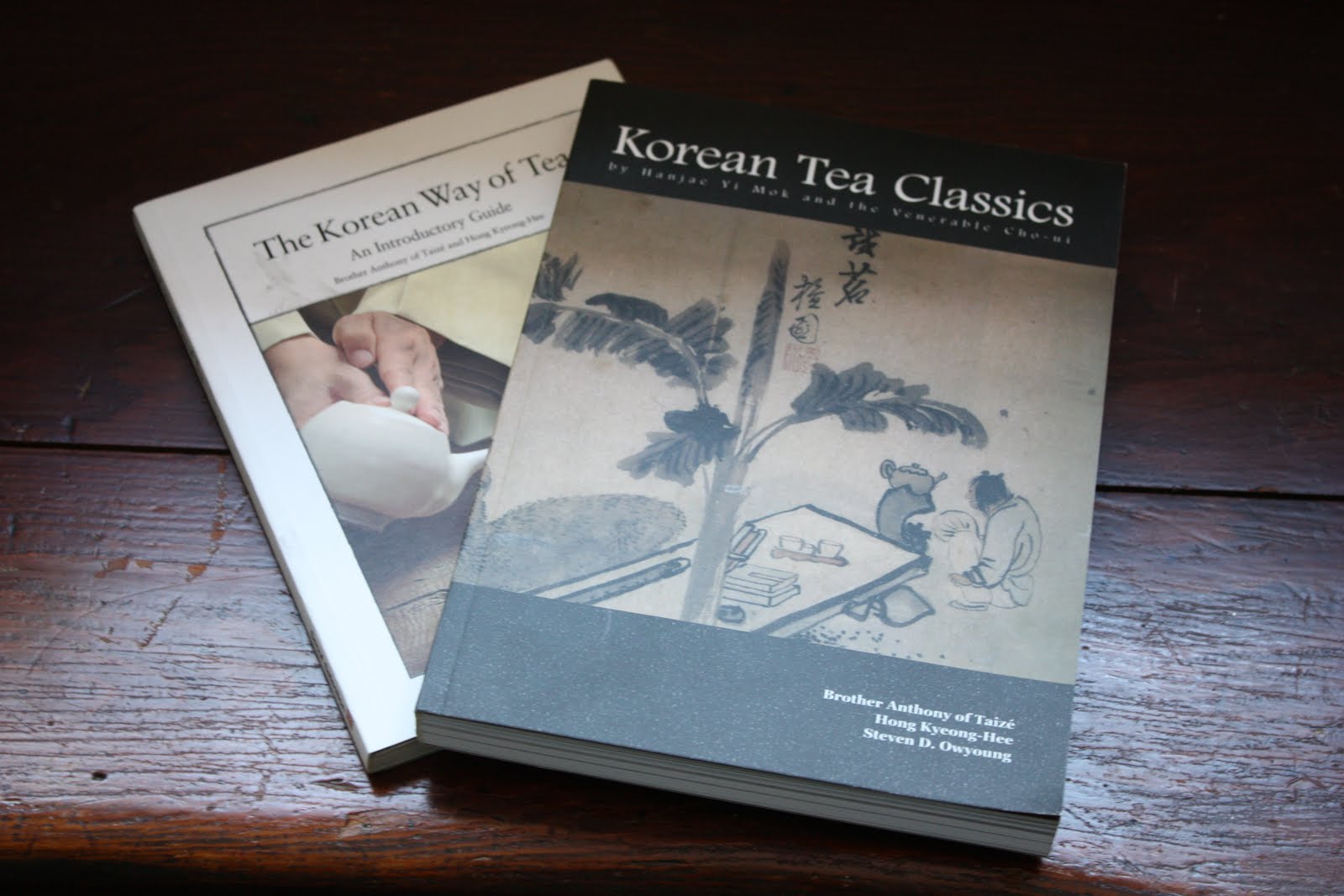
Korean Tea Classics Book Club- Dong Cha Song- Hymn In Praise of Korean Tea- 15


"A profound subtlety lies at the heart of this process that is hard to express"


Feel free to join the online book club at anytime by simply purchasing Korean Tea Classics. Dong Cha Song is 17 stanzas in length, we will go through each stanza week by week. Jump in and join the discussion as you please.

Peace

Tuesday, September 20, 2011

2010 Yunnan Sourcing Jing Gu Yang Ta


This tea is still available from Yunnan Sourcing. On their site they offer some good background on this tea that comes from 60-350 year old wild trees.

Had an interesting experience with this tea, a sample sent by Hobbes a few months back. The qi was such that one doubted that it could possibly have came from the leaves- a profoundly powerful movement throughout the mind. So lets sit down and boil water in the ceramic brazer, and see if this tea can charge the mind like it did days before...

The dry leaves are rich, fruity, and tangy. Sweet frosted sugary smells have notes dwelling in a forested puerh tea base. The leaves are very down covered smallish-medium type that show many light white-green leaves in the mix with medium-greens. These leaves are put in a warm pot and rinsed.


The first infusion pours a slightly pale-cloudy opaque yellow. A subdued woody creamy initial flavour presents itself first with a very light, sweet, plum finish. There is almost a granola taste to this tea. A slight tingling of the lips occurs from drinking this tea- these lips soon become sticky. Inside the mouth it covers the cheeks and upper throat nicely. The aftertaste is of muted bubble gum florals and lingers nicely for quite some time. Woody tastes surface as well supplying ample depth to this light tea. This muted woody taste seems to underlay most of the profile of this tea. The qi immediately warms the body and is felt bearing down in the the lower body.


The second infusion is of woody bark tastes with creamy, fruity, floral sweetness in its initial taste. The flavour is complicated and full of enough depth but gives way to a plumy-gummy sugary returning sweetness that is felt gloopy in the mouth. The aftertaste is an extension of these plum-gum floral tastes which end up liking to linger for a while in the sticky mouthfeel that is mainly found on the tongue and lips. The qi starts off more on the mild side here- moderately warming the body.


The third and fourth infusions have a more woody-creamy initial taste with relatively less fruity taste but still lots of sweetness. The fruit notes return more in the aftertaste accompanying those nice long plum-gum florals and hiding wood notes. There is a noticed bitterness in the aftertaste as well. The mouthfeel is full even in the upper throat still pasty and gloopy.

The fifth infusion turns a corner and now offers a mild woody, barely sweet initial taste with mild woody returning sweetness. The subdued fruit flavours are pushed to the aftertaste and are muted by a plain woody taste. The qi is so mild it is almost unnoticeable here.

The sixth infusion has a mild creamy-woody initial taste that now turns more bland than sweet before turning to into wood again. The mouthfeel is thin here and coats mainly the front of the mouth- it has lost most of its stickiness.


The next handful of infusions pretty much just have a bland, bitter wood taste that sometimes shows hints of plum or chokecherries. Although the qi of this tea is barely noticed in the body it shakes the mind strongly. Later in the session the full effect of the qi has taken control of one's mind and puts it under a spell of twitchy, jittery, buzzing energy.
This tea was put to the test again a few days later- the same strong but slow evolving, mindshaking, chaqi seems to develop.

Link to Hobbes (The Half-Dipper) Tasting Notes

Peace

Sunday, September 18, 2011

Korean Tea Classics Book Club- Dong Cha Song- Hymn In Praise of Korean Tea- 14


"Drinking dew on clear nights, hands guided by meditation produce a wonderful fragrance"


Feel free to join the online book club at anytime by simply purchasing Korean Tea Classics. Dong Cha Song is 17 stanzas in length, we will go through each stanza week by week. Jump in and join the discussion as you please.

Peace

Wednesday, September 14, 2011

2011 Kim Shin Ho (Samtae) Hwagae Valley Saejak Green Tea


Before we get into the mix with this tea one will mention right off the bat that it is currently available from Martin of Tea Mountain. One has often been criticized for blogging about great Korean teas that are unavailable to the western audience. On top of this post the next Korean green that one will be posting about in the coming weeks will also be available to western audiences. Do please check out the updated list of Online Korean Tea Vendors for those who are interested.

A 40g sealed package of this tea was gifted from generous Pedro of Dao Tea. This year he hooked Martin of Tea Mountain up with his 2011 Korean teas. When drinking this tea a conversation that was had with Pedro came to mind. It involved musing about how much year to year variance there is with Kim Shin Ho, Kim Jong Yeol, and other small Hadong area producers' teas. Actually, it is quite hard to recognize the personal nuances year after year with these small scale producers compared to the more consistent offerings of larger, older, and more well known and established producers such as Jukro and Ssang Kye which still manage to do things in the traditional way despite their size. The wide year to year variances sure make for exciting tea sampling though. As it turns out this tea would be quite different than the 2009 and 2010 Saejak from Kim Shin Ho. So let's heat up the water and see what his hands and lands have presented to us this year...

Immediately following the opening of the foil pack the smell of dusky, deep, and frosted notes turn nutty and roasted. These odours are deep in the nose where a soft, frosty sweetness develops from these medium sized saejak leaves.


The first infusion is prepared and pours a vibrant clear green with just a slight tone of yellow. The initial taste is very bright sweet floral honey that is as vibrant and clear as its liquor. There is a milkiness to it as well- in taste and in feel. The aftertaste is light, ethereal, sweet, and long with suggestions of forest that is barely noticed among this light, sweet notes which gracefully dominate the mouth. The mouthfeel is as if the mouth is covered in soft silk.

The second infusion presents with a soft light body with distinct creamy-milky-forested taste and a sweet buttery finish. The aftertaste is sweet and somewhat buttery and hints at wild florals under the surface. The mouthfeel is full and now develops a very sparse, soft, milky texture in the mouth. The qi of this tea is soft and cool on this very summery early September day. One's feet and legs feel cool to the touch and ones mind feels cheerful and somewhat relaxed.


The third infusion has an initial taste of soft, light, creamy, buttery sweetness with a relatively deeper forest finish. Now the aftertaste shows more signs of deeper forest tastes but remains predominantly sweet, light, and long as before. Creamy fruit suggestions even find there way out as the minutes go by between cups. The mouthfeel becomes thicker here. If one didn't know better and ignored the leaf size, would have thought this an ujeon grade.

The fourth infusion remains light and creamy but is now a touch woody and contains a cool-fresh taste with an energizing creamy sweetness. The aftertaste is barely woody and mainly creamy and sweet with a light forest feel. Fruity tastes are noticed minutes later. The mouthfeel is full and is now noticed at the top of the throat. The mouth develops a soft dry quality.


In the fifth infusion the soft woody notes start becoming more dominant than the creamy sweet notes. The aftertaste is becoming more dry and woody. It still has a large, creamy-fruity-sweet taste that lasts much longer than the woody aftertastes. These woody notes, like earlier infusions, drop off leaving subtler tastes in the mouth. The mouthfeel and throatfeel remain constant, very similar to the last infusion.

The sixth infusion contains a light, wood, sugary-floral initial taste. The initial tastes present lighter now but still full in the mouth. The aftertaste is smooth with sweet, fruity-creamy notes riding themselves out as before. The seventh is much the same with more wood notes developing here.


The eighth has woody and dry notes that are further developing as the mouthfeel becomes dry and loses some of its depth. Floral notes still remain long in the mouth.


Peace

Sunday, September 11, 2011

Korean Tea Classics Book Club- Dong Cha Song- Hymn In Praise of Korean Tea- 13


"Wisdom dwells all round, every barrier falls.
Its divine roots are entrusted to Spirit Mountain."


Feel free to join the online book club at anytime by simply purchasing Korean Tea Classics. Dong Cha Song is 17 stanzas in length, we will go through each stanza week by week. Jump in and join the discussion as you please.

Peace