Showing posts with label Bing Dao. Show all posts

Wednesday, June 30, 2021

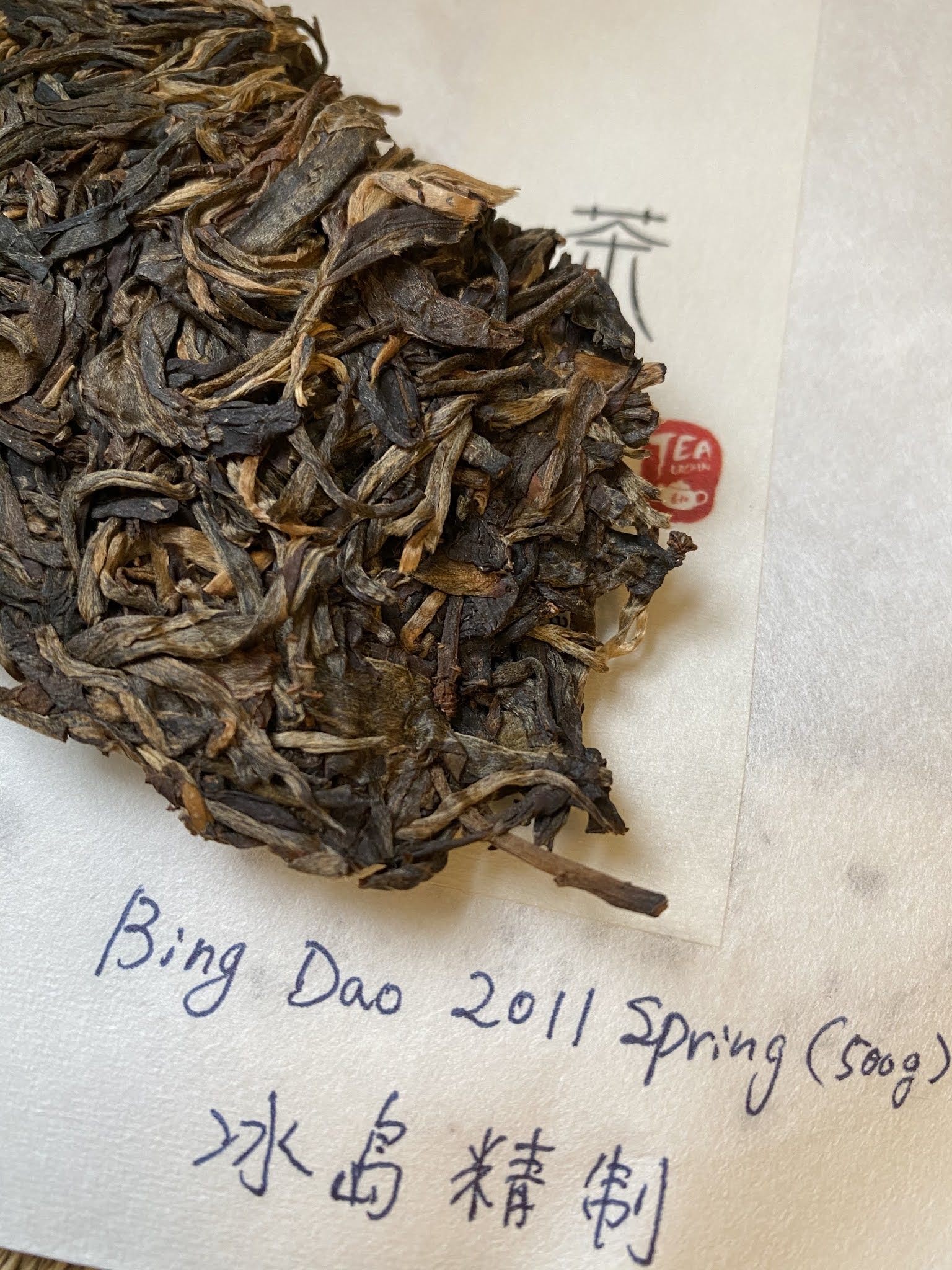
2011 Bing Dao Bing Dao Tea Refining Co.: Comparison of Western Bing Dao


The following unpublished notes are from about a year and a half ago…


This 2011 Bing Dao Bing Dao Tea Refining Co goes for $ 252.00for 500g Qing Bing or $0.50/g.  This factory is actually quite famous and, although relatively unknown in western tea circles, is kind of to Bing Dao as Chen Sheng Hao is to Lao Ban Zhang.  The price seems quite low for this factory and production and my experience with this cake also confirms this.   I think the best years of Bing Dao productions that I’ve tied are: 2009 & 2011 are notably considered better than 2008 & 2012 with 2010 somewhere in between here.  Not sure if I’ve tried enough to say clearly but that’s where I am so far…

Dry leaves are quite subdued compared to the 2010 Yong Chun of yesterday.  These leaves are not that fragrant just a bit vegetal with a faint long icing surgar sweetness.  The leaf compression is also very different with these ones being stone pressed and visually the leaves look less humidly stored and the others a significant tighter compression with a bit more humidity to the leaves but not significantly.

First infusion has a very vibrant peachy sunny fruity sweetness.  There is a nice apparent cleanness of this drier storage and the peach taste rides into the distance with a low and long cooling underneath and some mild but full vegetal green in the distance.  The mouthfeeling is slippery stone and the throatfeel feels deep.  There is this faint deep mild stimulating astringency that is almost unnoticeable now but pushes a creamy sweetness through the profile.  The taste is really good.  The colour of the liquor is very close to the 2010 Yong Chun even though this one tastes much more dry stored.

The second infusion has a pungent cool right off the start that can be felt in the nose. The pungent movement that is slightly cooling mixes with the vibrancy of this puerh there is vegetal mild but full base and a vibrantly sweet creamy taste that is full of aromatic high notes of florals and fruits.  The mouthfeel is quite stimulating and full but mild and the throatfeeling is deep.  The Qi is nicely relaxing and the breathing slows and Heart slows down and you can feel the palpitation in the body.  Very nice. This tea is quite nice.

The third infusion has a thick fruity onset with pungent coolness throughout.  The thickness of the taste and layered fruity and floral and especially thick creamy sweetness is excellent.  The mouthfeel is thick and sticky and the mouthfeeling and throatfeeling are very nice and give the strong sweet, cooling tastes lots of depth.  There is a touch of sour initially but its quite faint and there is this super faint creamy expansive astringency that adds depth as well.


The fourth infusion pours out a thick syrup sweetness of fruit and almost wildflower the coolness dives into the thick and pulls it along.  There is a long aftertaste and thick mouthfeel and deep throatfeel presentation.  There is a bit of bitter astringency here but it is lost in the thick sweetness and long deep coolness.  The Qi pushes me into a deep stoned spaciness a strong high and my chest feels split open and my body and mind seem to separate and pause.  The Qi is very good.  There is a minutes long aftertaste of pear and pineapples and dense creaminess. 

The fifth infusion has a thick fruity presentation with a coolness riding strong in the background.  The pronounced coolness, thickness, very sweet fruitiness, full mouthfeeling and deep throatfeeling with intense Qi and bodyfeel make this a very excellent and complete Bing Dao for me.  This puerh is of good value for this reason alone.  The thickness of the initial fruits creates an unswayable depth that doesn’t fade even minutes later.  There is this interesting high sweet almost green tea and floral sweet pop that happens minutes later in the back of the throat.  Very nice.

The sixth infusion has a more diverse very sweet fruitiness and creamy sweetness to it.  There is pear, pineapple, dragon fruit, tangerine, and a creamy type of sweetness.  There is starting to be more astringency that comes out here too in an almost woody nuance.  The throat feeling is very deep and the coolness comes at the onset and stretches throughout.

The seventh is thick sweet and a bit of woody astringency along with deep long cooling.  The peachy thick sweetness is very nice and flanked by a very stereotypical long deep coolness.  The mouthfeeling is losing a bit but the throat remains deeply opened.

The eighth infusion has a peachy thick fruity and less astringent woody taste to it.  There is a touch of coco that comes out of a mild bitter sweet taste in there as well.  The creamy sweetness is long and intermingles with coolness long into the aftertaste.  The Qi is powerful and typical of high quality Bing Dao and pushes me into a stoned state.

The ninth infusion has a more bitter sweet astringent presence to it which results in a lovely dark chocolate nuance.  There is a thick sweetness underneath and full chalky mouthfeeling.  The thick fruity sweetness and creamier sweetness is still a significant presence.

The 10th has a juicy fruity onset with lighter pungency and a nice significant coco taste without much bitter astringency here.  The dark coco taste is long and satisfying.  The Qi gives me a nice stoned feeling.   The mouthfeeling is thining out a touch and is more a chalky fullness now.  The throatfeeling is medium deep.

The 11th and 12th are juicy peach to start with a creamy sweet under belly that is paired with cooling pungency and a coco finish.  The mouthfeeling is a chalky slight tightness and the throat is mildly simulated and open to a mid-deep level.  The coco taste is now long and even can be found minutes later.  Semi aged Bing Dao tends to develop some of these bitter sweet coco notes. The Qi is really felt in the chest and makes me feel stoned.

13th and 14th have a peachy pear onset and the liquor is thinning out considerably.  There is a sunny bright vibrancy in these steeps.  There is also a slight mineral edge to the infusions now.  A long cooling moves with the sweet tastes through the aftertaste of sweetness.

The 15th has a bit of bitter astringency that has a woody and even coco suggestion with the sweet fruity, floral, and especially creamy sweet riding low along with a cool pungency.  The Qi is more relaxing stoner now.

The 16th I long steep it and out comes more florals and thicker feeling of woody and sweet honey fruits.  The mouthfeeling and deep throat are reestablished here.

The 17th is a good 20 min steeping and the result is thick viscus fruits and low and long cooling underneath.  It also pushes a strong stoner euphoria out of these leaves.

The 18th another long one with a similarly strong effect.  The stamina and strength is solid in this one too.


I think this one completely flew under the radar for the following reasons:

1-      Tea Urchin doesn’t market any more.  No slick marketing machine or social media presence = no one pays attention.

2-      There is no description or tasting notes on the website unlike most other puerh on their site which leads you to believe that maybe its not as good.  This is kind of what I thought about this one.

3-      There are no reviews of this puerh out there none on the site, or steepster, or blogs, nothing- besides Shah8’s and I thinkeven he underrated this one a bit especially considering that he reviewed it 3years ago and the price is still the same.

4-      The 500g cake size is daunting and if you are not sampling to buy then sometimes people will just skip it altogether.


Pictured Left to Right: 2010, 2011, 2016


I drank the 2010 Yung Chun Bing Dao and 2016 Yunnan Sourcing Bing Dao Lao Zhai before and after this cake to compare them and then put them all in an overnight steeping. 

The overnight steeping of the 2010 Yong Chun is the most interesting, the leaves are a bit darker and much more tightly rolled and traditionally processed than the other two.  It is more processed in the older school factory style and you can see some chopped leaves in the mix as well.  There is still some delicious tropical fruity nuances that play out here with a long sweet creaminess and forest vegetal with a long cooling pineapple and creamy sweet aftertaste.  There is still a bunch of bitterness that presents as dark coco and adds a lot of depth.  I guess I steep the other two out for much longer so there is much less but this to me at least speaks to the durability of the 2010 Yong Chun which had a significantly more bitter and astringent profile.  I like this one but its just not “Bing Dao” enough for me to pay the premium on this one but it serves as a great counterpoint to the other modern produced bingdao compared here.

This 2011 Bingdao Refining Co. Bing Dao was mainly mineral, alkaline, forest almost stone like,  it still has a nice thickness to the mouthfeel though and some coolness and very very almost not there sweetness.

The 2016 Yunnan Sourcing Lao Zhai Bing Dao is the least exciting of the bunch with a more flat in taste with a somewhat fruity finish.  The mouthfeel is chalkier here and nice mango fruit can be found in there.  The leaves for this one are much larger than the other two and much looser compression is obvious with a more typical gushu presentation with long stems on the leaves.

In a general sense you can compare them this way:

For me the classic Bing Dao profile which is of good quality has the following: Long obvious coolness throughout profile and often comes at start of profile not just at the returning sweetness, Light everescent fruit creamy sweetness, thickness of taste and a subtle vegetal forest mineral base, some mild coco like bitterness and a bit of astringency that comes out with aging, and a pronounced Stoner Qi effect.

This tea basically has all these qualities for me the thickness and Qi are particularity strong and they are also what I value most.

And so this is the one that I ended up caking out of the group of samples ….

Yummy…

(Ended up drinking up the last of these samples a few weeks before publishing this old post and the 2010 Yong Chun is aging much better in taste than the 2011 Refining Co but it still is not Bing Dao enough for me to consider purchase at that price.)

*I think this is the last of these Tea Urchin posts until I dig and find some more*

Peace


Tuesday, June 29, 2021

2010 Bing Dao Yong Chun: Nice Traditional Bing Dao

Tea Urchin just listed a few of these a year or so ago.  I purchased a sample but the 2010 Bing Dao Yong Chun cake goes for $209.00 for 357g cake or $0.59/g.

Dry leaves smell of floral grassy lightness very sweet light and subtle.  A faint grassy candy floss and sweet floral odour.  Almost like ice creamy sweatness in a rainforest nuance slight vegetal nuance.

The first infusion has a nice dry stored peachy colour liquor with a creamy sweet vegetal approach initial.  The taste is simple in this first infusion of slight creamy vegetal forest with a sweet icing sugar candy finish.  The taste has a very mild candy even peach fruit finish.  A sweet and soft delicate presentation initially with a mild sticky mouthfeeling.

The second infusion becomes a bit stickier and very mildly astringent with vegetal forest note being the most dominant with some soft and subtle icing surgar and peachy candy in the finish.  The mouthfeel is nicely stimulating but the taste is quite simple and very subtle, sweet, and light.  The aftertaste is a very smooth very sweet long cooling with creamy, peachy, and icing sugar sweetnessess.  The Qi is relaxing and slows me down in this busy morning.

The third has an astringent obviously almost sour peach onset with vegetal underneath.  The initial burst of astringency and sweetness is strong and fast and moves slowly to a long cooling peach and icing sugar and creamy sweetness.  The Qi is relaxing and slowing, forcibly mellow.


The fourth infusion onset of stone mineral, astringent pear, and vegetal subtle bitter.  It comes as a quick burst then fades into pear, icing sugar, mild coolness, icing sugar in a long subtle aftertaste.  The mouthfeel is slippery and astringent in the mouth and the throat is mildly stimulated at the upper.  The Qi in nicely relaxing.

The fifth infusion has a quick burst of flavours fresh leaves turning to autumn, minerals, metallic, peach, moderate astringency and a bit bitter which turns to a pear like finish, slightly cooling with icing sugar, slight creaminess, The mouthfeel is a slippery almost puckering astringency.  The Qi is a nice mellow and relaxing in the mind.  I feel a calm from this puerh.

The sixth opens up with thick fruity notes, slight sour astringency, a long icing sugar cool finish.  The mouthfeel is long and slight puckering.  The Qi has a mild floating sensation.

The seventh infusion has a thick fruity sweet onset with faint vegetal bitter and some sour astringency mild and quick moving into a long fruity, icing surgar cooling sweetness.  The tastes are simple and consistent but the profile is nice and long and pops quick then ends slow.  This is a nice floating feeling to the Qi not in the body but the mind.

The eighth infusion starts of sour fruit less astringency and even less bitter then moves slowly and strongly to a pear icing sugar and almost vegetal returning sweetness.  There is a nice clarity to this puerh and the profile is long but simple.  The mouthfeeling becomes more of a mild slippery not that astringent quality now.

The 10th infusion is a nice peachy onset with some mineral, vegetal, the sour, astringency, and bitter are less.  There is a long creamy sweetness here.

11th starts off with sour peachy fruit with a mineral and vegitaliness faintly underneath the bitter and astringency is very very mild here.  There is a long pear and cooling sensation.

12th has a sour pear and peach onset with slight vegitalness underneath the mouthfeel in these infusions are slippery and not really astringent.  This puerh doesn’t have a deep throat feeling or stimulation as soon as the astringency and bitter fall off.  The result is a aftertaste that is less long and flavourful.  The Qi is mild now.  A Chill relaxing feeling.

13th has a sour sweet onset that comes fast and fades to a slightly cooling kind of vegetal astringency with a slight sweet fruit note.  The mouthfeel is becoming less complex here.

14th a bit woody, some fruity, and a bit woody astringency with less long sweetness now.

15th starts with a woody peachy astringency, still a nice long subtle coolness in the aftertaste.  Peach notes on a vegetal base with slight creamy edges.

I long steep the 16th and 17th infusions and it pushes out some bitter astringency some fruit but a nice deep pungent cooliness and stimulating throatfeeling.


Vs 2016 YS this 2010 Yong Chun is traditionally processed and has a lot more astringency and bitter which do it well but doesn’t give it as much elegance as YS.  I think interesting aspects of the YS might age out somewhat anyways.  Similar price, I think the 2010 Bing Dao Yong Chun will age better but I like the 2016 Yunnan Sourcing Bing Dao because it has way more interesting depth at 4 years of age.  The gushu modern processing and especially the Kunming Dry storage is making this one shine now.   I guess the fact that I didn’t really consider a purchase on either says, to me that these are nice Bing Dao, enjoyable for sure, but you are really just paying the premium for the Bing Dao name.  These aren’t spectacular Bing Dao puerh so you are kind of just paying for the name of a famous area for a puerh that is pretty good, Ok… very good but maybe a little bit overpriced for what you are getting but still enjoyable.  You are essentially paying for the name Bing Dao but overall nice traditional processed Bing Dao. It’s temping… you can read how I slowly talk my way down from this one…. Hahaha

Peace

Tuesday, August 13, 2019

2016 Yunnan Sourcing Bing Dao Lao Zhai … A Premium Offering…


This puerh goes for $298.00 for 400g cake or $0.75/g.  This was my 3rd favorite sheng I sampled out of a handful of Yunnan Sourcing Brand samples I purchased a month ago…

Dry leaves smell of mild dry wood, faint sweet almost tropical and sugar.   The dry leaf odour is very generic sheng type of smell.  With a slight lingering wild floral nuance.

The first infusion has a nice candy like onset, some mineral, almost evergreen, a slipper mouthfeeling then an elegant entry into a long mild cool candy finish.  There is a mild stickiness on the lips and throat.  A long mild cooling candy taste is left in the mouth.

The second infusion has a mild astringent woody onset that is kind of a mix of dry wood, evergreen, pungency and sweetness but it is not overly deep.  This taste hits a mild-moderate cool pungency then a returning candy sweetness and mild almost tropical fruit sweetness glides under a woody almost mineral base.  The mouthfeel remains quite sticky and the throat has a mid-upper opening sensation.

The third infusion has a sticky onset of dry wood, mineral, and floral, it is not really sweet until the mild cool pungency hits then it rides that out into a candy, almost tropical and almost floral sweetness over a dry woody base.  There is a smooth elegance about the way these flavours present themselves.  None is overpowering or strong.  Still not much Qi coming out yet a bit of chest stuffiness, some mild lightness of the head.  There is a slight astringency around the edges that my empty stomach takes not of.

The fourth infusion starts with a mild almost juicy fruit taste mixed with mild bitter wood.  The juiciness is surprising and long and interfaces with woody, almost mineral and grassy notes.  There is a moderate coolness in the mouth then an almost faint candy and wildflower slight juicy fruit nuance to end.  The mouthfeel is sticky with lip drying effects.  There is a low lying astringency typical of Mengku area.

The fifth infusion starts with a quick burst of cooling fruity sweetness that is very satisfying and stretches across the profile.  This is some typical Bing Dao taste profile that is prized coming out in the 5th infusion here.  The sweetness compounds as the pungency peaks and then rolls out like a wave in the distance.  Nice.  The mouthfeel is sticky and moderately full the throat opens to a mid-level deepness. The Qi is a relaxing thing.

The sixth infusion has a creamy sweet pungent onset which stretches throughout the profile.  There are faint suggestions of dry wood or even forest or dry grass underneath but mainly its this typical profile playing out.  I wouldn’t say the flavours are overly complex or strong but rather elegant. The astringency is mild underthe whole profile.  The mouthfeeling is sticky and almost puckering astringent.  The Qi is relaxing and I can feel the tops of my shoulders slightly heavy.

The seventh infusion starts with a quick bitter, floral sweet creamy, almost pungent taste.  It has an almost dry wood, almost slippery rock like taste that crests with a touch of pungency then the sweet fruit floral expands on the breath. 

The eighth is that fruity buttery floral sweet quick pungent mild bitterness that stretches into the aftertaste there are some mango taste and some other tropical nuances that extend in the aftertaste.  This is a real pure almost elegant puerh.  The mouthfeel is an almost sticky, velvet, barely astringent type of thing that is overall quite mild but somehow carries the flavor nicely.  The Qi is mild and relaxing.

The ninth infusion has the quick pop of deliciousness of juicy fruity mango, slight floral, nice coolness, the sweetness feels so grounded in the taste and balanced nicely with a sticky mouthfeeling.  The pungent quities don’t ever overtake the sweet taste but somehow give it depth and nuance.  The sweet aftertaste is nice and long.  This is a really classy tasting puerh with no negative or distracting flavours and results in a very satisfying long sweet taste that seems nuanced but not overly complex.  The Qi is a mild lingering in the mind relaxed type of Qi.  A harmoniously calming type of thing going on here.

The 10th is a nice juicy pungent with an underlying coolness that gently supports a floral candy like mango sweetness.  The sweet pungent taste feels full and satisfying on a sticky mouthfeel and mid-deep opening throat.  The taste is reasonably long and slowly trails on the breath.  This has to be one of the better tasting puerh I have sampled over the last few years.  The taste is just really delicious and harmonious.

11th has this pungent, sweet fruity mango, buttery clear sweet candy quick on the mouth taste that stretches out in the mouth and throat.  Qi is quite calming in nature the body feels a bit light.

12th has a bit more dry woodiness up front detracting to the last 6 really pure and elegant infusions.  It is not as prominent as the pungent fruity candy sweet taste which still dominates the session.  The mouthfeel is cottony and fluffy in the mouth.

13th is more dry wood and almost grainy tasting initially which is now stronger than the sweet high-noted pungency.  An interesting citrus taste appears minutes later.

The 14th infusion is back to having that really delicious, creamy, buttery, pungent, juicy fruit bunched up note trailing throughout.  One thing of note is how stable this taste is across the session.  Maybe a bit monotonous but the monotony is glorious and yummy.  The Qi continues to be relaxing and clam.  Peachy mango tastes appear minutes later.  This taste evolves into a citrus taste.

The 15th is a bit drier woody and astringent than juicy fruity.  There seems to be more of a candy like aftertaste when the woody astringency is more dominant.  The candy sweetness is long.  This puerh has a nice harmony to it.

16th is more woody dryness astringency now which overtake the highnoted subtlety of the early infusions.

The 17th has a more mellow fruitiness to it almost a melon taste in there now but mainly woody.  A faint buttery floral nuance and some faint candy on the breath.

I push the 18th infusion for a minute a get a more bitter woodier but also fruitier infusion.  There is a stickiness that is left in the mouth.

I put this one into a day’s long infusion and am completely blown away but the result of vibrant creamy fruits, a dense explosion of tropical tastes layered on creamy tastes, slight vegetal and cooling underneath.  This is a real tasty puerh.

I don’t think I would have guessed this to be Bing Dao even though it has an obvious character from this area.  Very good tasting sheng puerh with a taste that is stable thoughout.  The session is not super powerful not outlandish Qi but a nice overall feel to it.  The taste profile has a delicious elegance to it. 

Who said Yunnan Sourcing was a budget vendor… ???... hahahah….

Peace