Out of any tea from the 90s, I have consumed the 7542 more
than all others combined (here and here and here). This classic recipe from Menghai Factory is
by far the most popular and famous of all 90s puerh. In Korea in the mid 2000s every tea shop that
sold puerh pretty much had some.
Inevitably I drank a lot of it at the tea tables all those years back.
In fact it was so abundant that, it is a guarantee that many
must have been fakes. Either way, they
all tasted fairly aged and delicious- some more than others. The quality of these cakes depended mainly on
the storage and whether they were true Menghai factory vs. fake. Sometimes a fake could even taste better than
a cake that seemed real. So even early
on in my puerh tea education I learned that the taste of a long session of tea
rarely lies.
These 7542 sample recipes came included in a recent order from Stephane of Teamasters. If you are looking to avoid the fakes
altogether the first thing would be to find a very reputable vendor, Teamasters
is one such vendor.
Well, as I said there is only one way to know if these guys
are the super delicious 7542s or just the normally delicious 7542s. Let crush these samples with some gong fu and
deep meditation…
Earlier this week received a few feet of snow, it is a
blizzard out there today, the whole family is out of the house so I ‘m breaking
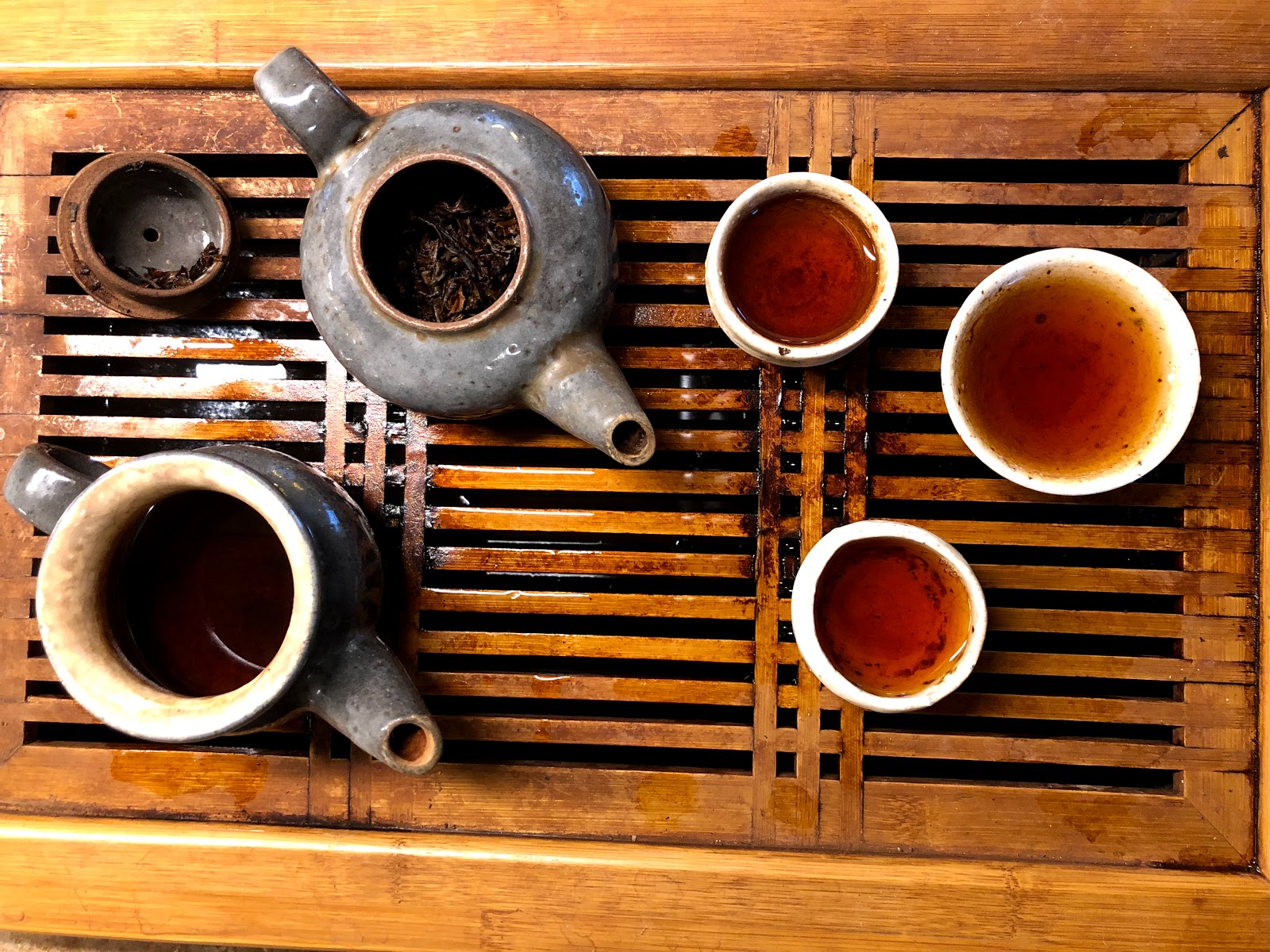
out this sample and having a great tea session… Sigh… I forgot I broke my old
small, cheap shui ping pot… and my other small volume David Louveau pot is
at work… well this will be a first aged puerh in this Korean ceramic pot …
with no other great option in mind…. Let’s do it! It is actually perfect volume for all the
sample!

The dry leaves smell of dry wood with a very faint odour of
distant fruit that is overwhelmed by a dusty odour. As the leaves hit the warm tea pot woody
notes and cherry almost orangy notes emerge.
The leaves seem medium-higher humidity stored with decent humidity
exposure likely Taiwanese stored.
First infusion has a smooth velvety creamy woody slight
orangy taste. The taste is deep, rich,
and coats the tongue, mouth, and throat with a slightly simulating, but thick
coating. It opens the mid throat
nicely. There is a nice cooling menthol
aftertaste present along with deeper dried cherries, orange peel, and wood. This tea imparts an immediate warming
penetrating qi and makes the mind release into immediate reassuring calm.
The second infusion starts to show that this is Menghai
Factory because even with significant age it still has an edge. It opens with chalky almost talc cherry fruits
and old dry wood, like that of an old library.
It has both a viscus feeling in the mouth as well as a slight
astringency. The astringency is enough
to push a gob of saliva up into the throat to entrap all the aged flavours of
aged camphor and oak, slight cream, distant cherry and talc. They sound simple in writing but deep in the
mouth.
The third infusion returns to a denser, richer presentation
with the more astringent aspects dropping slightly. The rich profile gives us deep layer, nuanced
aged wood taste, very slightly creamy edge, with cherry talc distant tastes and
a slight orange peel taste distant in the throat that follows aged wood and
slight menthol. The mouth and throat
feel are spot on for Menghai Factory of this age.
The fourth infusion has a lighter fruity burst initially
that was shrouded deep in richer wood tastes in the previous infusions. The wood tastes are drier and more astringent
in this infusion. This astringency seems
to capture more fruity tastes in the mouth.
The fruit tastes are distant, almost like dried cherries, orange peel,
and pomegranate. The shift in profile could
have been due to me fetching new water as well.
The fifth infusion is much the same as the fourth- dry wood,
talic, distant dried cherry, old aged wood in the library taste. Slight cooling even a mushroom like taste in
the finish which I’ve never encountered before in 7442. Has anyone out there ever tasted mushroom in
7542? Mouthfeel and throatfeel remain
full, slightly astringent. The qi is
big, nice, warming in the whole body, mind is very relaxed but sharp and
present. The strength is apparent as it
still seems to nudge the digestion. I
rest the leaves for 30 minutes…
The sixth infusion has a robust layered wood taste that is
very full in the mouth the high notes have again yielded to the aged wood. The mouthfeel is not as astringent here more
of a rich astringency. A chalky feeling
in the mouth with slight cooling in throat.

The seventh lightens up more than the sixth and is much the
same. I added 5 more seconds to the
flash infusion here.
The eighth infusion 10 seconds is added to the flash
infusion and it yields pretty much the same flavours as previous. Of note is still the strong menthol
aftertaste, full mouth- and throatfeeling.
There seems to be more fruit notes in the mid profile in this infusion. I step away for an hour or so then I’m back
to enjoy…

The ninth infusion tastes of wood and almost date fruit
taste. The sweeter fresher cherry taste
is gone in this infusion. Everything is deeper and more coalescent. Wood, slight dates, leather. The cooling sensation is less.
The tenth infusion is of woody, leather, aged taste. slight
cooling aftertaste in a full, slightly astringent/drying mouthfeel. The taste beyond this point is just basically
the above aged taste. When makes it
still enjoyable is the engaged mouthfeeling, almost sweetness as a counterpoint
to the deeper, earthier woody aged tastes and traces of a cooling aftertaste in
a simulating throat. As a result it can
play out for many many infusions much like this.
After a few more infusions I put this tea into long
overnight steepings and I am greeted to dried fruity, leathery wood infusions
the throat feel holds somewhat giving these longer infusions some depth. I enjoy this tea for the next few mornings
like this.
Overall, this 7542 has lost almost all traces of youth. I would image that this tea had heavier humid
storage for the first 10 years then it was direr stored. It has suggestion that this came from a
herbal medicine distributor in the 1990s with a slight aged herb feel- it is
possible. Nice tea for those who prefer
their 7542 with deeper humid storage and more of an aged taste and feel. This 7542 very much resembles the stuff I drank
years ago in Korean Puerh Tea Houses.

The shear amount of snow has really slowed down a place that
is used to having lots of snow. The
result is another perfect morning for a great tea session and just days from
the 1997, I sample this 1999.

The dry leaves smell of creamy fairly intense sweetness with
undertones of wood. The creamy rich
sweetness surprises me a bit. The leaves
are not as compressed as the 1997 and much much lighter and more vibrant. This 1999 is much more dry stored Kunming or
shrink wrapped or true dry storage.
The first infusion has a very creamy sweet initial taste
with notes of fruity wood that descends into very mild and creamy wood almost
talc like taste. The mouthfeeling is
light and thin creamy and talc. The aftertaste
is light on the breath with a very light cooling sweetness.

The second infusion’s initial taste dries the lips with
creamy sweet slightly astringent fruity wood flavor. The base taste is clean wood with a
noticeable undercurrent of creamy sweetness throughout. The vibrancy and creamy sweetness of this
7542 is quite nice. The cooling aftertaste is nice and strong the mildly
astringent mouth and throat feel hold it there and keep it on the breath.
The third infusion starts with a creamy sweet more cohesive
taste with the fruitier sweetness overtaking the creamy sweetness. This infusion tastes more broth-like, more
contained, more juice-like, with the fruit taste almost equal with wood tastes
here. The creaminess is still there
too. The dry wood tastes seems more
intense as the astringency continues to grow here. It’s not drying in the mouth or throat, its
medium astringency. A very noticeable
classic Menghai note of pine wood or resin start to develop.
The fourth infusion has the woody pine like notes dominating
now with the creamier sweet notes entrenched almost equally now. The pine comes initially then greats the
creamy sweet taste quickly. The
sweetness is long on the breath along with a bit of cooling. This is a classic 7542 profile. There is less talc and more cherry-plum
sweetness in this infusion now.
The fifth infusion has a cohesiveness pulling all the tastes
into one and they start to be more mild.
The aftertaste remains big with sweet creamy notes and an almost menthol
like pine taste. Overall the mouth and
throat feeling are easy to ignore- they are still very full but not
standoffish. The mouth- and throatfeel
have a full slightly powdery consistency with a medium astringency. This infusion also tastes puerh like almost camphory
in taste. The qi of this tea is not as
strong as other 7542 but it has a very cooling qi in the body not warming. This speaks to its still relative youth and
dry storage. In the body you can feel it
lingering in the stomach slightly.
Overall it’s relaxing and gives on a mild, focused mental sharpness.
The sixth is much the same as the fifth as all these tastes
pull together in the initial taste and following taste. These infusions have a plum and camphor
taste. There is also pine especially on
the breath. The aftertaste remains
active and evolving, the mouth- and throatfeeling unwavering. There is a talc taste on the breath minutes
later, lots of sweetness returning with coolness.
The seventh infusion you can taste a subtle smokiness, could
taste it very faintly in the sixth but more here. This infusion has much less sweetness and
more of a smoky woody taste throughout.
The aftertaste is mainly woody slight returning coolness. Not as much sweet here. Not as complex over the whole taste profile.

Eighth infusion I start adding 5 seconds to each subsequent
infusions and starts with a clear woody taste, slight, faint almost
flowery/powdery fruit taste. Cool
aftertaste with chalky finish sweet and creamy slight woody. Long aftertaste.
The ninth infusion I drop back to flash infusion and am
gifted with a very nice result that almost talc rose like sweet chalky taste
that is classic dry stored 7542 initially.
It slightly numbs the lips the evolution in the profile is complex,
interesting. Pine wood appears in the
aftertaste next to creamy sweet undertones.
The tenth I flash infuse again and the taste is much like
the ninth.
The eleventh another very enjoyable infusion that is just as
complex and very similar to the above.
I have to leave for work but I understand that these leaves
are at their prime right now in the infusion.
I throw them into a container and put them into my one cup Korean tea
maker at work but, I’m not sure if it’s the different, softer water there, the
exposure to cold, or the steeping vessel but I can’t keep the momentum going
with this tea. Infusions at work I start
adding more time to the infusions but get tastes of sweet creamy plum cherry
but more muted than before. Now mainly
the tastes are of wood with a still full mouthfeeling and nice astringency of
the throat which nicely hold the returning sweet menthol coolness.
The Qi really starts to build until it is almost of a
talkative, jittery type. Someone at work
asks, “Did you have coffer today?” Its
that type of intense factory style qi that lingers within these steepings. But
it really builds up very slowly to this point.
I steep this tea from morning to night and I am amazed at
the stamina of it. The throat feeling is
unwavering and the menthol like returning sweetness will not resign. This is a great example of dry stored 7542
and shares a certain resemblance to the Manghai Factory Qingbings I’ve sampled
in the past.

Comparison:
These two Menghai Factory 7542 are quite interesting to
compare. Only 2 years separate these two
identical recipes from identical factories, as far as puerh from 20 years ago
this is almost nothing. Meaning there is
no one I ever met, no teamaster, that could guess which puerh is older by
tasting a 19 year old and a 21 year old so this age difference, doesn’t mean
much. Although the price difference between
these two is more due to the age difference.
The huge difference between these near identical teas is
basically storage.
Neither is really better, it’s just a matter of preference.
I doubt that there are many readers out there who are going
to shell out the money for these full cakes but I highly recommend ordering the
samples. Especially if you are new to
puerh and want to see how different storage conditions effect a puerh 20 years
down the road. Or those drinkers out
there who have never experienced Menghai (Dayi) Factory back when it was still
great puerh.
I quite like the 1999 myself although just a bit out of my price range.
I quite like the 1999 myself although just a bit out of my price range.
Thanks Stephane for these memorable sessions.
Peace