Dear Stephane,
I remember your Teamasters Blog was one of three that I used to read
in the mid-2000s. Effectively you
inspired me with your posts to start MattCha’s Blog. Your enthusiasm, kindness, and passion for
transmitting what you have learned is contagious. Thanks for putting your passion into this as
well as the sale of teas that represent the extent of your tea knowledge.
Matt
When shopping for puerh Teamasters’ smaller curated selection is often overlooked in North America.
Certainly, I’m just as guilty as everybody else. Luck for me, Stephane, was quick to send some unsolicited
samples to this old blogger to try out.
I have been eagerly waiting for the cold winter to give them a try. The warming qi of a nicely aged puerh cannot compare on these early Winter days. I’ve tried Teamsters' puerh before and was quite impressed. For me Teamasters’ puerh usually has nicer
humid storage and usually has some quality aged offerings as well as a few more humid stored everyday drinkers. This sample is one such example of the former. At $750.00 per 500g brick or $20.00/12gsample, it offers us a glimpse of what puerh at this level, age, and storage
should look like. Let’s indulge, shall
we…

Stephane describes the origins of this tea as follows: This special order from Hong Kong to CNNP was made in 1995 in one of the state factories since the market hadn't been liberalized, yet. There's no neifei or neipiao to tell us which factory it comes from, though.
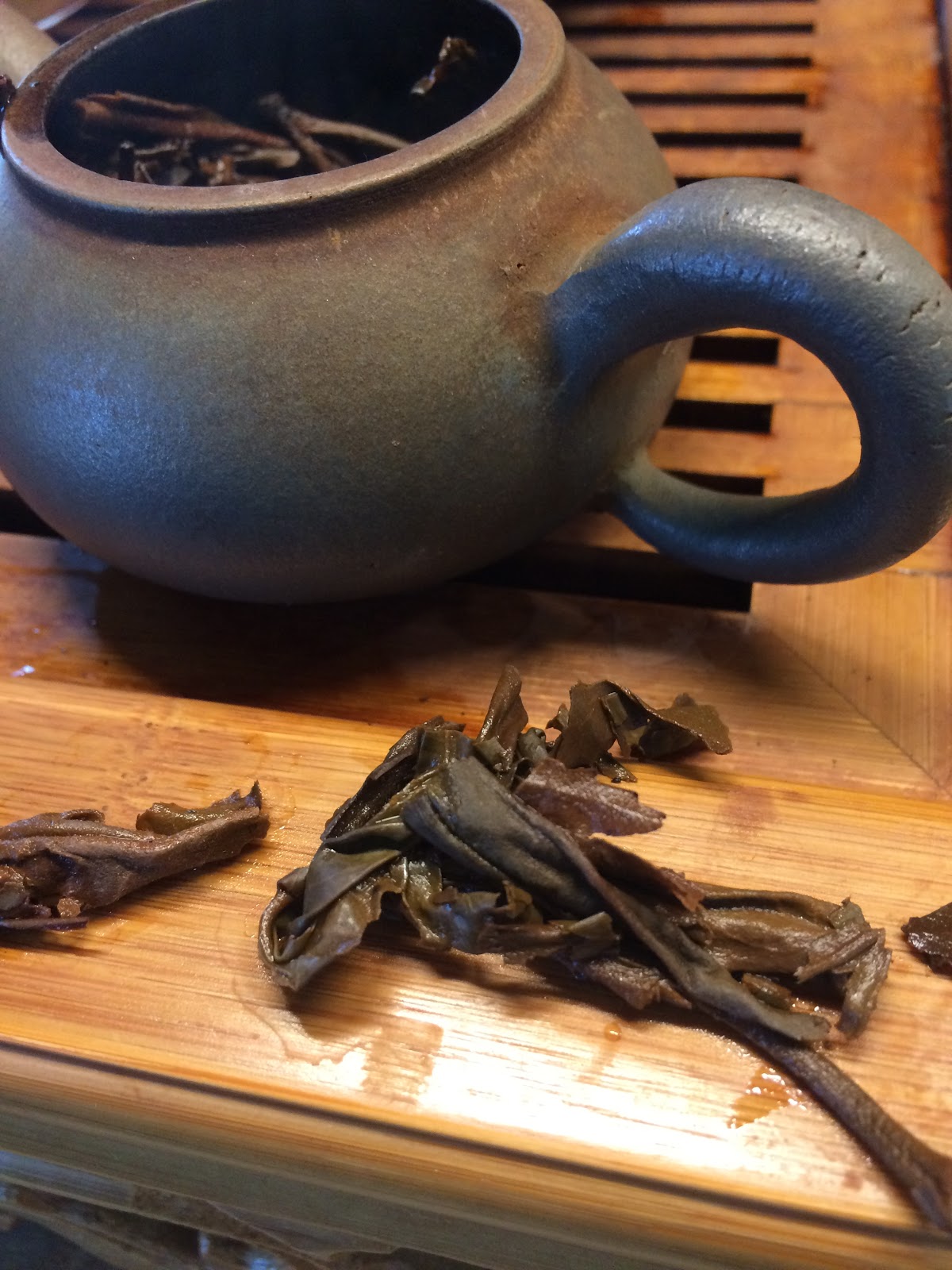
The dry leaves smell of soft fruity and deep aged puerh
forest and dirt depth. The odour of the
dry leaves immediately give away that this tea is should have lots of complexity
to it. It smells of clean medium humid
dry storage with lots of fresh depth.

The first infusion has a very smooth buttery sweetness. There are deep aged tastes with some suggestions
of dried fruits in a very rich thick and viscus broth. The mouthfeel is immediately thick like
syrup. It finishes lightly fruity with
strong viscus depth. There is a nice
soft cooling in the mouth with indications of vanilla and rum. You can feel the warm qi building in the
chest and calming the mind.
The second infusion starts off more woody, and slowly transitions
into more of a richness, a deep aged puerh taste. There is a nice lightness that creates a
beautiful dichotomy of thick rich depth and suggestions of syrupy fruit underneath. The aftertaste is long the throat feel is
lubricating and nice.

The third infusion has a pronounced wood note and a cooling
aftertaste. The mouthfeel is very nice
and full with a nice finish of cooling throatiness. There is less indication of fruitiness here
and more deep thick aged puerh taste.
This infusion releases a nice euphoric head feeling.
The fourth infusion has a more of an earthy, dirt taste to
it. The aftertaste has a nice rich
returning sweetness that has a very aged lighter fruit taste over a nice deep
cooling. There is a certain taste to
this infusion that I have a hard time describing almost like a brandy taste to
it.
The fifth infusion has a nice lively fruitiness to it
balanced with deep aged puerh tastes. The
tastes are really nice here with the fruity tastes almost as distinct as the
woody-camphor aged puerh tastes. The
throatiness of this tea is significant and hold the aftertaste nicely. The qi here induces nice euphoria- I feel on
top of the world.
The sixth infusion has
more of a woody camphor taste to it, the brandy alcholol note is in there now
too. The fruit tastes are gone now with just a ghost on the breathe with a slight
bread taste as well.
The seveth is much the same as the sixth but now has a
smoother compete taste there are hints of vanilla here.
The eighth has a high noted wood initial taste, I think this
would be the way to describe it. Then is
smooths out over the profile and matains a deep wood taste. The aftertaste is nicely cooling. Straight camphor through and through in this
infusion.
The ninth infusion again has some hints of fruit under the
woody depth. This tea really goes back
and forth infusion to infusion showing off its complexity and depth.

Tenth once again presents light elements in dark. The eleventh is quite smooth too. Vanilla, camphor, woody, slight earthy dirt,
a nice soft cool returning breathfeel.
Very smooth.
The twelveth has some buttery brown sugar notes in there as
well. There is a fresh robust taste to
this infusion with touches of vanilla in the breath. Mmmmmm… There is just as much compexitiy here
than in the earlier infusions but the flavors are much more conhesive. This tea has a nice rhythm to it.
The fourteenth infusion seems to offer basic woody tastes in
a smooth mouth- throatfeel. The
fifteenth is more fruity and cincentracted all the while maintaing that aged
wood taste. Sixteenth has a deep depth
of slightly different woody tastes here.
The seventh and eighteenth hold the line hear with light
woody almost fruit tastes with a cooling aftertaste.
The nineteeth onward is pretty much just light camphory
tastes with a cooling aftertaste and still somewhat full mouthfeeling. What’s not to enjoy about this puerh?
I like how this tea pulls off the fruity lightness of Yiwu
with the deeper aged tastes. It really
makes for a brilliant tea. Overall there
is much complexity to be found infusion to infusion. The storage would be a medium-dry humid storage
to me which I think has done this tea well in maintaining some high notes amongst manly just deep aged tastes.
Peace