Sunday, June 27, 2021

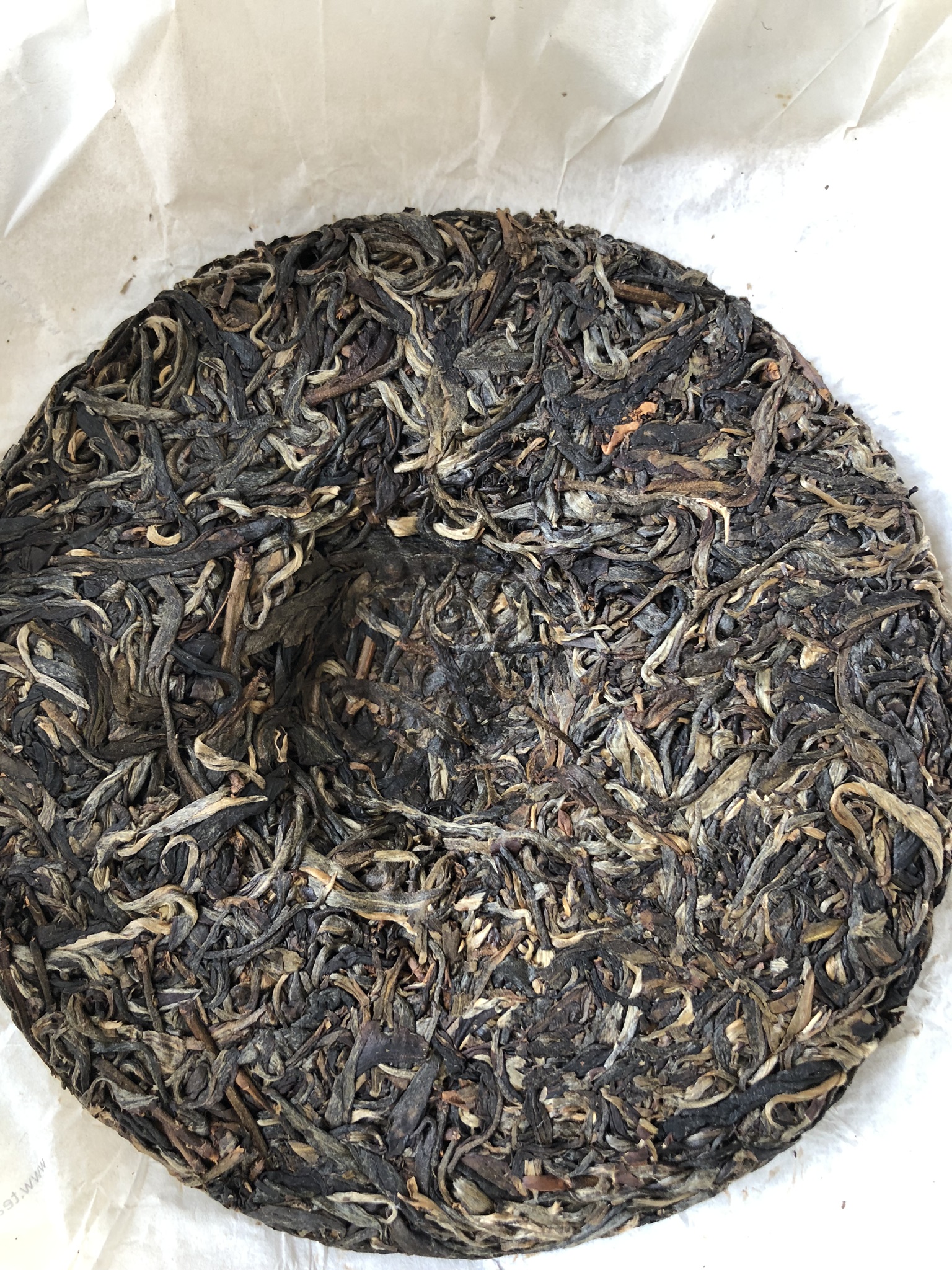
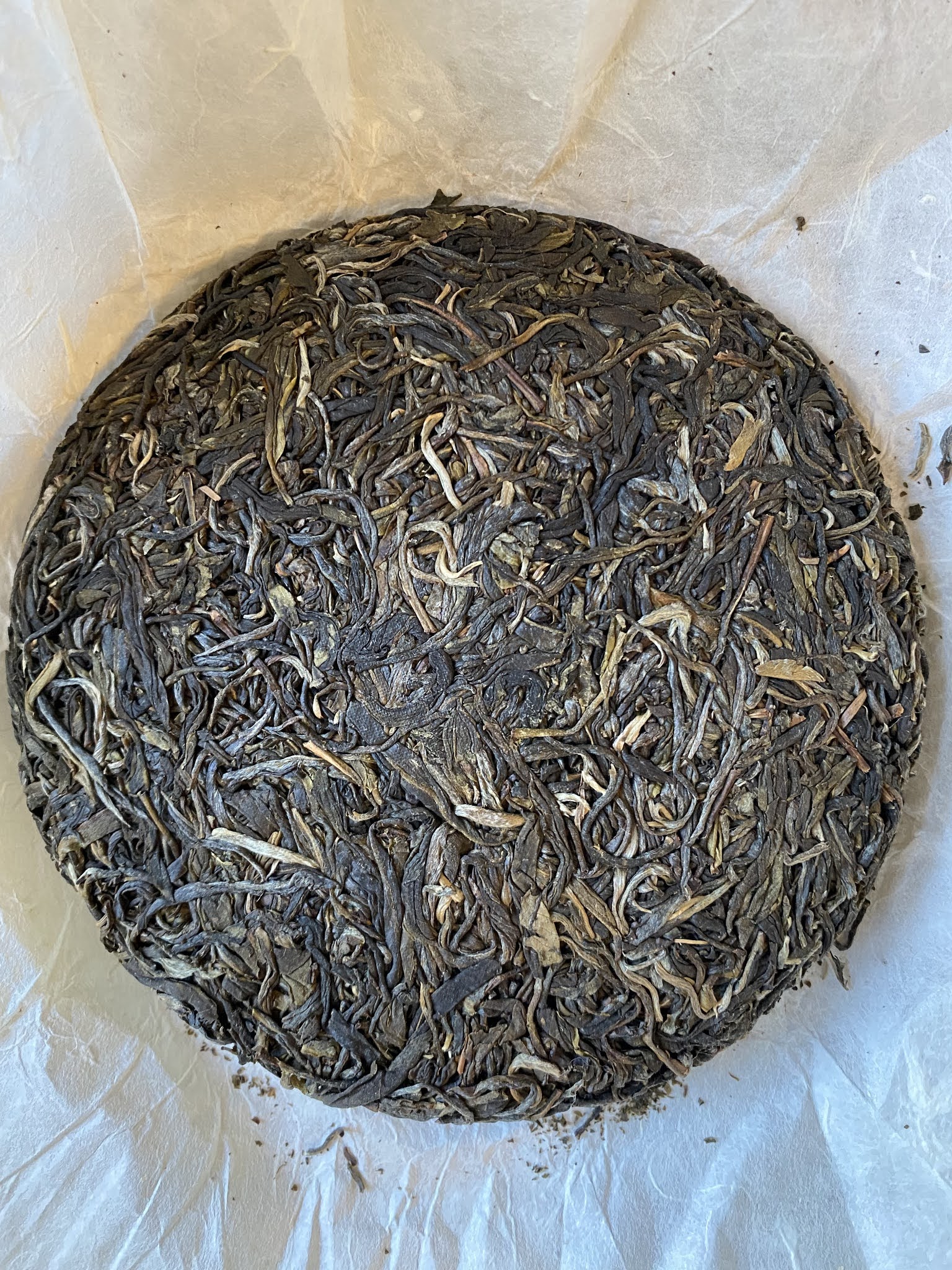
2014 Spring Tea Urchin Xi Kong: Tobacco-ey and Delicious


(The following notes are from back in 2019 when I blind purchased a cake)

This 2014 Tea Urchin Xikong goes for $107.00 for 200g cake or $0.54/g.

Dry leaves smell of tobacco, distant wildflower sweetness, and dry wood and plum fruits.  The odour is very layered and complex.  I would have thought this to be a blend, but, I’ve never tried Xi Kong village before… well I have tried lots of Yi Bang… this one smells of the old production of Douji… very comforting indeed…

The first infusion starts off with dense popping fruity berries, followed a pop of dark coco and a wave to coolness.  Woody tastes, plum, and tobacco make up the complex undercurrent of this puerh.  There is almost a Concord grape jelly aftertaste.  The depth of high, medium, and low notes make this puerh terribly complex even in the first flash infusion.

The second infusion is dense thick blueberries, wood, tobacco, the flavours barrage me and I have a hard time sorting them out.  The liquor is dense and mouth and throat feeling strong slightly drying but very full.  There is a bitter edge of dark coco tobacco, wood, long juicy blueberry or grape jelly finish with many layers.  The Qi is very strong, mind racing, frenzied, and also very hypnotic feeling.

The third infusion has an intensely fruity onset.  It’s layered with woods, berries, cherries, blackcurrents, grape, plum- darker fruit tastes.  Tobacco, coco, the almost smokey tobacco, slight bitterness, moderate throat and mouth dryness that is not off putting.  This tea is pretty good… how can Xi kong be any better?


The fourth infusion starts with heavy dark fruit taste, layers of wood and tobacco.  There is a bitter coco pop and then long layered dark fruity sweetness.  The mouthfeel is tight almost drying and the throat feeling is very deep.

The fifth has more vibrant mid-to high fruit berries layered into dark fruits.  This infusion is especially layed with complex fruits. Long dark bitter coco and tobacco some wood.  The Qi is very strong in this puerh- it gives the mind and Heart a very significant bump.  Strong intense, racing euphoria, stoner Qi.

The sixth infusion has lots of fruits to start, slight sour peel, slight tart.  There are the tastes of sweet, tart, bitter, that barrage you at the same time really.  Even a subtle savory note can be found in here.  The pungent cooling is mild and mainly on the inhale.  The chokecherry tartness is more obvious as well as the coco bitterness.  The qi is really enjoyable.

The seventh infusion has more of a syrupy chokecherry syrup onset the mouthfeel is very simulating and astringent.  There is lots of puckering, the aftertaste is fainter but an obvious creamy fruit note linger long on the breath even minutes later.

The eighth infusion has a powerful bitter wildflower entry layered with dark dry wood.  The astringency and mouth and throat simulation is something to note.  The power of this tea likely means you can use much less leaf and probably get a lot from it.

The ninth infusion starts with a fruity light fruit and bitter coco onset.  The bitter coco trails off in the profile leaving fruits behind.  I love this energy in the puerh.

The tenth infusion delivers berries, dark honey, woods in a distinct coco base,

The eleventh has lots of berries in there as well as coco a velvety mouthfeeling and throat feeling is developing around coco, wood, subtle tobacco, lots of deep fruits.  Qi is hypnotic.

The 12th and 13th infusions start with an apricot fruit sweetness now which dominates with coco, wood, wildflowers, tart, this puerh is very nicely flavoured.  Slight almost coco/ coffee bitterness. Great mouth/ throatfeel and amazing qi.  Despite this it is not harsh on the body

14th, 15th , are slight apricot fruit, wood, coco, tart finish.. yummy… A nice movement through the whole session as well.


This tea somewhat reminds me of the now unaffordable early house taste of Douji blends- tobacco and woods and sweet.  I’m fond of this, very, very fond of this display in a puerh.  But yet it’s a single estate thingy not a factory production.  I like this one.

Steepster Tasting Notes

TeaDB’s Tasting Notes

Peace

Tea Urchin Upcoming Price Increase

Okay people… the party is over…

The western facing puerh vendor Tea Urchin emerged after production methods for gushu type teas were really set and as puerh areas began to explore smaller sub areas (2011-2012).  They offer a really clean and crisp and modern gushu-esque style that is focuses on harmonious yet vibrantly energetic puerh with a clear flavor and profile that is never harsh.  They mainly have single estate but also very clear, simple and purposeful blends.  They made regions like Xi Kong, Lao Man E, and Wan Gong common for many a Western puerh drinker that had not known of these profiles before.  They also introduced us to other small factories that filled gaps in there catalogue.

Since I started re-stocking my puerh 4 years ago 90% of the prices on this site have remained basically unchanged.  This was especially true of their very delicious 2014 production year that has not had a price increase. In fact, with the price of the Canadian Dollar and some irregular sales you could even get this stuff cheaper than when they released it years before.  They still even have that 10$ flat shipping even with shipping prices going through the roof lately!  I have irregularly sampled and purchased from here throughout those years.  There is even some I blind caked.  However, starting in July Belle and Eugene will finally increase their prices.  

I had said in the past that they have sold out of their more famous and popular productions but that there is still decent stuff to be found for more than reasonable prices.  Especially the 2010-2014 productions where the price to quality ratios for these regions hadn’t yet become overinflated.  Over the years I have done a poor job of posting Tea Urchin samples (see here for the ones I posted) but hope to get a few up in the next days here for those who want to get a better idea of what their stuff is really about.  Even better idea would be to sample heavily yourself…

Peace

Saturday, June 26, 2021

What is “Forest Tea” or “Forest Puerh”?

 Over the last few years there has been more and more puerh being labeled as “Forest Tea” or “Forest Puerh”.  I find this supper strange because this terminology was never used to describe puerh until rather recently although lots of puerh has always been picked from forests.

I first heard of “Forest tea” when Shah8 introduced me to the concept in the comments in this post here.  I set out to try a few samples and try to come up with my own impression of what “Forest Tea” is.  Below are my thoughts and conclusions based on only a handful of samples.

1- “Forest Tea” or “Forest Puerh” is actually not puerh or at least is composed of a majority of leaves that are not conventional varietal puerh leaves.  Although it’s processed like puerh I believe “Forest tea” mainly consists of wild tea varietals and not conventional puerh materials.

2- If it’s mainly just Yesheng or “wild tea” (aka “wild puerh”) then why not just call it what it is which is “wild tea”? Notice that people and not many vendors are using the term wild tea or Yesheng ? I think it may have dropped out of style as people have realized that it is not puerh and doesn’t really age like puerh? I’m not sure?  Either way it seems to me to be trendy tea speak to market tea.

3-  But Yesheng puerh is different than “Forest Tea”!  All the Yesheng or wild tea that I have tried have consistent material- all one same varietal pressed into the cake.  However most of the “Forest Tea” I have tried have a blend of different looking leaves.

4- I believe the method of picking “Forest Tea” is different than picking wild tea and puerh teas.  When wild tea or puerh tea is picked certain varietals are targeted and that targeted varietal, either the conventional varietal for puerh tea or wild varietal for Yesheng/ wild tea, is 100% of the material in the cake.  However, Forest teas seem to be different in that all tea-like varietals within a specific Forest area are all picked at the same time and processed together without blending or sorting.  You can see evidence of this if you look at the spent leaves.  The result is a sampling of the actual tea ecosystem rather than a selection of a specific varietal within that ecosystem.  In this way there is a blend of tea like materials within the cake but they are not purposefully blended.  Often the tea is picked over a very spread out area of forest as well adding to the variety of the end product.

4- “Forest Tea” seems like it might follow from the pure Forest movement of puerh.  That is the movement of certain vendors and producers to find more pure and relative untouched tea growing in natural and untouched environments.  As groves of conventional puerh become popularized these vendors are turning to “Forest Tea”.  In this way Forest Tea is also a philosophical puerh movement.

Below is a list of “Forest Tea” posts, all great teas, but I wouldn’t call them great puerh…

2012 Yang Qing Hao Yeh Gu- this seems to be a very good and very early example of Forest Tea.  I purchased a single cake when they significantly dropped the price on this one.

2016 Yang Qing Hao Wujin Cang- a less intense, younger, and cheaper version of yehgu.  This one has more leathery tastes and less complexity than yehgu but more bang for your buck.

2020 Puerist Youle Forest Tea- bitter and intense cocktail of powerful energy.  Very wild tea varietal tasting.

Similarities are that they are all quite bitter, they all have an intense energy,  they all have complex sweetness and floral and bitter profile.  There is sometimes a certain emptiness or compartmentalized taste that puerh doesn’t have.  They all have very good stamina and can easily go 20 steeps.   

Peace

Friday, June 25, 2021

2020 Puerist You Le “Forest Tea” vs 2020 Puerist Yiwu #8


This is my last in a series of samples to try to understand and define the concept of “Forest Tea Puerh” after Shah8 introduced the concept in this post on 2012 Yang Qing Hao Yegu (also see 2016 Yang Qing Hao Wujin Cang and 2020 Puerist Yiwu #8 below).  This 2020 Puerist Youle “Forest Tea” goes for approx. $96.00 for 200g cake or$0.48/g- I purchased a sample in my last Puerist purchase to further educate myself on “forest tea” and to compare to other Youle area tea.

The dry leaves smell of very creamy, airy, almost turnip but very creamy sweet.  Strangely this one doesn’t smell of strong florals typical of Youle.

The first infusion has a pungent spicy grassy floral woody coolness in the breath.  It tastes almost green tea like in its finish.  There is an airy pungency to this one with a watery very mild tongue coating, a watery oily feeling and very deep throat where a cooling taste but not that much retuning sweetness resides.  The Qi is apparent immediately and is strong.  A fresh grass and coolness lingers on the breath with only mild sweetness.

The second infusion has a lips tingling pungency very faint and very quick moving bitter that is hard to even spot it follow pops of cherry sweetness and pungent sweetness.  The base tastes is almost rubbery grassy woody.  It kind of tastes like a wild and conventional variety blend.  For sure the wild tea material is more obviously apparent in this “forest tea”.  There is a watery almost oily feeling that turns to a chalky density on the tongue and the throat is very deep and cool.  Strong Qi sensations rule with this very wild tea like thingy- strong intense energy in the chest.  There is an unusual power to the Youle “forest tea”.

The third infusion has a woody, floral rubbery, quick very very hard to spot mild bitter that make a cherry like taste pop in the mouth.  The rubbery aftertaste is a sign of wild tea material being pretty heavy in here along with the lack of typical retuning sweetness and aftertaste.  This is basically unrecognizable as Youle terroir for me.  Very different, very wild tea, very tasty but not that conventional puerh like.  The cooled cup reveals lots of candy almost caramel finish.  The complexity in the forest tea blends are their strength for sure!  There is also a huge body feeling and intense energy vibrating throughout my body.


The fourth infusion has a strong start fruity, cherry like burst of intense fruity taste that is pushes out by a faint bitter.  There is that rubbery wild tea base taste and aftertaste that signal a strong wild tea like composition.  But man… is the energy of the wild tea electric… intense energy bursts, racing heart beats, strong shoulder especially in the front of the shoulders release… lots of intense and vibrant energies and bodyfeelings.  It’s an intense experience.  Like ingesting a cocktail of tea like drugs.

The fifth infusion has a very cherry bitter floral bitter star-fruity wild tea like intensity to the taste.  The taste is balanced nicely between bitter and sweet with a saliva producing and deep throat opening.  The mouthfeeling is thin and tight with a developing density and rubbery woody floral wild tea strong character.  Intense heart, shoulder, crazy bodyfeelings and intensity… wow!

The sixth infusion has a creamy bitter buttery floral pop of cherry with a tight mouthfeel and grassy-rubbery woody wild tea finish in the mouth.  The Qi is making my head explode!  Hahahhah strong intense bodyfeelings in chest, and across the front of the shoulders like a consiricting feeling.  Grassy almost sweet aftertaste.

The seventh has a strong berry and juicy bitter taste with intense returning flavors of dragon fruits.  The mouthfeeling is thin a tight with an mild oily liquid and a throatfeeling that is disappearing as well as the coolness in the throat.  Feels about mid-throat at this point in the session.  Nice vigorous ground shaking Qi.   Very intense and transformative experience.

The 8th is strong fruity rubber berry taste of wild tea it has a grassy finish to it, a bit bready, star-fruity, berry pops after the quick bitter.  Very intense Qi in body and mind.  Rubbery, grassy, not that sweet finish in mouth.

9th has a strong savoury grassy bitter with more of a low lying sweetness over a thin sandy tongue and lips coating with a tighter upper throat.  Slight coolness with rubbery tastes….

10th begins with a stronger but quick moving bitterness which brings out berry sweetness over a thin sandy mouthfeeling with a certain tightness of the lips and tongue.  The throat feel is loosing strength slowly and much less coolness resides there.  The Qi is just really really big … really really intense… it feels like my heart is exploding in my chest and I’m riding a serious high for hours after…

Not expecting my daily tea session to go into the heavens of intensity, I am left no other chose to back away and approach with caution tomorrow…

11th is resumed after the wet leaves have rested in the pot overnight… and it comes off as very light and floral with a nice melon taste and a rubbery vacuous wild tea taste.  The mouthfeel has softened quite a bit.  Strong energy courses through the body.

The 12th has strong melon and fruity florals over a quick moving bitterness and mild tight dense mouthfeeling.  There is that rubbery floral wild tea nuance to it.  But lots of flavor and of course lots of chest pounding and intense energy rushing throughout the body.  This is some strong stimulating energy here even the next day.

The 13th has strong fruity floral intense fruity even layered creamy flavored fruit tastes.  The cooled cup and nice long caramel sweetness.  There is some complexity and lots of stamina in these leaves.  Strong energy explosion here.  Faint coolness and long rubbery fruity floral finish.

The 14th is also cooled and gives off a very vibrant and flavourful soup of florals, startfruits, long sweet tastes that goes deep into the throat with a mild cooling and has a bread-like sweetness in the aftertaste.  There is a very subtle bitter astringency. 

The 15th is left to cool and gives off lots of fruity melon tastes up from that turn to floral and woody and a kind of brackish mild bitter then to long faint cooling in the throat.  There is that long floral/bread note faintly skirting around.  The Qi is starting to be relaxing.  The stamina of this wild tea is long for sure.

The 16th infusion has a very vibrant fruity intense tasting mild quick moving bitter pop of taste in the mouth.  The mouthfeel is a thin density to it.  Long aftertaste of rubbery woody.

This ones seems to go one forever!  I put the remaining leaves in a mug to steep out.
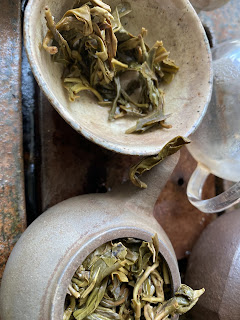


Overall, this is very much wild tea in taste, Qi and feeling with not much typical Youle feeling or taste at all…  It compares nicely to 2020 Puerist Yiwu #8 which I purchased a few cakes of…

The following are notes from a similar 2020 Puerist Yiwu #8 which goes for $175.00 for 200g or $0.88/g. I sampled the fresh maocha last year.  These are my notes from last week…


Dry leaves smell of intense forest sweet candy.

The first infusion has a creamy sweet familiar Yiwu sweetness upfront there is some woody taste underneath but a very deep cooling throat which pulls the aftertaste along into grassy almost melon floral taste.  The mouthfeel is nice with a full dense chalkiness and the throat is deep.  Very smooth and soothing feeling initially in the body and mind.  The colour of the liquor is more deeply yellow than the Youle.

The second infusion has a soft onset of Yiwu like sweetness over faint woody with a grassy taste coming out deep smooth cooling throat and a base level of mild bitterness there is a smooth vigorous bread-like sweet finish that lingers in the breath and a strong saliva producing effect in the mouth.  The Qi is really big starting to make the mind stuffy and large.  Arms can feel the effect.  There is sour tastes and woody tastes and grassy-forest tastes and bitter tastes.  The effect is complex with an interesting dichotomy of smooth soothing energy and underlying and building power.

The third infusion has a strong onset of sweet creamy Yiwu sweetness a berry sweet taste with an undercurrent of building bitterness that makes the berries pop.  There is a strong dense mouthfeeling and very deep throat subtle coolness.  A strong intense euphoria shakes out of this one.
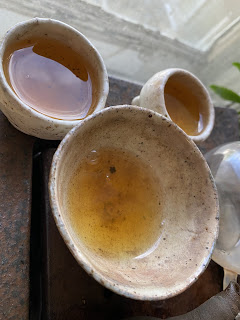


The fourth has a strong popping berry taste that follows the initial quick moving bitterness with a nice base of grassy and bready sweetness, wood, fruity berries.  The mouthfeeling is dense and throat very deep. Sqeekey gums and long breath almost floral berries and bread and grass.  Nice euphoria takes hold with some stronger bodyfeeling.

The 5th is a cooled down cup but is smoother creamy and deeper layered fruity in the cup with an almost caramel edge with a long deep throat coolness over a gradually building density in the mouth.  There is some grassy undertones as well as woody but more of a playing out of complex sweetnesses over a really good tongue coating and deep throatiness.  Nice big euphoria engulfs me.

The 6th has a juicy fruity bitter with a creamy complex fruity presentation.  There is lots of complexity in here- breads, grasses, wood, floral, melon, and berries.  The tongue coating is interesting in that it kind of slowly becomes denser as you swallow.  The broth is nicely oily and the throatfeeling is deep.  The Qi is strong in the chest but also calming and focusing and euphoric.  This puerh feels nice in the body and mind if not slowly building in intensity.

The 7th has a quick bitter onset with floral caramel, berries, bread, melon, bitterness, grass, woods- its complex the dense chalky tongue coating and deep throat with saliva producing effect is really good. It finishes kind of woody oily minutes later.

The 8th is very sweet with a quick bitter pushing berries, melon tastes along the tongue.  Nice complex layered sweetnesses.  Nice euphoria too.  Chalky tongue coating and deep throat.  High floating feeling.

9th has a strong fruity onset with layered sweet, floral, grass, woody long creamy sweet returning saliva over the tongue over a chalky tongue coating.  Lots of saliva producing effect.  Nice strong focusing. energy.  Relaxing body effect.

10th has a fruity sweet creamy sweet bready onset over a full dense tongue and deep throat and returning saliva.  There is a mild bitterness to this infusion.  Very bread sweet creamy finish in mouth.  Nice hypnotic euphoria takes hold.

11th. … I have no choice but to mug steep out over a few days and is much more conventional puerh varietal in there in taste and feel but still a bit wild tea in there.  Very vibrant and sweet tastes remain.  This Yiwu #8 has a certain vibrancy that I find alluring.  Sometimes I’ve tried this and its more bitter other times its more sweet… I think it has an interesting and vibrant blend of material from that forest and feels really interesting to me.  A good young example of something that might be “forest tea” and something I’m curious about aging out.
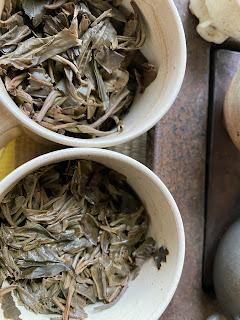


To compare the two they both have some similar taste in that they have a distinct bitterness to them that quickly gives way to vibrant sweetness.  The 2020 Puerist Youle “Forest Tea” has an obvious wild tea profile / wild tea varietal and is actually quite a bit more bitter than the 2020 Puerist Yiwu #8 where the Yiwu #8 is more sweet and savory and closer to the conventional puerh varietal.  The 2020 Puerist Youle has an overwhelmingly powerful Qi, almost chaotic at times where the 2020 Puerist Yiwu #8 is both intense but also focusing and euphoric.  They are both pretty intense and interesting experiences.

Peace

Wednesday, June 23, 2021

2018 Puerist Youle (Ya Nou): A Powerful Youle

This is an interesting Youle for me because it was deliberately sourced by Mark to age based on his tastings of other aged Youle from the same famer and garden specifically in 2013.  This is opposed to most of the other Youle that we in the West have been exposed to that are more for drinking now.  I purchased a sample of this 2018 Puerist Youle which goes for approx. $83.00 for 200g or $0.42/g in my last order from Purist…

Dry leaves a very floral and fruity and sweet and have the odour of fresh grapes almost aritifical grape candy sweetness.

First infusion has a strong buttery floral sweetness in it that has a certain long dense thickness to it and goes deep into the throat like sticky butter.  There is an initial pop of fruity grape then a long thick buttery floral that fades out long and slowly in the throat and breath.

The second infusion has a strong push of heavy fruity buttercup floral thickness that goes the distance in the mouth, throat, and aftertaste breath.  The throat feeling is deep and is stimulated by a faint veil of very mild astringency that pushes saliva on to the tongue.  The mouthfeeling is a thin very full coating dryness.  The Qi is warming and strong and warms the face and relaxes.  The bodyfeel is specific in the face- it feels kind of tingling.

The third infusion has a really thick buttery floral taste with a very sunny fruity thick taste and mid-deep throat.  There is a very faint astringency that pulls saliva over the tongue and extends the taste into the aftertaste with a nice almost bread like and even melon and grain like glimpses.  Very fresh thick floral buttery sweetness.  The mouthfeel is a very full but thin almost dryness.  A strong peachy odour and faint taste is also found throughout the profile.  The Qi is warming in the face with a free spirit and mind like effect.


The fourth infusion has this thick juicy peachy grape burst of taste with a long fragrant floral finish.  Thick oily texture with mid-deep throat and strong saliva producing astringency gives this Youle strength and power.  The taste is long and thick and turns almost into a apricot bread taste.  The Qi is pretty warming and the face feels subtle numbness and the heart starts to race.  There is enough astringency in here that it starts to turn on my empty stomach.

The fifth infusion is left to cool but has a strong floral fruitiness, and buttery taste and with an astringency that continues to increase.  There is a really full almost tight dry mouthfeeling with a very oily viscus mouthfeeling and returning saliva.   Strong enlivening Qi with face sensation and Heart sensations.

The sixth infusion has a less thick fruity floral presentation.  There is some subtle throat coolness and a full thin tight mouthfeeling that works well with a mid-to-upper throat opening and saliva simulating throat. 

The seventh has a bitter astringency to it.  Very thick fruity floral taste, very very fragrant buttery sweet fragrant.  The mouthfeeling is really good.  Very full but thin but kind of tight.  There is a coolness developing.

The 8th is very oily and much more floral buttery.  The floral taste is really strong and interestingly interacts with the strong mouth and throat presence.  The cooled cup gives off a more bitter melon type of taste which is kind of unexpected.  The taste is strong either way, thick, a bit of astringency.

The 9th has a bitter melon floral type taste to it with a bit of bitter astringency over there is a distinctly floral melon taste to it. The flat mouthfeel is still there but not as much throat feeling and less cooling and saliva producing now too.

The 10th has a bitter coco and strong floral initial taste with a melon, floral, fruity coco finish.  There is a full but thin tight tongue coating and a deep cool throat feeling.

The 11th is bitter coco with a creamy floral onset that stretches over the full thin almost tight mouthfeeling and into a subtle coolness.


The mug steepings are a thick heavy bitter coco deep floral.  This is a super strong and interesting Youle.  The teeth are squeaky and the mind very sedate.  The aftertaste lingers for a long time in the mouth.

This is the most powerful Youle I have sampled since this 2013 Pu-erh.sk Youle.  It is less refined than this one but has lots of power, mouth, and throat presence.  It’s a nice Youle for the price for sure one for aging.

Peace

Sunday, June 20, 2021

What about Youle???

 Why does the Western puerh scene not value Youle area puerh compared to other Six Famous Mountain puerh? After blind sampling this 2010 Youle Gushu from TeasWeLike last Summer and really appreciating its complexities- I started to ponder this.

I guess some of the reason that Youle doesn’t get the respect it deserves in the West is because it was widely written off of as an area of “drink now puerh” by many Western puerh drinkers in the early days.  I am as guilty of this as the rest!   Some of my first exposures to Youle were examples from Douji that had a complex new style factory nuance to them but many more early Western puerh drinkers were influenced by Scott’s real delicious light Youle puerh.  Even Scott seems to concede that he enjoys his Youle puerh when young. David of Essence of Tea seems to imply that this is simply due to a lack of old trees of high quality in the area.  Maybe there isn’t enough interesting complex examples of Youle out there?

Another reason why Youle doesn’t seem to get the same respect in the West is because it isn’t commonly offered by Western puerh vendors.  Not sure if this is a chicken-egg thing happening here ? but it seems to be true.  The common idea that Youle puerh is better young than aged is perpetuated by fact that there have been so few Youle semi aged or aged puerh for sale by Western vendors over the years.

Anyways, it’s good to see more Western vendors selling Youle and even semi-aged and aged Youle. There is that one at TeasWeLike, Scott and Xiao Yao have 5 on their site- some more humid aged examples, a Gushu from Hailanghao, and the three of his own brand which I have tried.  I look forward to sampling that 2021 from the Essence of Tea which is on its way.  Also, Puerist has a few interesting Youle as well. I really do like to appreciate the qualities of a nice Youle even though I still have not cracked for a cake yet.

Expect to see some interesting young Youle in the next week or so on the blog as well as some samples from the Essence of Tea.

Peace

Saturday, June 5, 2021

2021 Puerist Ban Pen Maocha: Lao Ban Zhang-ish Power


Ban Pen is an area that is really overshadowed by its close neighbour Lao Ban Zhang.  Its also notoriously known as one of the area ingredients (along with Lao Man E) to fake a Lao Ban Zhang.  However, like any area, it has its own merits that are often overlooked… I look to not overlook…

On this unseasonably hot 31C early June day I go for something that is reeeeaaaaally fresh...

Dry leaf smells of intense very grape deep sweetness.  Very sweet and very grape… a bit too fresh for 2020 (this is actually fresh 2021 maocha!).

The first infusion has a buttercup shining sweetness with an underlying woody taste and returning grape sweetness.  There is a faint cooling in the mid throat and a saliva producing effect in the mouth.  There is a bit of underlying bitterness that moves into that grape sweetness with rubber/wood underlying.  The mouthfeel is a fine sandy feeling in the mouth.  It tastes really vibrantly fresh.

The second infusion has a quick moving vegetal bitterness that moves to a mild saliva producing grape sweetness in the mouth.  There is a strong floral presence with this taste that says throughout the profile.  The mouthfeeling is thin and slightly sandy with a saliva producing effect almost being trapped in the mid-throat.  There is a muscatel sweetness and grape skin pucker going on here that reminds me of a good Darjeeling.  The aftertaste is long with grape, bitter, rubber, florals stretching out for minutes later.  The Qi is felt in the Chest and in the mind with a spacy expanding energy.

The third has a strong bitter onset with an underlying floral and grape sweetness.  The bitterness is strong and overpowering here, a bit astringent and really pushes my empty stomach reminding me it’s time for breakfast.  I am also pushed into a euphoric state by the overtaking Qi- my Heart races.  A flat thin kind of griping tongue coating.  Bitter but also nicely floral sweet.

The fourth infusion has a very vibrantly floral grape sweetness that comes after a moderately strong quick moving bitterness.  There is the splash of vibrant flavours.  This infusion has a brilliant and clear pure balance of quick moving bitterness and strong returning floral muscatel sweetness.  There is underlying woody rubber taste, flat tongue coating and long floral aftertaste.  The Qi is big and euphoric in the mind.  There is strong bodyfeeling in the shoulders and arms almost pulsing throbbing.  The length of the floral aftertaste is notable.

The fifth infusion has a vibrant lemon peel bitterness that quickly moves to a floral grape skin fruit taste. The bitterness is moderate strong- to strong and has a quick reversal to a long floral finish in the mouth.  Chest Qi with limbs floating and throbbing.  There is a flat sticky tongue coating with some faint saliva producing in the upper throat.


The sixth infusion offers an almost gamey pungent barnyard not as bitter but also not as sweet.  There are more subtle florals and white grape skill tastes over a flat sticky tongue coating and faint upper throat opening.  Qi is quieting in the mind with Chest and limb bodyfeelings.

The seventh infusion has a mild-moderate quick moving bitterness that transforms into strong more pungent florals and grape skin fruitiness.  The mouthfeeling is a touch gripping but the throat sensation is nice and deeper into the mid-throat.  The Qi has taken me places and it starts to soften and relax just a bit but still euphoria reigns.

The eighth has a buttercup and gamey tastes that come out after quick moving bitterness that turns to gamey floral notes.  A flat sticky tongue coating and fading floral finish.  There is a relaxing bodyfeeling now.  Soothing and tranquil.  Shoulders and arms feel like they are floating or separating from my body.

The ninth infusion oops was left in the pot for 5 minutes!  It has a very concentrated pear syrupy gamey pungent barnyard taste with a fair bit of thickness.  Syrupy bitter wild flower dandelion barnyard.  Very strong spaced out feeling with this hard push…. Spacey very spacey.

My busy day engulfs the tea session and I, unfortunately, abandon it for the day and come back the next day…


I fill a big mason jar up with the leaves from yesterday which I refrigerated and pour boiling water over them and drink this stuff up grandpa style…

Wow! Is it ever good…

Obscenely fragrantly floral notes fill the nose and mouth.  The floral is strong and long.  The bitter taste hits you pretty hard especially after sitting in the boiling water for hours but there is always a strong movement to grape muscatel notes over a strong hard chalky and slightly gripping mouthfeeling.  There is a bit of linger depth in the throat but not overly.  There is also suggestions of vegetal notes, and almost faint pungent gamey suggestions.  The floral and grape and bitterness is strong and along with the gripping moutfeeling stick tightly to the mouth.  The Qi is really insane here and push me into a euphoric stupor with a floating bodyfeeling overall.  I have to step away and approach cautiously tomorrow!


This fresh 2021 Puerist Ban Pan maocha is not like any I’ve tried before but no doubt has the power of a solid Lao Ban Zhang underneath.  This maocha hasn’t been pressed yet or put up for sale.  Its Mark’s style to let this powerful stuff rest for a few months.  I also am not too sure about the current pricing from a region that can piggy back on the price of its ultra-famous neighbor Lao Ban Zhang.  I could guess a tea like this could go for above $250 for 200g cake.

Its good stuff.

Peace