Showing posts with label tea culture. Show all posts

Tuesday, August 7, 2018

Tea Ceremony Art Installation at UofR

Attended the mediation group tonight...


If you are near Regina, Saskatchewan, this is a rare opportunity to take in tea ceremony curated by  graduate student Lin Liu.  The artist in question grew up in a monistary in Taipei, Taiwan.  Very beautiful stuff here people.

Peace

Wednesday, March 6, 2013

Korean Tea Get-together In Canada


This is what it looks like when two serious drinkers of Korean tea get together and drink Korean tea for a few hours. It starts to look a lot like a Korean tea shop!

Peace

Sunday, February 17, 2013

Top Annual Korean Tea Festivals, Fairs, and Conventions

Korea is a festival full nation with hundreds and hundreds of annual festivals. Most festivals in Korea highlight a local custom, tradition, agricultural product, and often occur at a time which best highlights the beauty of an area or during a time of year that is most relevant to the particular industry or product. Like in Japan and China, the harvest of tea in Korea is a symbol of Spring. So it is fitting that the six main tea festivals of Korea take place in Springtime.


Mungyeong Traditional Chasabal (Teabowl) Festival (Late April-First Week Of May)


This festival kicks off the tea festival season in Korea in late April-first week of May. It is located in Mungyeong, a region that was historically influential in the production and evolution of tea bowl ceramics in Korean and conversely Japan. It brings together some of the top masters of Korean tea pottery and is a place where they can showcase their talent. It also draws new potters to the festival trying to establish themselves in the industry. It is maybe the festival that has reached out the most to international participants and visitors over the years. Every year it draw in famous international tea potters as well as there is a contest for international potters. In the years past Korean influenced European potters Petr Novak of Pots and Tea blog and Daivid Lourveau have exhibited there. Cho Hak of Morning Crane Tea blog usually does a tour to this festival every year. The Korean powered tea ceremonies are also a must see at Mungyeong Teabowl Festival.


Hadong Wild Tea Culture Festival (First Week of May)


This festival is located in the heart of Korea's most traditional tea growing region, Hadong. The tea season officially kicks off in Hagong at Gogu (April 20ish) where the yearly ceremony giving thanks to the tea god takes place. The tea festival follows a few weeks later but continues to highlight the most traditional aspects of Korean tea culture such as the Korean tea ceremony. It is also a festival which gets you out into the fields of wild and semi-wild tea and focus on traditional picking and production. It is the only festival that puts you smack dab in the action in the middle of the busiest time of tea picking in Korea.


Boseong Green Tea Festival (Third Week of May)


This festival is located in the most well-know of Korea's tea producing areas, Boseong. The tea festival in Boseong is more of a mainstream Korean tea experience. The event includes not only picking tea and producing it in the perfect looking, machine manicured tea fields, but also trying and even making some of the other agricultural products are produced from the area's tea leaves. Of course there is also a chance to try some of the best green tea Boseong has to offer. The Boseong Tea Research Center has events running throughout the festival.


Daegu World Tea Culture Festival (Thrid or Fourth Week in May)


This tea festival in one of the largest conservative metropolitan citys in Korea, Daegu, draws a big crowd of tea exhibitors from the surrounding tea areas to the South. Tea culture is strong and well in Daegu and it shows in this festival that takes place in the EXCO convention center. Packed full of tea exhibitors, it offers a nice balance of famous Korean tea producers, local tea shops, and tea ceramic exhibitors. Expect a full line up of Korean tea ceremony performances, if you attend.


Tea World Festival (Seoul) (First Week of June)


This is the main annual commercial tea exhibition in Korea and takes place in Seoul's COEX convention center. With the main tea picking season over in Korea, all focus is on this, the largest tea gathering in Korea. All the big Korean producers have booths at this exhibition with tonnes of small producers and farmers with stalls mixed in as well. This is also the festival with the biggest international tea presence. The stage features Korean related tea performances and lectures. One of the interesting events is the open invitation, group, Korean tea ceremony.


Busan International Tea and Craft Fair (Last Week of October)


Busan is clever enough to offer a tea festival in the exact opposite season (six months away) from the best tea picking time in Korea. It definitely quells the thirst of Korean tea lovers as it offers the standard fare of tea and tea related exhibitors in a standard convention center setting, the BEXCO convention center. This convention, as the title implies, has more folk and craft exhibitors in the mix as well.


It should be noted that the festivals that take place in the city convention centers actually take place over a period of 4 days (Thurs, Fri, Sat, Sun) where the Festivals in the growing areas typically run from 5-8 days. It should also be noted that each of the websites hyperlinked in this post have English pages that are accessed in the top right of the Korean page.


Peace

Thursday, September 13, 2012

Challenging Assumptions: A Groundbreaking English Research Paper on the History of Korean Tea

In a recent article in the journal, Transaction of the Royal Asiatic Society, Korea Branch, Volume 86, 2011, ISSN 1220-0009, by the foremost English authority on Korean tea, Brother Anthony of Taize, published a piece which challenges some older assumptions about the history of Korean tea. The paper is ground breaking as it slightly shifts the lens of which we can view Korean tea culture, in particular tea in the Late Joseon Dynasty (1392-1897). The article looks at the actual historical literature of this period, some of which has just been recently discovered. The following post looks at five previous assumptions about Korean tea that are challenged in this thought provoking article.


Assumption #1: It was the suppression of all things Buddhist, including tea drinking, by the ruling Confucian Joseon Dynasty which contributed to the decline of tea culture in Korea.


"When we turn to the history of Korean tea, the first difficulty we face is the lack of documents from the Goryeo period [918-1392]. It is usually assumed that tea-drinking, which had been introduced from China along with Buddhism in the earlier Silla period [57BC-935], continued to be widely practiced in the strongly Buddhist Goryeo period. Tea trees had been planted near temples in the southern areas early on. Yet from the early Joseon period, when records start to become more plentiful, there is no sign of tea being drunk as a sophisticated or civilized pursuit anywhere, in the court, by scholars or by monks. It might be that this decline had already begun under Goryeo."


The first mention that tea was drank in such as way came, according to Brother Anthony, is from a poem by Jeom Pil Je, Kim Jong-jik (1431-1492) in 1481 where he suggests two important points. First, that tea production has declined, at least in his area of Hamyang. In the maps and detailed geological records from 1454-1530 called Sejong Shilrok Jiriji or The Cultural Geography in the Veritable Records of King Sejong Of the Joseon Period, show that there were over 30 areas of tea production in Southren South Korea, with Hamyang being one of them. Secondly, the Korean Kings demanded tribute tea from certain areas of Korea, and likely had some refined way of enjoying their tribute.


This shows us that although there is a record that showed that tea grew abundantly in Korea, there is no record of a sophisticated tea culture and therefore no proof that it indeed existed in the Early Joseon Dynasty at all.


Assumption #2: Yi Mok's (1471-1492) ChaBu (Rhapsody to Tea) is evidence of sophisticated tea culture in Korea and suggests the depth of Korean tea culture.


"There is no indication as to when or why he [Yi Mok] composed the ChaBu (Rhapsody to Tea), which is unlike any other text devoted to the Way of Tea found in Korea or China, although the influence of the Classic of Tea and other Taoist Chinese tea texts is evident in it. The most striking absence is the total lack of any mention of tea being grown or drunk in Korea. The text is only about the Chinese Tradition."


This suggests that Yi Mok's ChaBu was strongly based on Chinese tea culture and contains no evidence of tea culture in Korea.


Assumption #3: Korean tea culture was kept alive throughout the Joseon Dynasty at Buddhist Temples.


"Tea, we may say with some assurance, was only known in the Joseon dynasty when scholars and diplomats brought some back from China. There is no record indicating that anyone made and drank it for pleasure in Korea. The first extensive text about Korean tea making known from the Joseon Dynasty is Bupung Hyangcha Bo (Record of Native Tea Made At Buan c. 1756) by Pil Seon Yi Un-Hae [1710-?]."


Pil Seon Yi Un-Hae, states in this record, "I heard that there was famous tea growing at Seonun-sa Temple in Bupung. Neither officials nor ordinary folk knew how to drink it, they treated the bushes as mere weeds and used them for kindling, so they were in a bad state."


Yi Deok-ni's Record of Korean Tea states, "In our Eastern land (Korea) tea grows in various localities of Honam (the South-west) and Yeongnam (the South-East). The places listed in the (offical geographical texts) Dongguk yeoji seungnam and the Gosa chwalyo etc are only one tenth, one hundredth of the total. It is customary in our land to use what is known as "jakseol" in medicines but most people do not realize that "cha" and "jakseol" are the same thing. The reason is that for a long time now nobody has made "cha" (tea) or drunk tea. Supposing some dilletante buys tea at a market in China and brings it back, nobody knows how to appreciate it."


It goes on to say, "Once tea reached Korea by ship in Gyeongjin year (1760), the whole country learned what tea looks like. It was drunk widely for the next ten years, and although stocks were exhausted a long time ago now, nobody knows how to pick and make more. Since tea is not so important for our countrymen, it is obvious that they are unconcerned wheather it exists here or not."


Brother Anthony reiterates this message, "It is clear [by interpretation of Stanza 12 of DongChaSong] that he [Cho'Ui, the Saint of Korean tea (1786-1866),] felt the art of making good tea was barely known anywhere in Korea, even among monks."


"There is an often repeated claim among Korean tea experts that it was Hyejang [a monk] who introduced Dasan [1762-1836] [a Confucian] to tea; recently, however, Professor Jeong Min of Hanyang University has argued convincingly that the opposite was the case. Certainly in the poem [of their first meeting] Dasan implies that he knows what to do with tea leaves once he has them, he does not ask Hyejang to give him already dried tea and indeed it is clear from later texts that Hyejang knew nothing about tea except for what he learned from Dasan."


This suggests the opposite is actually true, where confucians likely knew more about tea durring the Joson Dynasty than the Buddhists. Their knowledge likely came through close trade ties to China.


Assumption #4: Tea was drank in a loose leaf form durring the Joseon Dynasty because of the sophistication of the literi which preferred it this way over the more Buddhist cake style of drinking tea. Afterall, the use of loose leaf tea was described in the ChaSinJeon which Cho'Ui, the Saint of Korean tea, made a copy of it.


In Bupung Hyangcha Bo (Record of Native Tea Made At Buan c. 1756) by Pil Seon Yi Un-Hae states that, "many buds are picked, pounded, formed into cakes and roasted."


Brother Anthony states, "Rather strangely, the Ming style tea described in the Chinese text is leaf-tea, and the text was not revised to refer to the caked variety of tea that Cho-ui had learned from Dasan. It seems from various writings of Cho-ui that he only began to make tea around this time. The method he used was that which he must have learned from Dasan years before, that know as "caked tea"


In the Epilogue of the article Brother Anthony states, "Yi Han-yeong (1868-1956), who continued to make and sell caked tea in Gangjin during the Japanese occupation (1910-1945) in a manner he always claimed to have inherited from the practice of Dasan and his students. He called his tea Baekun-okpan-cha. He was the only person known to have been producing and selling a specifically Korean form of tea during the Japanese colonial period."


This suggests that tea was consumed in Korea with very little sophistication, tea not as fine loose leaves but produced as medicine, likely in a form similar to ddok cha.


Assumption #5: Korea developed and used its own tea implements for appreciating tea.


In Yi Deok-ni's DongChaGi he states, "In the spring of Gyehae year (1743)... Our host had prepared places beneath the pines, close to a tea-brazier; brazier and utensils were all Chinese antiques and we each enjoyed a cup."


This shows us that Korean tea implements were not used in the consumption and appreciation of fine tea, which was not local tea but that imported from China.


Besides challenging these old beliefs about Korean tea, Brother Anthony's article gives those interested deep historical background to which we can understand the Korean classics in a more complete way. Highly recommended reading.


Peace

Wednesday, January 4, 2012

The Tradition of Korean Peasant Teas


If you think that the farmers that scatter the rual south of Korea are drinking the finest first pick Ujeon grade teas in the teaware of old ceramic masters, you are wrong.  Most farmers and labourers in tea producing areas choose to sell their best teas for cash or give it as gifts and sometimes drink more modest teas prepared in a very simple way.  Koreans are very practical people.  Throughout history Korea has gone through periods where the price of tea was beyond the reach of the average person, this is especially true for the finer Korean teas.  Even today, Korean tea is quite expensive.

Today Koreans who don't or can't purchase the finer teas can easily enjoy inexpensive Korean tea the way that the world's common people enjoy it, in a tea bag.  The tea bag is a relatively modern invention of the last century.  In the hundreds of years before the invention and use of teabags these Koreans resorted to peasant teas.

There are two practical considerations that have lead to the development of peasant teas in Korea.  The first is to not waste good quality tea.  The second is to make use of lesser quality leaves.

Tea in Korea is picked according to seasonal markers.  The most subtle teas are picked in the early spring (ujeon grade) and become deeper with a larger leaf as they are picked later into spring and summer (in this order: saejak, jungjak, daejak).  Loose summer teas are rarely picked and sold because they have lost much of their complexity at this point.  However, they are still perfectly drinkable, often organic or semi-wild, tea.  One method of preparing these later picked spring/ summer leaves is by producing chung cha.  Chung cha is produced by a very simple technique which involves roasting the freshly picked leaves in an iron cauldron to kill-green, hand rolling, allowing short time to wither, second roasting, then sun drying.  This crude technique is very similar to the way puerh tea is produced.

Sometimes later picked spring and summer leaves are used for ddok cha especially coin type ddok cha.  This is because the later picked leaves have a deeper, hardier quality to them that are in some ways better for aging than the more subtle picks of Ujeon and Seajak grades.  These less expensive leaves can also be stored for a longer time when they are compressed into cake forms.  This allows them to be enjoyed at a later time, after the higher quality tea has been consumed.  Very simple, peasant style ddok cha can also be produced by freshly picked, but leftover, tea leaves that have not undergone the rather labour intensive production of green tea.  Even cruder forms of peasant style ddok cha can be made by using up old stale green tea that is left over from last season.  These finished but stale loose green tea leaves are steamed, pulverized with a wooden mallet, pressed into cakes, and then left to dry.  It is important to note that the ddok cha that is available for sale in Korean teashops is not produced in this style but rather from high quality, fresh, seajak or jungjak grade leaves.  The ddokcha for sale in shops is produced using a very deliberate and refined method of production.

Ddok cha is not the only type of peasant tea that Koreans make with older stale green tea.  They may also crush this old green tea up in an attempt to oxidize the tea, then they store/age it as balhyocha.  They also re-roast green tea, especially higher quality but stale green teas.  The re-roasting is done just before the tea is consumed to awaken the qi of the tea.  One has seen this re-roasting done over a ceramic device than looks very similar to a tea warmer.  A small, wide-angled, cylindrical-cone shaped ceramic cup is warmed by being placed in the ceramic holder.  The ceramic cone rests in the holder directly above a tea light or small oil lamp.  When the ceramic cone shaped cup is warm the stale green tea is placed in the cup.  It is removed from the heat and shaken to mix it up and give it an even roast before being placed back over the heat source.  This tea is roasted in very small batches, just enough for one pot.  The awakened green tea is placed in the pot either immediately after the roast or after it has sat out for a short while.

As you can see Korean peasant teas are inexpensive teas that undergo simple even crude production.  Nowadays these teas are quite rare especially outside the rural tea producing regions of the south, even few tea people in Korea are familiar with them.  However, they are an interesting but rarely discussed part of Korea's tea culture and history.

Peace

Monday, December 19, 2011

Korean Tea Pages New and Old

Before there were any English books on Korean tea, or even mention of Korea in tea books, there were two really great sources of Korean tea information in English. In fact, in 2007, before MattCha's Blog even existed, these two sources were pretty much the only English information of Korean tea info on the internet. This information was in the form of web pages authored by Anthony of Taize and David Mason. Over the years they have significantly updated these sites to include a growing amount of Korean tea information and are still excellent free sources by two knowledgeable and kind pioneers of Korean tea culture in the English speaking world.

A few days ago one stumbled on a 49 page English research paper on Korean tea. It is basically just a combination of English sources and at times is a bit repetitive. Don't know who compiled the info, by the looks of it a German, but it probably took a lot of work. See here for a link to this paper:

home.arcor.de/rsoeder/Tee%20kor.docx

Happy reading.

Peace

Sunday, October 23, 2011

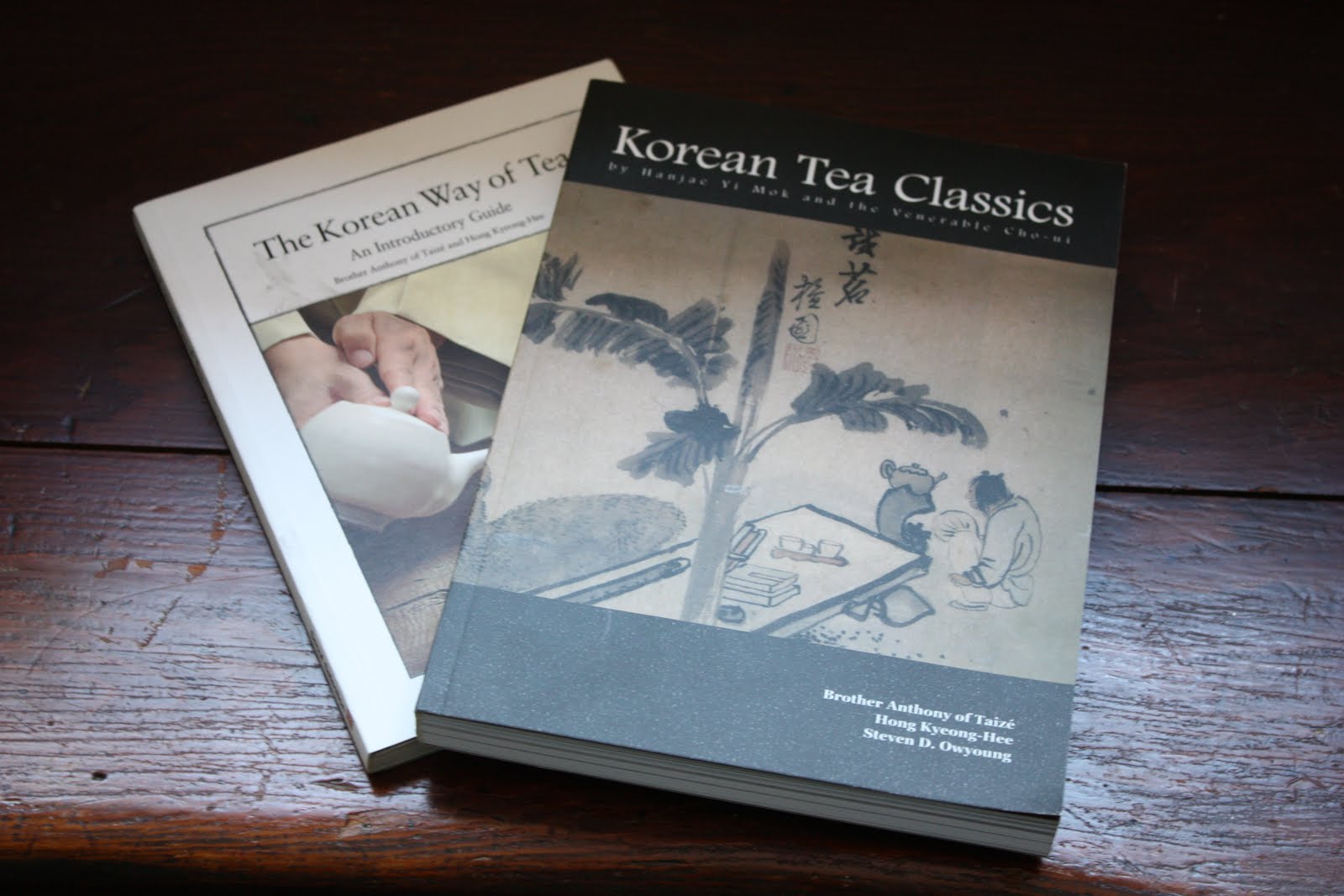
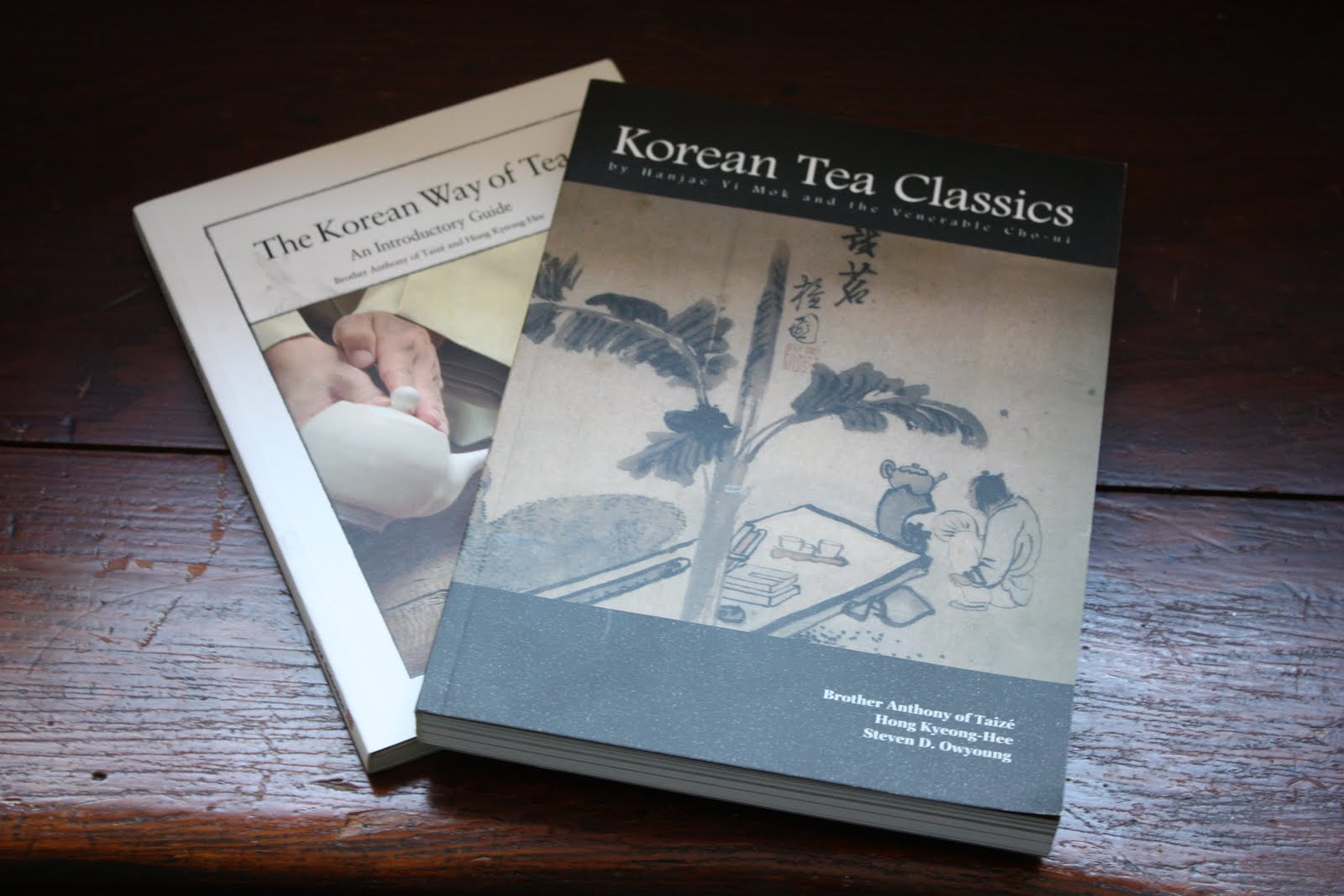
Korean Tea Classics Book Club- Final Comments


Thanks to all who participated in the Korean Tea Classics Book Club. It was a learning experience for all. A special thanks to Steve Owyoung, one of the translators of the book, for his added and detailed commentary.
See here to bring up all the Korean book club posts for review/ reference.

Peace

Saturday, October 15, 2011

Korean Tea Classics Book Club- Dong Cha Song- Hymn In Praise of Korean Tea- Epilogue


"Tasting Cho-ui's Fragrant Green Mist. picked before Gogu, it is as delicate and fine as the tongues of birds."


Feel free to join the online book club at anytime by simply purchasing Korean Tea Classics. Dong Cha Song is 17 stanzas in length, we will go through each stanza week by week. Jump in and join the discussion as you please.

Peace

Thursday, October 6, 2011

Korean Tea Classics Book Club- Dong Cha Song- Hymn In Praise of Korean Tea- 17


"With no other guests but a white cloud and a bright moon, I am raised to a place far higher than any immortal."


Feel free to join the online book club at anytime by simply purchasing Korean Tea Classics. Dong Cha Song is 17 stanzas in length, we will go through each stanza week by week. Jump in and join the discussion as you please.

Peace

Saturday, October 1, 2011

Korean Tea Classics Book Club- Dong Cha Song- Hymn In Praise of Korean Tea- 16


"With one cup of Jade Flower, a breeze rises beneath my arms, my body grows light and I ascend to a state of supreme purity."


Feel free to join the online book club at anytime by simply purchasing Korean Tea Classics. Dong Cha Song is 17 stanzas in length, we will go through each stanza week by week. Jump in and join the discussion as you please.

Peace

Thursday, September 22, 2011

Korean Tea Classics Book Club- Dong Cha Song- Hymn In Praise of Korean Tea- 15


"A profound subtlety lies at the heart of this process that is hard to express"


Feel free to join the online book club at anytime by simply purchasing Korean Tea Classics. Dong Cha Song is 17 stanzas in length, we will go through each stanza week by week. Jump in and join the discussion as you please.

Peace

Sunday, September 18, 2011

Korean Tea Classics Book Club- Dong Cha Song- Hymn In Praise of Korean Tea- 14


"Drinking dew on clear nights, hands guided by meditation produce a wonderful fragrance"


Feel free to join the online book club at anytime by simply purchasing Korean Tea Classics. Dong Cha Song is 17 stanzas in length, we will go through each stanza week by week. Jump in and join the discussion as you please.

Peace

Sunday, September 11, 2011

Korean Tea Classics Book Club- Dong Cha Song- Hymn In Praise of Korean Tea- 13


"Wisdom dwells all round, every barrier falls.
Its divine roots are entrusted to Spirit Mountain."


Feel free to join the online book club at anytime by simply purchasing Korean Tea Classics. Dong Cha Song is 17 stanzas in length, we will go through each stanza week by week. Jump in and join the discussion as you please.

Peace

Sunday, September 4, 2011

Korean Tea Classics Book Club- Dong Cha Song- Hymn In Praise of Korean Tea- 12


"With nine difficulties and four fragrances, tea is an extremely delicate affair."


Feel free to join the online book club at anytime by simply purchasing Korean Tea Classics. Dong Cha Song is 17 stanzas in length, we will go through each stanza week by week. Jump in and join the discussion as you please.

Peace

Monday, August 29, 2011

Hadong, South Korea- A Recognized Cittaslow, Hadong Tea- A Slow Food

Hadong, South Korea is a special place. Unlike most places in Korea its pace is, well, a lot slower. Slow enough to be recognized as an official Cittaslow, a slow city, promoting the slow food and slow movement. It is special in a sense because it is the only recognized slow tea city in the world. The contrast in the pace of life is quite stark from the rest of the country with its speed trains, tech savy population, and fast pace lifestyle. As a reaction to this almost unavoidable pace of life, Korea has done much to support the slow food and slow movement and in 2009 five slow cities in South Korea were recognized by cittaslow including the Akyang village of Hadong.

When you think of it though, all villages throughout Asia that grow and drink tea in the traditional way are, in fact, slow cities. The problem is that almost all tea areas and cities have since mechanized and/or used some sort of fertilizers/ pesticides in at least some aspect of the tea production in the area or have lost some aspect of their traditional tea culture. This is what makes Hadong so special- it is really hard to find these unnatural (and obviously so much 'faster') ways of growing and producing tea. The slow tea movement of Hadong is essentially a modern revival and trendier renaming of what is traditional growing, producing, preparation, and consumption of tea- nothing more. What is sad is that a certification agency is needed to protect and promote these things and that they are not simply protected and promoted for their own sake.

Boseong is usually the tea producing area that first comes to mind for Koreans because of its relationship with Korean pop culture. Hadong is slowly gaining national and international notoriety for exactly the opposite reasons. Handong is setting a excellent example of how tea areas, towns, and cities throughout Asia can preserve and promote their traditional tea culture.

Peace

Thanks to Alex Zorach of Alex Zorach's Tea Blog and his post on "Tea as Slow Food" and to Gingko of Life In Teacup and her post on how to enjoy tea (or noodles) in the spirit of slow food. They motivated one to put these old notes jotted down years ago into a post. Please do have a look at thier great posts for more on the subject of slow food and tea.

Double Peace

Saturday, August 27, 2011

Korean Tea Classics Book Club- Dong Cha Song- Hymn In Praise of Korean Tea- 11


"I have a rock spring, so I brew Excellent Blue and A Hundred-Year Life.
How shall I offer some to Old Hae at the foot of Mongmyeok Mountain?"


Feel free to join the online book club at anytime by simply purchasing Korean Tea Classics. Dong Cha Song is 17 stanzas in length, we will go through each stanza week by week. Jump in and join the discussion as you please.

Peace

Friday, August 19, 2011

Korean Tea Classics Book Club- Dong Cha Song- Hymn In Praise of Korean Tea- 10


"Tea made in the Eastern Land is identical to the original.
In color, scent and taste it is granted the same high merit."


Feel free to join the online book club at anytime by simply purchasing Korean Tea Classics. Dong Cha Song is 17 stanzas in length, we will go through each stanza week by week. Jump in and join the discussion as you please.

Peace

Friday, August 12, 2011

Korean Tea Classics Book Club- Dong Cha Song- Hymn In Praise of Korean Tea- 9


"In his letter requesting tea, Master Dasan said (that the best times to drink tea were): "When the flowers begin to open early in the morning, when clouds float white in a clear sky, on waking after a daytime doze, when bright moonlight is reflected in a clear stream.""


Feel free to join the online book club at anytime by simply purchasing Korean Tea Classics. Dong Cha Song is 17 stanzas in length, we will go through each stanza week by week. Jump in and join the discussion as you please.

Peace

Tuesday, August 9, 2011

Factors Influencing the Price Increase of Korean Tea

The shelf prices of Hwagae Valley Korean tea have increased tremendously from 2009 to 2011. Prices of the old famous producers such as Jukro (Jookro) and Ssangkae are pretty much fixed across Korea (as noted on their web pages), a study on the shelf price of these teas gives us a pretty good idea of what is happening to prices of Korean tea. Note a personal example of how the standard shelf price has changed:

2009:

Jukro Saejak 30 000 South Korean Won
Ssangkae Saejak 30 000 South Korean Won
Jukro Yellow Tea 30 000 South Korean Won

2011:

Jukro Saejak 45 000 South Korean Won
Ssangkae Saejak 45 000 South Korean Won
Jukro Yellow Tea 50 000 South Korean Won

Why did the price increase so much? The reason is much more complicated than just the colder than average Winter and Springs and low yields that you have been hearing about...

First off, the actual quality of the tea is not a factor in the year-to-year increase in price. Some years, Jukro Ujeon is thought to be of arguably better quality than other years but the price doesn't seem to reflect the quality. It is important to note that these famous Ssangye area tea producers are very good at producing a fairly consistent, high quality tea from year to year, so the difference in quality is very minimal. However, smaller relatively unknown producers from the same region ARE impacted by the quality of their tea from year to year. Price differences can reflect this but the below factors have influenced the price much more than quality over the last three years.

Increased demand both nationally and internationally, increase in the cost of production, and decrease in yield all seem to be having a synergistic effect on the increasing price of Hwagae tea.

Increase in wealth and stability in the Korean economy has lead to an increase in the purchase of luxury goods (tea at this price is a luxury). Also there has been a recent interest in all things "traditional" in nature of which Korean tea, pottery, and tea ceremony fall into. This interest in the traditional arts of Korea is both a reaction to a globalized world, a result of an increase of wealth, but more importantly, a movement where a sometimes historically repressed Korea is reclaiming its culture. All of these factors have increased demand for tea grown in the most traditional of green tea growing areas, Hwagae Valley.

International demand and interest in Korean teas have increased tremendously over the last few years. Outside of Korea people are becoming more educated about Korean tea. Before 2007 there was only Brother Anthony's webpage that offered information on Korean tea- nothing else on the net or in print was available in English. Now you can find lots of good information on the web and even a few books the focus on Korean tea. Before 2007 Jokro, Ssangkye, and Joytea didn't even market their tea outside of Korea, now these big Hwagae Producers are often in attendance at all the big international tea festivals. On top of this publicity and public awareness about the Korean brand Korean teas have racked up its fair share of international awards particularly in Japan. All of these have added up to an increase in demand in tea drinking countries around the world.

An increase in production costs is another factor that is likely leading to the increase in prices. The traditional movement has even spurred those who once worked as business executives in Seoul to renounce the modern Korean and trade their suits for hanbok (traditional Korean clothes) to live the traditional rural life emulating the monks and aesthetics of long ago. More and more old farmers are being replaced by businessmen driving late model cars (Hogo you can attest to this). The old ladies that would work the fields picking the tea for almost free are dying off with no cheap labourers replacing them- a story seen in every aspect of agriculture in Korea. As Korea becomes more wealthy the cost of the very labour intensive production of traditional Korean tea will continue to keep prices high.

Most people, especially here in the West, are pegging the yearly increase in price solely on low yields caused by the colder than normal Winter and Spring. Although this may be the enough reason to increase the price, will yields back to the pre-2010 levels in the near future deliver prices of 30 000W ever again?- probably not. Prices we see today are likely to be the norm. The days of 25$-a-box all hand produced semi-wild hwagae saejak grade green tea have come and gone.

Peace

Friday, August 5, 2011

Korean Tea Classics Book Club- Dong Cha Song- Hymn In Praise of Korean Tea- 8


"A follower of the Way constantly sought tea's perfect beauty,
planting it with his own hands on Mount Meng.
When he had five pounds of it he offered it to the prince."


Feel free to join the online book club at anytime by simply purchasing Korean Tea Classics. Dong Cha Song is 17 stanzas in length, we will go through each stanza week by week. Jump in and join the discussion as you please.

Peace