Saturday, June 11, 2011

2005 Yichanghao "Zhengpin"


In the mail yesterday came a large box of puerh samples care of Hobbes of the famed Half-Dipper. Basically, it is what was leftover from every sample he has tried over the past 3 months or so. If anyone follows The Half Dipper they know that Hobbes samples a lot of tea- expect lots of puerh reiviews over the next few months or so.

The first one that stuck out was this sheng puerh from the Changtai factory, a tea reviewed just days ago by Hobbes. This sample is a puerh that Daniel of The Chinese Tea Shop had sent him but yet a tea that one has not yet tried. So lets open up the sample bag and see what its all about...


The dry, dusty, shoelace looking leaves of mainly brown were placed in the warmed teapot and rinsed. The first infusion yields a rich creamy sweet start carrying a malted creamy finish. In the taste under the creaminess is a layer of sour wood and even cooling eucalyptus finish in the mouth. The aftertaste is woodsy and fairly dense with a touch of sweetness. The mouthfeel is quite satisfying with the mouth and tongue tingling just slightly from having the mouth's saliva retreat into the throat.


The second infusion starts off with a greenish wood start leaning into a woody, sour, almost lime-like flavour in a woody forested base. The aftertaste is crisper than the first infusion with freshly sawed lumber tastes floating above rich wood notes. Even after just two pots the qi of this tea is strongly euphoric and relaxing. Listening to the birds chirp outside, life couldn't be better.

The third infusion presents with sandy grainy sweet, slightly metallic, wood- there are light vanilla notes in there as well. All these tastes turn into malty, grainy, sweet wood. The mouthfeel is very satisfying stimulating even the middle throat slightly. The aftertaste is somewhat creamy malty wood that both shows some sharpness and richness. The chaqi is relaxing on the mind and lightens the body. It nudges at the stomach just slightly.


The fourth infusion reveals a sweet, tight wood start. Its mainly malty wood body stretches throughout the flavour profile and where it is quite obvious. The finish of crisp wood, a touch of spice among pine, is welcomed.

The fifth infusion shares a mild, a bit creamy, malty, newly sawed wood initial taste. There is a grassy raw throatiness to things here. It finishes as simple crisp wood in the mouth. The mouthfeel is somewhat drier now.


The sixth and seventh show a juicy sweet wood taste with movement to something deeper before resorting back to simple sweet wood in the mouth. The feel in the mouth remains solid.


In an attempt to shake the last few infusions of solid but simple tastes, this tea submits to a handful of hours long infusions which reveal vibrant berry and plum flavours intermixing with pine. There is still depth in the mouthfeel of this tea during these infusions.


Peace

Tuesday, June 7, 2011

The State of The 2011 Korean Tea Harvest

This year was another tough one for Korean tea. It was marred by a colder than seasonal Winter and Spring with frost impacting most of the harvest in Hadong (and even Boseong), pushing back the harvest. The result was the destruction and damage of much of the early spring growth resulting in extremely low yields, somewhere around 50% lower than last year! The result has been higher prices for tea that is already relatively expensive.

Pedro of Dao Tea claims that the price of leaves bought directly from the farmers in Hadong are approximately 200% higher this year than 2009. Fortunately, not all of these price increases have been passed down to the consumer in Korea although there are slight increases on the shelf price. Those who are trying to bring Korean tea to the Western market will be hit the hardest paying the brunt of the difference as Korean tea farmers are demanding more dollar for less tea and see bulk sales as the way to recoup their loss. It makes sense considering that the demand is still relatively high but there is simply less tea to be had.

As far as the quality of the 2011 harvest, most say that it was unaffected. Korean tea farmers take pride in their harvests and are ensuring that the quality remains high. HoGo (aka Tea Off) was recently on the ground in Hadong sourcing some original Korean ceramics (see here for some of the pieces that he has brought back for sale). He felt that the ujeon harvest was not as nice as previous years, he is definitely not alone in his criticism.

This years Korean tea has not yet arrived on the door step so we'll have to wait and see.

Watch for updates to the List of English Online Korean Tea Vendors in the months to come.

Peace

Sunday, June 5, 2011

Korean Tea Classics Book Club- Dong Cha Song- Hymn In Praise of Korean Tea- 4


"The Duke of Zhou testified that tea relieves drunkenness and reduces sleep."


Feel free to join the online book club at anytime by simply purchasing Korean Tea Classics. Dong Cha Song is 17 stanzas in length, we will go through each stanza week by week. Jump in and join the discussion as you please.

Peace

Saturday, June 4, 2011

The Qi of Wild Tea and A Tasting of 2010 Fujian Wild Oolong


One received an interesting sample from Gingko of Life In Teacup a few months back. The well written initial posting by Gingko on the background of this tea brought up many interesting questions about wild tea. Questions such as, Why do the local people believe that wild tea has better health benefits than cultivated varieties?, and Why do these locals believe that tea (especially wild tea) is good for treating Liver conditions?


One thought it a good idea to discuss these questions before going into a tasting of this very enjoyable, unique, wild oolong (Thanks Ginko).


Why does wild tea have better health benefits than cultivated varieties?


There are many reasons why wild tea has better health benefits than cultivated varieties. All of the reasons share a similar similar core- wild teas are most in harmony with nature leading to the absorption of more of nature's energy thereby containing more powerful and effective chaqi. Wild teas have evolved and adapted to the climate, soil, and seasonal variances and therefore, contain in them, a natural energetic resistance towards environmental pathogenic factors which are said to not only negatively impact the health of plants and animals but humans as well. The use of artificial pesticides not only make the tea less pure but also make it less in tune with the rhythms of nature. Plants that are artificially harvested and especially plants that have been sprayed follow an artificial rhythm, not entirely set by nature becuase of their influence by man. A tea that has grown wild for many years in a certain area will have adapted to that area's environment, it is the same way that a people of a certain area have learned to adapt to that same environment because they share that environment. So consuming local wild tea harmonizes you and protects you from local climatic, environmental, and seasonal change which is thought to make your body more resistant to environmental changes that can lead to illness.


Why is tea (especially wild tea) good for Liver conditions?


Firstly it should be noted that the "Liver" in traditional Asian thought is very different than "Liver" organ in contemporary western medicine- they have different functions. Tea is thought to be closely connected to the Liver of traditional Asian thought. Tea is green, it is of the Wood Element, its energy is abundant in the spring, it is thought to store qi, it soothes the emotions and spreads qi throughout the body. The Liver also shares these qualities. Therefore it was thought that the consumption of tea could regulate an imbalance of energy of the Liver by harmonizing the Liver's functions to its own innately healthy functioning. The above mentioned explanation of wild tea makes it, quite naturally, more effective at harmonizing such imbalances.


So does the 2010 wild Fujian oolong noticeably share some of these qualities???... lets boil the water, tear open the sample pack and enjoy this interesting tea to find out.


The dry leaf is an beautiful, uncut mixture of diverse green colours and leaf shape from pale to dark greens to delicate very small leaves to medium-largish harder leaves. They carry a spicy savory smell that is unique. They contain the fresh forested odours of a very young sheng puerh as well as sweet creamier notes of a Taiwanese oolong. This enjoyable juxtaposition of sheng puerh like qualities and Taiwanese oolong like qualities would play out in not only the smell of the dry leaves but also in the taste and feel of this tea throughout the session.


The first infusion presents creamy sweetness first with acidic spicy tanginess that moves from this initial sweetness and follows tastes of pear and pineapple. These tastes have a simple stand alone quality about them that makes them more individual and discernible in the mouth. It finishes sweet, simple, and flat in the mouth mainly covering the tongue in a thin film.


The second infusion starts much like the first infusion with a sweet and tangy start which fades into more spicy notes which overlap a predominately sweet base. The very sweet tangy taste reminds one of that sugary powered iced tea that you can find in supermarkets all over America. The sweet flavours really stand out because it feels like there is not much depth to anchor them down.


The third and fourth infusions are much of the same although the initial sweet tangy taste becomes slightly flatter. The following taste is still very strong and simple with spicy tropical fruits in a mouthfeel that has now became more full now coating the front and tongue but still somewhat evading the back and throat areas. The aftertaste develops a sweet-bland finish- even floral notes can be found in this sweet bland aftertaste. The chaqi is giving off a slightly floating lightheaded feeling and body sensation. Some strength pushes at the digestive center but this effect is somewhat mild.


The fifth, sixth, and seventh infusions stay much the same with tones of melon and banana noted in the simple stand offish sweet flavour. In the sixth, a sturdy, young bitterness starts to encroach on these tastes and in the seventh, the bitter taste is an element which shares room with still very noticeable sweet flavours.


This tea is taken to nine infusions still with sweet creamy tropical tastes still enjoyable amid bitter flavours. This oolong has great stamina which carries these simple but delicious tastes. The qi of this tea is strong, vibrant, and very relaxing even after nine infusions.


Peace

Monday, May 30, 2011

A Wonderful Article on The Buddhist Way of Tea In Korea

Please give this wonderful article by Martine Batchelor (here) a read. Bev of Listening To Leaves pointed it out in the comments here on MattCha's Blog (thanks again Bev).

It offers brilliantly translated quotes of the most prolific modern Buddhist tea masters in Korea including one's most influential that passed away last year- Beop Jeong Seunim. It covers everything from how tea first got to Korea to detailed explanations of the Korean tea ceremony. The article specifically looks in detail at the Buddhist Way of Tea in Korea.

A must read for any tea lover!

Peace

Sunday, May 29, 2011

Korean Tea Classics Book Club- Dong Cha Song- Hymn In Praise of Korean Tea- 3


"Heaven, immortals, humans, ghosts, all esteem it highly, for they know that by nature it is true and admirable."


Feel free to join the online book club at anytime by simply purchasing Korean Tea Classics. Dong Cha Song is 17 stanzas in length, we will go through each stanza week by week. Jump in and join the discussion as you please.

Peace

Saturday, May 28, 2011

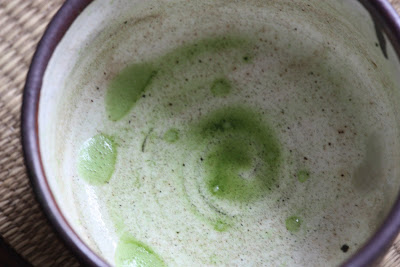
2010 Jagasilk Crane Flies Above the Clouds Matcha


This 10g can was a very generous gift from Jared and Miyuki owners and operators of local flavour Jagasilk. Their web page describes this tea as "the highest grade we have ever cupped at JagaSilk". Like other matcha they sell (see here, here, and here) it also came from a freshly ground monthly batch on April 20th of last month. It is another cloudy spring day, this decadent matcha is sure to fly one past these grey clouds.


The water is taken off boil, the can is opened, the bag snipped open. The odour that catches ones nose is of high very sugary sweet notes with a generic ripe fruit, almost floral, smell. These light odours present amid a deeper nutty base.


The tea is prepared in ceremony and is taken that way in three sips. As the fluffy-light froth slides over the tongue, a sweet raw sugar cane and predominantly nutty taste captures the mouth. The taste of creamy almond milk embraces taste buds. The sweet start cannot quite turn over slightly floral and fruity notes that seem intuitively, if not very faintly, there- lingering in such sweetness.


The creamy sweet almond milk taste slowly grows in depth in the mouth becoming thicker as the flavour develops on the tongue. A thick, sweet, almond taste is left in the mouth for quite some time afterwards. One is left feeling happy and in a state of moderately relaxed concentration. Worries slip away- its a sunny day in ones soul.

Peace