Showing posts with label 2016. Show all posts

Wednesday, May 12, 2021

2015 Puerist Ban Po Lao Zhai: Lots of Ban Po Lao Zhai!

I had mentioned that that Puerist has about ¼ of their catalogue from the Nannou producing area.  Specifically all of their productions are from a garden that is “on a ridge between Duo Yi Zhai, Ban Po Lao Zhai and Shi Tou Zhai.”  The 2015-2020 are also all processed in a similar style by the same farmer.  I believe from tasting this puerh that it might be different from the 2013PueristBan Po Lao Zhai that I purchased last year.  For someone looking for a vertical sampling of a higher quality Nannou, look no further…

This 2015 Puerist Ban Po Lao Zhai goes for approx. $83.00 for e200g or $0.42/g.  Let’s give it a try...

Dry leaves smell of faint creamy sweetness.

The first infusion has a watery creamy sweet taste over a background of faint raisin there is some low lying coolness and a full chalky feeling in the mouth and even mid throat.  The Qi is invigorating and chest opening.

The second infusion has a strawberry woody almost raisin full initial taste.  There is some dirt woody sweet raisin in the background.  A cool low pungency in the mid-deep throat and a full chalky mouthcoating with subtle oily saliva feeling on top.  Nice sweet creamy raisin finish.  Strong warming and invigorating Qi sensation and open chest feeling.

The third infusion is cooled down but gives a creamy sweet caramel raisin with a low slow moving cool pungency in the throat over a creamy full fluffy mouthcoating and deep open throat.  Vibrant Qi and open chest bodyfeeling.

The fourth infusion has a thick creamy sweet raisin onset with a carrot dirt like base and a low moving cooling deep throat which pushes out a lot of creamy carrot sweetness and almost fruity mango and dirt tastes.  The taste is nice and condensed and full feeling and is creamy sweet into the distant aftertaste.  Nice thick chalky fluffy mouthfeeling and deep open throat with salivating oily returning.  Nice.

5th strong creamy almost strawberry carrot raisin taste a bit woody and caramel.  Thick chalky mouthfeeling with a returning grape woody creamy sweet taste.  The flavors are condensed and mouthfeeling thick and chalky.  The Qi is invigorating.

6th has a strong almost syrupy sweetness with a low menthol pungency which pushes out a woody juicy fruity menthol and grape aftertaste in a very full chalky puckering mouthfeeling.  The throatfeeling is deep with a saliva bursting sensation.  Vibrant invigorating deep sighing Qi washes over me.  Body feel is a chest expanding feeling.

7th has a smoky meaty creamy sweet woody condensed taste that hits a pungent menthol deep throat and turns quite sweet- grapes, creamy sweet, woody, carrot, dirt, caramel… flavor is very complex here and nice.. deep throat and full mouth.  Invigorating Qi.  Very nice.

8th has a strong fruity punch thick mouth woody menthol taste with an emerging creamy raisin and almost grape sweetness over a dirt woody carrot taste.  There is a strong condensed taste throughout with a deep throat pungency and mouthwatering effect.

9th is cool but packs a good thick punch of complex Nannou flavours- woody, raisin, grape, dirt, carrot, menthol, cooling, creamy sweet, even a mild bitterness.  The mouthfeeling is chalky and throat opening is deep.  Very nice.

10th has an increasingly mild bitter onset with woody, dirt, carrot, not as creamy sweet. Vibrant shaking surging Qi.  Deep throat.

11th has a juicy fruity taste creamy sweet, slight smokey woody dirt.  Tastes are condensed and excellent.  Vibrant Qi. Chalky full mouthfeel and deep throat. 

12th has a tangy fruity woody carrot dirt mild bitter slight smoky full feeling.  Condensed with a low menthol and creamy sweetness.  Thick. Enlivening.  Long sweet and slight woody smokey finish.  Heart palpitations with open chest feeling.  Buzzing feeling.
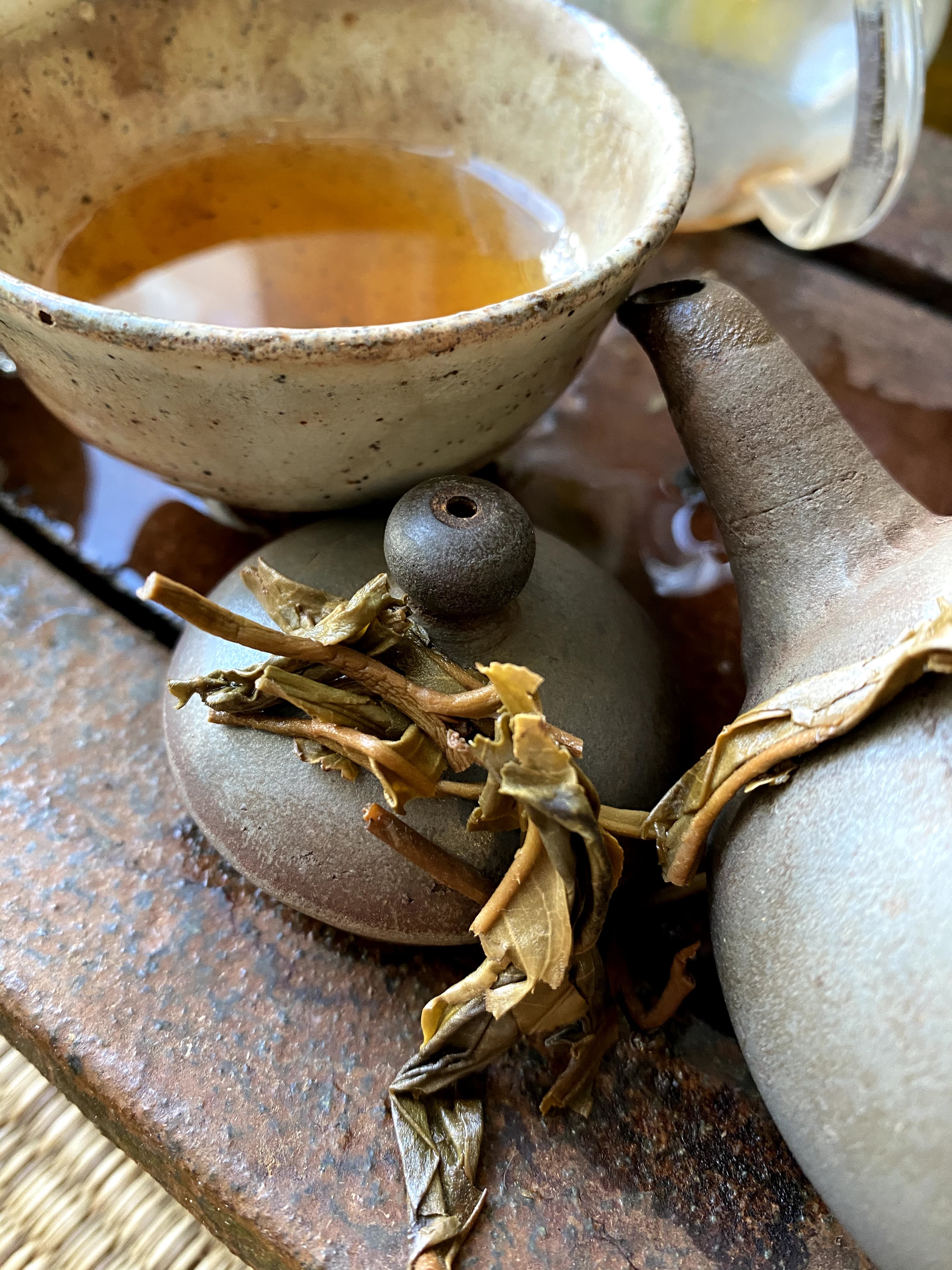


I mug steeped out the rest…

This is a very lively, flavourful, and powerful Ban Po Lao Zhai!  Lots of complex and very dense flavor presentation here as there still lots of young puerh notes in there but also emerging semiaged notes as well.  Qi is the best part with a surging powerful vibrant Qi at some points of the session, even Heart Palpitations and chest opening stronger bodyfeelings.  Nice deep throat stimulation and mouthwatering effect over a chalky full mouthfeeling.  It’s all about the maximum experiential effects with this puerh and it does not disappoint!  One of the reasons, I could guess, Mark keeps pressing this garden is because the package you get here in terms of quality is hard to beat for this price.

Peace


Monday, May 25, 2020

Comparing Deep Forest: 2016 Yang Qing Hao Wujin Cang (“Endless Possession”) vs 2012 Yang Qing Hao Ye Gu


This 2016 Yang Qing Hao Wujin Cang ($250.00 for 400g cake or $0.63/g) came as a part of a sampler from Liquid Proust Teas he is currently selling it separate for those who are interested here. Description on site is “Early spring production from old trees in deep forest areas around Yiwu. Limited production with only 1277 cakes produced.”

I was in the mood for a cooling younger type puerh at work and I decided to go for this sample on this unseasonably hot day.  It turned out that this puerh? was straight up fire…

Dry leaves have a sugary creamy odour almost but not quite fruity and a lingering faint storage smell of almost woods.  The odour is changing and hard to pin down.

First infusion starts with a creamy buzzing pungency onset with a soft almost ripe banana taste.  There is a low register pungency which expands in the mouth with a cool pungent sweetness.  The taste is bright and vibrant tasting.  The mouthfeeling is creamy and chalky and reasonably thick for the first shot.  The throat feel is mid to deep.  This is a nice gushu thing I think to myself…

The second infusion has a creamy sweet almost floral quick but smooth and vibrant punch there are some coco tastes that emerge and distant fruity edges there is a light honey nuance as well.  There is a certain fullness of the taste and vibrancy that feel complete and really satisfying.   The taste is quite complex with cream sweetness, coco bitter, strong pungency and long sweetness.  There is a deep throat presence and a nice vibrant enlivening but comforting Qi. 

The third has a thick fast fruity creamy coco bitter onset that feels very full and satisfying and deep.  The mouthfeeling is chalky and fully coats the mouth.  The throat opens to a mid-to-deep depth and lets the significant pungency reverberate in there.  The Qi is strong and pushes me into a sweat there is a strong warming energy in these leaves that is immediately apparent.  The bodyfeel is opening the sternum and making the arms light.  The mind feel alive and I feel an invigorating motivating energy throughout.  The Qi of this “deep forest” puerh is quite nice.  The complexity of the sweet, bitter, pungency and fullness in the mouth and depth of throat make this very satisfying.

The fourth infusion has a slight bitter coco onset with a syrupy sweet woody almost canned apricot syrupy, and malty taste.  There bitterness is moderate and is more integrated with a thick syrupy sweetness and seems to enhance it nicely.  This infusion is not as pungent or sweet and is more balanced with biiter coco, underlying storage woods tastes, lower lingering pungency with some coco almost creamy but muted syrupy sweetness.  The big Qi pushes another warming sweat out… this is not the cooling puerh I sought out…

The fifth infusion has more of a woody integration of syrupy sweetness and bitter.  There is less coco and less creamy or even faint fruity sweetness now.  The thickness of the liquor is keeping this complete and interesting.  This infusion is bitterer and has a lingering underlying ghostly sweetness.  The mouth and throat feeling are natural and simulating not over the top but quite full.  The Qi races the heart and opens the chest.  There is a vibrancy to this Qi I like.

The sixth has a thick creamy insistent sweatness that turns to wood and almost mushroom then a pungency bursts through and there is sweetness that is fruity then pungent creamy.  The thick chalkiness in the mouth is nice.  There is this underlying soupy coco mushroom almost woodiness in the distance that gives it a lot of depth.  It’s weird that this is Yiwu I would have guessed a blend of different regions due to its complexity.  It’s maybe a Yiwu blend?  This deep forest is hard for me to form a reference…

The seventh has a creamy fruity almost banana mushroom taste.  There is a pungency then a long fruity turning to creamy sweetness.  The thickness and leathery taste remind me of Mengku.  The long pungent and creamy sweet fruity of Yiwu.  There is a certain coco bitter in here that’s notable.

The eighth is more bitter a thick full bitter coco in the mouth.   The sweet flavours are pinned under the bitter.

The ninth has a fruity bitter coco vibe with peachy fruits.  The bitterness is moderate not strong in this puerh but offers a nice balance.  The flat coco taste has a mild pungency in the mouth with a coco and slight creamy sweetness.  The mouthfeeling is full but more sandy chalky.  The throat opens to a mid level.  Nice invigorating Qi.

The tenth is much the same with a very robust coco mid-level bitterness with a low pungency and faint creamy sweetness.  The mouthfeeling is more fine sand and less thick oily chalkiness now.  The throat feeling is still deeper but a development of complex flavours can no longer materialize.  Good head buzzing Qi.

Darn ran out of time in a day… will return to it tomorrow…

11th is creamy and peachy sweet Yiwu. The bitter coco has dropped in the leaves overnight.

The 12th has a creamy peachy onset with a faint undercurrent of bitter coco and slight woody tastes.  There is still a nice sunny vibrancy to this puerh. 

13th starts very creamy sweet with a thick chalky presentation.  There is a building bitterness and mouthfeeling now as these leaves keep giving out.  There is a lubricating juiciness in the mouth along with mild coco bitter.  The aftertaste is faint sweet creamy sweet.  The Qi is felt in the chest again as the infusions compound in the body once more. 

14th has a thick creamy fruity onset with a faint bitter coco woody underneath.  There is like a returning splash of juicy fruit then a faint pungent slight bitter creaminess.  The taste is full and satisfying but I’m not sure if the bitter coco would throw some people off.  When the bitterness is present, it’s a much fuller mouthfeeling and flavor presentation.

15th has a more flat bitter onset without much of a fruity splash of flavours that follow it.  The Qi expands in the chest, makes the head feel heavy, and sharpens the mind.  Nice Qi here.

This tea also has excellent stamina too.

16th, 17th, 18th… still quite strong bitter coco with fruit to finish.  The base taste is almost leathery.

My impressions of both the 2012 Yang Qing Hao Ye Gu and this 2016 Yang Qing Hao Wujin Cang are very favorable… but the problem is I have no reference point to other “deep forest” puerh… I guess my previous tastings of forest puerh were not deep???  I have no idea, but I find this super interesting and even proof of how deep and complicated the breadth of puerh tea can be.  I would have pegged this in the “wild tea” category if Shah8 hadn’t clued me in that it is something a bit different.  Its amazing that I’ve been drinking puerh for decades now and have tried literally thousands but have not had this or not know it was this in the past… that’s what makes puerh so interesting to me…

Anyway…

This 2016 Yang Qing Hao Wujin Cang deep forest yiwu is like a cheaper and less good 2012 Yang Qing Hao Yehgu.  I think it’s like %60 of the 2012 Yegu better bang for your buck if you are into “Deep Forsest”.  Or maybe you have a 2012 Yegu and want an everyday drinker Deep forest… that would be another reason.  The bitter and coco taste is very much the same as well as the fruit but it’s just not as concentrated or complex or intense or bitter as the 2012 Ye Gu.  The Qi is really a big and very warming thing in both of these which is why I like them both and why they remind me of wild tea.   They both have very good stamina. From my two samples the 2011 Yehgu is much smaller compressed leaf and much more brilliantly purple.  This leaf is less purple, seems larger, and less compressed.  I’m only going off the samples I received so hard to say.  Both share a lot of similarities.  The 2012 Ye Gu was different in that it had much more subtle complexity but the 2016 has a deeper leathery body to it which the 2012 didn’t have.

Overall, this one surprised me.  I am getting to know what “deep forest” means at least to Yang Qing Hao.  I still haven’t purchased a cake of either of these but it’s at least on my radar.  I highly recommend ordering both the 2012 Ye Gu and 2016 Endless possession samples from Liquid Proust Teas together and sampling them next to each other to get an idea of what “deep forest Yiwu” means to Yang.

Shah8’s tasting notes.

Peace

Tuesday, October 1, 2019

2019 Zheng Si Long Mang Zhi: Comparing all the Zheng Si Long Mang Zhi


This 2019 Zhang Si Long Mango Zhi sample was kindly gifted to me for review (cake goes for $121.22 for 400g cake or $0.30/g) .

The dry leaves are a very punchy fruity odour.

The first infusion is airy surgery, slight woody, with a vegetal and almost spicy nuance to it.  The mouthfeel feels slightly tight on the tongue.  There is a mild tropical fruity aftertaste.  The mouthfeeling is substantial.

The second starts with a spicy woody, and sugar onset with slight fruit underneath.  There is a slight gripping astringency to the mouthfeeling, slight sandy.  There is a nice mild tropical fruity finish over a sandy mouthfeeling.  The throat is less stimulated than the tongue and lips. 

The third infusion has a woody, slight fruity onset, with a slight peach note.  The full sandy slightly astringent mouthfeeling pulls the peach note into the aftertaste.  The mouthfeeling is full but not excessive.  It sits at a simulating fine grain sandy texture which feels quite nice in the mouth, the throat feels untouched.  The wet leaves have a very strong freshly bit peach odour with emits from the pot.  I start to feel the Qi in my body and my Heart flutters a bit.  I feel a touch of energy flowing.

In the 4th the initial taste is of dense peachy fruit with tropical underpinnings.  The dense fruit taste slowly fades into the aftertaste and overlaps with a creamy returning and more tropical sweetness in the aftertaste.  The mouthfeel is fine grain sandy, almost chalky on the tongue.  The cool sensation is felt on inhale but is mild in the upper throat.  There is some mild bread notes in there and woody notes in the back ground.  The progression of sweet taste is very nice here.

The 5th has dense peachy tastes right off the bat that hold in the mouth until they intersect with the returning creamy sweetness and tropical fruit.  There is a faint bread and almost spice taste also faint woody underneath the performance of intermingling sweetness.  The mouthfeeling is really nice a fine sandy/ chalky full feeling.  The upper throat carries a coolness and creamy sweetness minutes later.

The 6th has a dense peace and creamy fruity nuance initially now there is less intermingling of separate sweet tastes and is more a layered sweetness from the initial taste which just stretches out in the mouth and into the aftertaste now.  The mind feels relaxed, almost spacy from the Qi and the body feel a faint sensation in the chest.

The seventh infusion has a mellower fruity mixed with dry wood onset.  Its sweetness is less dense here. Then it collides with a touch of returned creamy sweetness and seems to be inhaled a bit from that in the aftertaste where a subtle creamy tropical fruit nuance is found.  The mouthfeel becomes chalkier slowly as the infusions go on. 

The 8th is that same woody, almost bready, but less fruity onset that meets creamier sweetness in the aftertaste.  The mouthfeel is chalky the throatfeeling is superficial.  The sweetness is much less dense now but still shares sweetnesses with woody nuance.  The Qi can feel heavy on the head a bit and a bit alerting and slightly euphoric.  Nice.

The 9th infusion is much the same with just a bit more astringency in there and I notice more of an orange taste that comes out with the creamy sweetness.  I would say the sweetness is balanced here with dry woody.  The mouthfeel is real nice chalky, almost astringent, almost sandy but full.  The Qi has a nice uppity feeling in the mind and you can feel it in the Chest/ Heart.

The 10th starts a more watery and juicy fruity wood then the sweetness transforms to a creamy almost tropical sweetness.  The mouthfeel is chalky and the throat carries a mild coolness.

The 11th infusion has a more creamy sweetness to it throughout.  It starts a bit watery/juicy then to almost woody then to a creamy sweet, almost tropical.

12th is becoming more woody and slightly astringent.  There is mild fruit underneath.  The Qi is making me move.  The mouthfeeling is thinning into a more sandy feeling.

13th has a floral woody almost fruity taste initially then slightly woody sweet fruity finish.

The 14th is mainly woody with faint fruit underneath.  The mouthfeel continues to thin out and become slightly sandy.

I take the 15th 30seconds longer than flash infusion it pushes more fruit out but also more astringent and almost bitter wood too.

The 16th I long infuse as well and it pushes out some sweetness with woody… some faint tropical something.

I put this in to the overnight infusion …

The next day there is a slight sweetness but mainly a bitter floral like taste.

In order of personal preference of the 5 Zheng Si Long Mang Zhi offered at Tea Encounter with price/ value in consideration:

2017 Zheng Si Long Mang Zhi – $0.29/g- has the best all round qualities of taste, Qi and mouthfeeling,  A slower building Qi that is relaxing in the head and light body feeling.

2018 Zheng Si Long Mang Zhi- $0.35/g- might have the best Qi sensation of chest tightening and knotting under the sternum sensation, slow moving and evolving creamy sweetnesses and some savory throughout the session, gripping more intense mouthfeeeling than others. (wait a minute... I think this is my favorite... hahaha)

2016 Autumn Zheng Si Long Mang Zhi Dragon Ball-  $0.23/g- good example of autumnal pureh, long candy aftertaste with deep throatiness, good stamina and decent mind chilling Qi

2019 Zheng Si Long Mang Zhi- $0.30/g- uplifting Qi with chest Heart body feeling, lacks the overall intensity that the 2018 and 2017 have overall, more woody but with layered tastes, peach and tropical early on, less intense mouthfeeling as 2018 and 2017 as well.

2016 Zheng Si Long Mang Zhi- $0.38/g- very stable infusions, very pure and quite flavourful, lazy and relaxing Qi

They are actually all nice famous tea mountain Mang Zhi puerh… and they are the most stable out of the Zheng Si Long offerings year after year.  I find them all quite satisfying and most offer a good balance of Qi, taste, and mouth/throatfeeling.  The most notable aspect is decently good Qi in these Mang Zhi and many have a nice mouthfeeling as well. Out of all the Zheng Si Long samples, I usually end up drinking up the Meng Zhi first, the sample speed test… hahahah… with that said I still haven’t purchased a cake… Yummy.

Peace

Tuesday, August 13, 2019

2016 Yunnan Sourcing Bing Dao Lao Zhai … A Premium Offering…


This puerh goes for $298.00 for 400g cake or $0.75/g.  This was my 3rd favorite sheng I sampled out of a handful of Yunnan Sourcing Brand samples I purchased a month ago…

Dry leaves smell of mild dry wood, faint sweet almost tropical and sugar.   The dry leaf odour is very generic sheng type of smell.  With a slight lingering wild floral nuance.

The first infusion has a nice candy like onset, some mineral, almost evergreen, a slipper mouthfeeling then an elegant entry into a long mild cool candy finish.  There is a mild stickiness on the lips and throat.  A long mild cooling candy taste is left in the mouth.

The second infusion has a mild astringent woody onset that is kind of a mix of dry wood, evergreen, pungency and sweetness but it is not overly deep.  This taste hits a mild-moderate cool pungency then a returning candy sweetness and mild almost tropical fruit sweetness glides under a woody almost mineral base.  The mouthfeel remains quite sticky and the throat has a mid-upper opening sensation.

The third infusion has a sticky onset of dry wood, mineral, and floral, it is not really sweet until the mild cool pungency hits then it rides that out into a candy, almost tropical and almost floral sweetness over a dry woody base.  There is a smooth elegance about the way these flavours present themselves.  None is overpowering or strong.  Still not much Qi coming out yet a bit of chest stuffiness, some mild lightness of the head.  There is a slight astringency around the edges that my empty stomach takes not of.

The fourth infusion starts with a mild almost juicy fruit taste mixed with mild bitter wood.  The juiciness is surprising and long and interfaces with woody, almost mineral and grassy notes.  There is a moderate coolness in the mouth then an almost faint candy and wildflower slight juicy fruit nuance to end.  The mouthfeel is sticky with lip drying effects.  There is a low lying astringency typical of Mengku area.

The fifth infusion starts with a quick burst of cooling fruity sweetness that is very satisfying and stretches across the profile.  This is some typical Bing Dao taste profile that is prized coming out in the 5th infusion here.  The sweetness compounds as the pungency peaks and then rolls out like a wave in the distance.  Nice.  The mouthfeel is sticky and moderately full the throat opens to a mid-level deepness. The Qi is a relaxing thing.

The sixth infusion has a creamy sweet pungent onset which stretches throughout the profile.  There are faint suggestions of dry wood or even forest or dry grass underneath but mainly its this typical profile playing out.  I wouldn’t say the flavours are overly complex or strong but rather elegant. The astringency is mild underthe whole profile.  The mouthfeeling is sticky and almost puckering astringent.  The Qi is relaxing and I can feel the tops of my shoulders slightly heavy.

The seventh infusion starts with a quick bitter, floral sweet creamy, almost pungent taste.  It has an almost dry wood, almost slippery rock like taste that crests with a touch of pungency then the sweet fruit floral expands on the breath. 

The eighth is that fruity buttery floral sweet quick pungent mild bitterness that stretches into the aftertaste there are some mango taste and some other tropical nuances that extend in the aftertaste.  This is a real pure almost elegant puerh.  The mouthfeel is an almost sticky, velvet, barely astringent type of thing that is overall quite mild but somehow carries the flavor nicely.  The Qi is mild and relaxing.

The ninth infusion has the quick pop of deliciousness of juicy fruity mango, slight floral, nice coolness, the sweetness feels so grounded in the taste and balanced nicely with a sticky mouthfeeling.  The pungent quities don’t ever overtake the sweet taste but somehow give it depth and nuance.  The sweet aftertaste is nice and long.  This is a really classy tasting puerh with no negative or distracting flavours and results in a very satisfying long sweet taste that seems nuanced but not overly complex.  The Qi is a mild lingering in the mind relaxed type of Qi.  A harmoniously calming type of thing going on here.

The 10th is a nice juicy pungent with an underlying coolness that gently supports a floral candy like mango sweetness.  The sweet pungent taste feels full and satisfying on a sticky mouthfeel and mid-deep opening throat.  The taste is reasonably long and slowly trails on the breath.  This has to be one of the better tasting puerh I have sampled over the last few years.  The taste is just really delicious and harmonious.

11th has this pungent, sweet fruity mango, buttery clear sweet candy quick on the mouth taste that stretches out in the mouth and throat.  Qi is quite calming in nature the body feels a bit light.

12th has a bit more dry woodiness up front detracting to the last 6 really pure and elegant infusions.  It is not as prominent as the pungent fruity candy sweet taste which still dominates the session.  The mouthfeel is cottony and fluffy in the mouth.

13th is more dry wood and almost grainy tasting initially which is now stronger than the sweet high-noted pungency.  An interesting citrus taste appears minutes later.

The 14th infusion is back to having that really delicious, creamy, buttery, pungent, juicy fruit bunched up note trailing throughout.  One thing of note is how stable this taste is across the session.  Maybe a bit monotonous but the monotony is glorious and yummy.  The Qi continues to be relaxing and clam.  Peachy mango tastes appear minutes later.  This taste evolves into a citrus taste.

The 15th is a bit drier woody and astringent than juicy fruity.  There seems to be more of a candy like aftertaste when the woody astringency is more dominant.  The candy sweetness is long.  This puerh has a nice harmony to it.

16th is more woody dryness astringency now which overtake the highnoted subtlety of the early infusions.

The 17th has a more mellow fruitiness to it almost a melon taste in there now but mainly woody.  A faint buttery floral nuance and some faint candy on the breath.

I push the 18th infusion for a minute a get a more bitter woodier but also fruitier infusion.  There is a stickiness that is left in the mouth.

I put this one into a day’s long infusion and am completely blown away but the result of vibrant creamy fruits, a dense explosion of tropical tastes layered on creamy tastes, slight vegetal and cooling underneath.  This is a real tasty puerh.

I don’t think I would have guessed this to be Bing Dao even though it has an obvious character from this area.  Very good tasting sheng puerh with a taste that is stable thoughout.  The session is not super powerful not outlandish Qi but a nice overall feel to it.  The taste profile has a delicious elegance to it. 

Who said Yunnan Sourcing was a budget vendor… ???... hahahah….

Peace

Wednesday, July 17, 2019

2016 Zheng Si Long Autumn Mang Zhi Dragon Balls Vs 2016 white2tea We Go High


It feels odd that I’ve never tired puerh in a dragon ball form ever.  Back in the day, it just wasn’t a thing, it didn’t exist back then.  I wonder who was the first to form puerh into a convenient ball size?  It has the same idea as the coin or minis idea … a modern incarnation of a coin.

This one is from the Mang Zhi region, an autumnal production (see Zheng Si Long Spring 2016, 2017, and 2018).  I recently mentioned that I am enjoying these productions of the famous Mang Zhi region.  The dry ball of puerh smell like slight woods with a candy fruit cherry sweetness.  I received it as a free gift when I placed my first order from Tea Encounter a few of these 2015 Zheng SiLong Wa Long.

I did a 30 second rinse and then put the lid on the pot for five minutes to break up these tight balls…

First infusion is still light and airy from the tight compression.  Watery and woody water with light floral and sweet sugar nuances.

The second is still just starting to unravel with icing sugar taste, slight dry woods, almost wildflower florals.  The mouthfeel is mossy and throat sensation starting to get stimulating.

The third infusion starts off with dry wood and icing sugar sweetness.  The sweetness is trapped in the deeper throat feeling and has a mild strawberry nuance to it.  The mouthfeel and throatfeeling are very soft but show signs of being quite full and deep.  The Qi starts to pool in the head.

The fourth infusion starts off dry wood and with a nice fluffy cotton candy nuance.  There is a fruity middle and nice throat stimulating and throatfeeling.  The throatfeeling is deep and opening.  It makes you want to clear your throat.  The tastes are light and airy, sweet and woody.  The Qi is reasonably strong and heady.

The fifth infusion starts off with an unpretentious sweet woodiness that turns into a sour taste then into a mellow vegetal sweetness.

The sixth infusion has a sour woody and barely sweet nuance that transforms to floral wildflower and dry woodiness.  It is not very sweet but has a sour sweet edge to it.  The wet leaves are predictably aromatic and have a menthol like odour.  Qi has a mild but noticeably stuffy sensation in the head.

The seventh infusion starts with a plum fruitiness to it.  There is a menthol woody undercurrent throughout which turns into a noticeable wildflower nuance.  The throat feel is reasonably deep and mouthfeel sticky and mossy.

The eighth starts juicy almost sour like a mango like taste mixed with grapefruit.  The mouthfeel is mossy and the throat feel is pretty deep.  After the juicy sour fruit fades there is a woody dry nuance left in the mouth.  The qi has a mild headiness to it.

The ninth infusion has a sour fruity onset with an astringent woody finish.  The mouthfeel is mossy on the tongue and the top of the throat opens a bit.  You can almost detect some wildflower nuances.  There is a bubble gum nuance left on the breath minutes later.

The tenth infusion starts fruity and woody and sour.  The mouthfeel is becoming sticky and there is a lingering cotton candy nuance in the breath.

The eleventh infusion is full and nuanced fruity layers of sweetness arrive with mango, and grapefruit being most obvious.  The liquor starts to thicken up here and deliver a nice thick woody fruit with decent depth now.  The aftertaste is lingering faint candy.  The Qi is mild in the head.

The twelfth infusion delivers a dense liquor of nice thick fruity woody tastes.  The flavours are sweet, barely bitter, and significantly sour.  The woody taste is the deepest and the most ethereal is the lingering candy sweetness.  My mind saunters in a nice place from the Qi.

13th is a dense licorice, fruity and woody presentation in a thicker liquor.  They fade into a long candy like sweetness.  Nice meandering mild spacy qi.

14th infusion has that nice dense onset with simple but thick flavours that fade easily into a candy-like faint finish.  The 15th has that candy sweet taste in the initial now alongside fruits and slight wood.  The bitterness and sourness continue to recede with each infusion.

15th has a nice dense fruity onset with dry wood underneath.  A wave of sweet fruity tastes comes and goes and leaves a slight woody taste with the breath of candy.

16th is less sweet, more woody very interesting lingering sweetness.  17th is more sweet, dense liquor, fruit.  The mouthfeel is mossy and sticky in these later infusions.  Candy long fait aftertaste.

18th here we go into a woody apricot like sheng type of sweetness.  Nice long candy finish.  A creamy sweet finish.

It was coincidence that I had just drank another 2016 Autumnal production that was similar in some ways to this one, the 2016 white2tea We Go High.  I found these 2016 Zheng Si Long Mang Zhi Dragon balls similar in tight compression, in its thick fruity and woody tastes and textures.  2016 white2tea We Go High has a bit broader profile and complexity.  Although the Qi is actually quite similar, We Go High is a bit stronger.  2016 Zheng Si Long Autumn Mang Zhi has a more intense long candy aftertaste and deeper throat feeling.  Each had good stamina and are both nice examples of autumn puerh.  In my first sampling of 2016 white2tea We Go High I suspected that some Gua Fang Zhi or other Yiwu like material comprises a small amount of the blend.  Maybe its closer to Mang Zhi than Gua Feng Zhi?

This was a fun session.  I wonder if Tea Encounter will offer these?

Peace

Monday, July 15, 2019

2016 Zheng SI Long Manzhuan & Pastry Sweetnesses


I just came off a pretty impressive sampling of the 2016 Zheng Si Long Man Lin and wanted to sample the 2016 Zheng Si Long Manzhuan($150.85 for 400g cake or $0.38/g) close together for comparison.  They are of the same producer, same year, same price and same general region.  They were also both complimentary samples that came with my recent orders (here and here). 

The dry leaves smell of a deep pungent sweet rainforest smell.  The sweetness lingers and the pungent forest odour is penetrating.

First infusion has deep rainforest notes and fruity sweet notes right off the start.  There is a base of rainforest wood.  A very faint pungent then a bread like almost coconut type of sweetness.  The breath carries a sweet cherry note as well as a coconut note into the distance.  The first infusion is very smooth and soft .  The mouthfeeling is sticky on the tongue and lips.

The second infusion has a sweet rainforesty and very pastry and sweet bread taste to it.  There is a very mild pungent that comes and goes quickly to reveal long bread tastes and nuances of coconut and even cherry.  This is a very sweet tasting sheng right off the bat.  It has an almost cloying sweetness.  The Qi is mild and airy in the mind and body.

The third infusion starts with a very sweet bread/ pastry and rainforest taste.  The sweetness in here is very high cake pastry type of sweetness.  There is a quick and mild pungency then long almost bready and cherry fruity taste.  This tastes almost like icing sugar.  The liquor is lubricating in the mouth with only a faint astringency or bitterness the sweet taste has the full run of the taste profile here.  I can feel it pooling in the stomach with a mild youthful puerh energy.  There is a stickiness to the mouth and throat feel.  The throatfeeling is more mid and airy feeling.  The energy is felt in the stomach and makes the mind feel light.

The fourth starts with a rainforest and very sweet bready taste.  Then a very mild pungency then bready, cake, and coconut and cheryy finish.  Icing surgar permeates the profile.  The astringency is mild but building and I can feel it in my stomach, a natural young puerh feeling, but not too comfortable this morning.

The fifth infusion has a rainforesty, almost floral, but very bread- or cake- like sweet taste to it.  There is a fruity peach taste in there as the astringency is more apparent.  Overall the astringency is mild but seems to be pushing out more fruity tastes initially and throughtout the profile.  The aftertaste is long sweet bread, almost cherry plum, coconut.  The astringency beats at my empty stomach pretty good.

The sixth infusion starts more astringent with less bready pastry sweetness and more astringency and peachy fruity taste.  The mouthfeel is developing a slightly puckering edges to it.  It is pushing out a more dry wood taste across the profile.  It also seems to extend the aftertaste into a long very sweet cake and coconut cherry fruit.

The seventh infusion is smooth rainforest, a touch astringent cakey and bready more smoothed out here.  There is less intense peach sweetness and astringency.  More of a silky smooth mouthfeeling.

The eighth infusion starts of slightly astringent peachy, with a bready sweet undertone, the pungency seems to be gone but there still lingers a long sweet bread aftertaste.  The mouthfeel is more silky now. The Qi of this puerh is a mild airy relaxing sensation.

The ninth infusion starts watery, slight viscus peach with a mild rainforest taste in background.  The peach taste is throughout now.  The mouthfeel and throatfeeling continue in this silky direction.  You can feel the youthful kick and astringency in the guts for sure.

The tenth infusion is a smooth, almost woody, peachy taste throughout that glides over the tongue in a mild astringency.  The Qi in the mind is mild.

The eleventh infusion is silky a touch astringent peachy before a very mild cools peeks and pushes a bready and peachy sweetness along.  This puerh has pretty simple tastes but lots of sweetness in there.

The twelfth is silky, slightly woody, slight fruity sweetness but not too much.  The thirteenth infusion is a bit more fruity and astringent with a more astringent mouthfeel.  These small leaves lose its stamina quickly and turn into a mild woody, peachy with just a touch of sweetness.  There is a slight touch of tannic roughness in the throat.

I call this one early and put it into an overnight infusion.

Overall, this tea has some really intense pastry, bread-like sweetness in the first handful of infusions with a nice rainforesty base.  To me this is some of that classic Manzhuan taste.  The tastes in this puerh are not overly complex with only a handful of nuances playing out and there is space between the flavours.  The Qi is unassuming and the mouth and throatfeeling are mild.  This puerh also lacks substantial stamina.  The lack of bitterness and slow to build astringency create open space for the intense sweetness to dwell undisturbed.  This has to be one of the sweetest tasting sheng puerh I’ve tried in a while.  Those who like it very sweet are going to enjoy this.  It’s a good example of that pastry or cake tasting sweet cloying character of the Manzhuan region.

For me I find the 2016 Man Lin way more interesting than this 2016 Manzhuan- the stamina is better, its less harsh and the Qi sensation is interesting, and it has a nice build throughout the session.

But for those who like it short and (pastry) sweet, this Manzhuan is for you…

Peace

Friday, July 12, 2019

2016 Zheng Si Long Man Lin & Slow & Spacy


This sample of 2016 Zheng Si Long Man Lin ($150.85 for 400gcake or $0.38/g) came free with the purchase of a few cakes of the 2015 ZhengSi Long Wa Long.  I don’t think I’ve ever tried any puerh from the Man Lin area before.  I’ve tried Man Zhuang area before but nothing this specific.  I wonder what this sub-region has in store…

The dry leaves have a dense perfume odour to them.  Floral, sweet candy and woody forest odours emit from the very tight pressing of leaf.  I throw whole chunks into the warm pot and the odour that they emit is beautiful floral, wild rainforest sweetness with a distinct odour of melon.

The first infusion delivers watery sweet fruit tastes of melon grasses and rainforest and mineral stone with an icing sugar sweetness.

The second infusion has a light watery icing sugar sweetness.  There are mild nuances of moss and rainforest, stone minerals, melon.  The tastes are refreshing and subdued as the chunks have not loosened in the pot yet.

The third infusion starts off pure icing sugar note very clean and crisp and cool in the mouth.  The mouthfeel and throatfeeling is faint and there is a wispy icing sugar that lingers on the breath.

The fourth infusion opens up more and has a creamy icing sugar initial taste that pop in a very clear watery broth.  There are distant nuances of cherry and wood but really this is a nice pure creamy, icing sugar sweet note.  The mouthfeel and throatfeel are mild and let these soft pure clear sweet tastes skirt overtop.  There is something very thirst quenching about this puerh on this overly humid day.

The fifth infusion has quick onset of fruity almost nutty flavors which glide into the aftertaste and end in an icing sugar taste.  The sweetness is that crisp, clear, clean type with almost no mid- or deep- base to it.  With just a mild astringency to the mouthfeel it leaves these cake-like sweet flavours unadulterated and long in the profile.  The Qi sensation is a bit mild but you can feel the cool youth of the leaves in my empty digestive system.  Subtly relaxing, matching the vibe of the taste.  I can feel a gentle pumping of my Heart.

The sixth infusion starts with a quick and distinct icing sugar sweetness there is a pop of fruit cherry but mainly just this ethereal long unadulterated thin icing sugar sweetness.  Simple but very yummy.  There is a subtle faint pungent coolness that is quite airy halfway through the profile.

The seventh infusion starts with icing sugar sweetness then a pop of cherry fruit which fades as a very faint almost unnoticeable pungent coolness skirts around the breath.  A long wispy icing sugar sweetness stretches into the distance.  The mouth and throat feel is quite faint with a mild astringency.

I step away from the tea table for an hour before returning.  The eighth infusion is more mellow icing sugar with barely creamy and barely fruit taste throughout.  The ninth infusion is much the same.

The tenth infusion shows mild fruity signs initially with icing sugar. There is that easy to overlook faint pungent then icing sugar sweetness.

The eleventh infusion I start steeping 10 seconds past flash and get a mild fruity sweet and underlying icing sugar sweet onset.  This is a very light tea with a bright ethereal nuance to it.  The qi is mild relaxing feeling to it with a mild chest Qi sensation.  This is an easy drinking puerh for sure with a touch of oomph.

The twelfth I add 20 seconds to the flash.  It gives me a touch more astringency up front with a dry woodiness and mineral that comes with it.  The mild quick fruit cherry and longer underlying icing sugar taste is still there.  The aftertaste fades into the breath without much fuss.  I space out under the mild Qi and even forget where I am… although mild there is something sneaky and spacy about this puerh’s energy.

The 13th I continue the trend of adding more time and do about 25sec steep.  The initial taste is a touch syrupy and malty wood with creamy sweetness and icing sugar sweetness underneath as well as a vegetal taste.  The wet leaves smell of roasted nuts.  I can feel the Qi racing the Heart and I feel a nice slightly spacy relaxation.

The 14th I continue to push.  I get a touch of astringency and even slight bitter if I push hard enough there are some mild fruits, mineral, dry woods, and lingering faint icing sugar.

The 15th is becoming a dense apricot sweetness with a woody note underneath.  A more standard sheng puerh taste with some astringency and bitter and a creamy buttery finish with icing sugar breath.  Nice expansive head feeling.

The 16th is put to a good 40 seconds beyond flash and pushes out thick apricot and woody tastes which disappear in the aftertaste.  The tastes here are decidedly sheng but thick and simple enough to enjoy with a faint touch of bitter and astringency in these longer infusions.  As the very compressed leaves release over the course of the session the flavor becomes more dense and fruity.

I push on for a few more infusions because the relaxation effect is still happening.  The flavors of dense apricot sweetness and wood doesn’t let up.  There is a thickness in the broth initially in the fruity taste that is pleasing enough and edges of bitter and astringency but not that much.  This initial taste kind of just glides away.  I am past 20 infusions now and still get some dense flavor out of this one.

Overall, this is a real simple and light sweet puerh that offers an unadulterated sweet sugary tastes.  It has almost no bitter or mid or low notes and just a touch of astringency.  It’s just this puerh light energy.  It has a nice relaxing spacy Qi with a touch of Chest and Heart body feeling that it creates.  The Qi was spacy enough for me to completely for get to get a photo of the spent leaves which I never do. 

Due to the fact that there is little to no bitterness or astringency and the fact that this has very tight compression, you can really push this puerh hard and push out some thicker flavor even late into the session.  The stamina and slow progression of this puerh is nice and keeps your attention to the end.  The way this one slowly unravels is something satisfying for this price.  There are going to be some people who really like this light puerh energy for drinking immediately… I like its stamina and slow release and options for diverse brewing.  Its Qi keeps the mind from getting to serious... this one is kinda interesting...

Peace