Monday, June 8, 2009

Sel Young Jin's Phenomenal Rustic Erabo Style Tea Cups, Part One: 'Snail Foot'


It was Hobbes from The Half-Dipper that noticed this little guy in action with some young shang puerh a few posts ago. These three pieces were a gift from a close friend before one departed from Korea.
The care that master Sel Young Jin puts into his cups are beyond what most masters put into there pots and tea bowls. Every micro space of these pieces are beautiful.

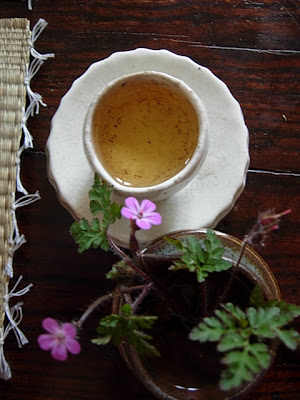
Both of these cups are quite small (think small Chinese cup), this one is just a bit bigger than the other. It sits staunchly, its form cute and natural. Its white body resembling the white caps of mountains.

The outside and inside of this cup is riddled with cracks, holes, blotches, and other so perfect imperfections. When ones eyes climb over its lip and onto the inside wall, it is met by a latticework of large cracks. These cracks meet a ring of little holes when the inside starts to level out. One especially enjoys the sight of the lonely hole in the middle of the the cups shallow- as if the poor guy was trying to lend some symmetry to this eccentrically wabi-sabi piece.

The outside wall tells a similar story of cracks that reach down toward a spattering of teeny, tinny holes at the base of the foot.

Yes, this cup has a foot much in a way that a tea bowl (chawon) would have. The detail of it is astonishing.

This foots style is 'Dal Paeng E' style. 'Dal Paeng E' translates to 'snail' because of its obvious similarity to the swirling of a snails shell. Traditionally a nail, twig or whatever was with an arms length was used in clear moment of zen to create the swirl. Although never a perfect swirl, the 'snail foot' adds balance, symmetry, and finality as well as an obvious air of natural beauty. The rustic look of this 'snail foot' was probably made by such a device and imbues such a feeling. The foot has an unfinished feel to it with three exposed blotches of unglazed clay, a permanent marking, a badge of honour only eared in the kiln. Most pieces have these imperfections sanded off. One enjoys the fact that Sel Young Jin choose to leave them on. Perhaps an attempt to roughen the effect of the snail swirl, or perhaps a statement on change.

The change this little rugged cup has undergone doesn't stop after it is cooled from the kiln. It's important to note that this cup didn't look like this at all when first made, but acquired its appearance through ware. This cup was completely white like blanketing fresh shimmering snow when first used. Only as tea penetrated its barely viable imperfections did it acquire the look it does in these pictures.

And as one sips tea from it now, change continues. The snow melts from the mountain peeks that one views from big windows, tea penetrating its cracks and hollows. But for a microsecond everything is clear once more.

Peace

Sunday, June 7, 2009

2008 Lao Mountain Fair Trade Organic Bolaven Plateau (Paxsong) 'Golden Green Tea'


One brought this one back with a few others from Lao. The company that produces this tea, Lao Mountain, pioneered the fair trade, organic movement in Lao and is doing much to give the farmers a fair wage they deserve. Check out their homepage to see all the good they've been doing and a description of their product. Like most tea producers in Lao, Lao Mountain is mainly invested in the coffee trade as tea is more of an after thought in Laos. This is manly because tea people simply haven't really discovered how good it is yet. Either way, this one sure is interesting and exudes the essence and defining flavour profile of teas from this southern region.

The bag of this tea came in a beautifully hand woven box from Kopnoi which truly gave it a Lao feel. The bag is removed from this interesting encasement and is snipped- revealing the wonderful aroma of malty, sweet coffee and hay. Mmmm...


Water is brought to a boil and then is left to cool before embracing these delicious smelling dry leaves.

The first infusion has a distinct coffee smell and taste with some notes of barley and almond. This tea is very tasty. Any 'greenness' in this tea is completely lost to this initial surge in flavour. It's mouthfeel is a touch juicy.

The next infusion delivers bitter-rich roasted coffee and dirt tones with a very light sweetness of sweet fruit. This time the tea leaves a dryness on the lips that seems unable to make it past the very front of the tongue. There is a dryness of natural rubber in not only feel but subtly in taste as well. This tea is dirty, gritty, and rough, something that, along with its flavour makes this tea immediately worthy of liking.

When infused again, roasted notes poke at the idea of becoming smoky before backpedaling. The roasted coffee profile of this tea almost allows for bitter to only act as a compliment. A bitterness that fits. A good bitterness. A black coffee kind of bitterness. By now it is quite apparent that this tea isn't so green but should actually be classified as a semi-oxidized tea as it fails in all areas to fit the 'green tea' profile in both its liquor colour and taste.


Apparently Lao is at a loss at how to classify tea. Confusingly enough, it seems to refer to all teas as 'green' but then adds descriptors such as 'smoked' and 'golden', and later as you will seen in an upcoming post ' puerh'.

The chaqi of this tea is not so amazing at all but what it lacks in qi it makes up for in flavour. And its flavor holds- this tea has stamina like few others one has ever sampled. In fact you can take this one further than some puerh. Through many infusions this nice, rough dirty, coffee taste hardly budges. It exudes the taste and feel of having a black coffee and smoke first thing in the morning- unrushed and cherished.

Actually, after many, many infusions have passed this tea develops a qi that characterizes some kicky hong cha as it slowly accumulates overtime in the bowels after filling the body with alerting energy.

The chaqi profile, stamina of flavour, and even the look of chopped wet leaves further suggest that this tea went through more than a little oxidization.

Those who drink tea but love the taste of coffee, this tea is for you.

Peace

Thursday, June 4, 2009

2008 Nannuo 'Cha Chan Yi Wei'

This sample was a part of a package from Nada a while back. His taste in puerh never lets down, challenging ones definition of 'good puerh' with every sample. One has heard many good things about this tea that Nada personally pressed last year on Nannou Mountain.

This one emits a mild aroma from leaves that are well defined- a nice mix.

The kettle and mind are prepared, the tea steeps. After a while this is nothing special, that's why its special.

This tea leaves a tingle on the lips as it enters the mouth. A tingle which lingers. A good tingle. The feeling in the mouth also follows suit. This pale yellow liquor is excessively creamy and sweet with hits of fruit in the nose. It is light, soft, smooth puerh but its mouthfeel is fuller than most with this profile. This is what one would expect from organic, old growth trees.

The next few infusions carry a sweetness that comes on fast then slips into spicy, banana-sweet creaminess. A dryness only begins to approach after the first few infusions and emerges after sweetness and flavours come and go.

This tea is a delicate one in flavour and in qi. This teas gentle nature unravels a soft, 'yin', downward flowing energy. A nice energy. A spring energy.

Further on, the fruitiness develops a distinct plum taste as the intense creamy and sweet tones drop off a bit.

Soon a lingering bitterness all but drowns out this tea's delicate taste. Fainter, tougher notes like licorice and a woody-caramel are sometimes present latter into the session under good brewing conditions.

A very nice tea.

Peace

Thursday, May 28, 2009

2008 Xiaguan “Xizi” Tuocha


One noticed this one on The Half-Dipper a few weeks back. This was a gift from ol' Hobbes.

The elaborate and ornate packaging sets the stage. Removing it from the box and wrapper reveals a healthy mix of dry leaves that smell of creamy sweet, papery tobacco. Just a touch of mushroom is detected as one inhales deeply.

This tea is prepared in the same way one prepares all puerh, the ritual is as much of a treat as the tea.

The first infusion imparts a gentle follow through with light, waify creamy cinnamon-like spice in a nice sweet finish of tobacco. The qi of this young tea is very welcoming right from the get go.

As the go gets, the tea gets going. The honest, pale, slightly orangey-yellow liquid has flavour and energy abound for such a little tuo. Its simple flavour is a good one. Its feel in the mouth is timidly gathered in the middle of the tongue and snatches at ones saliva playfully.

After not too long, the flavour starts to develop an underlying grainy-cereal profile which evolves as the session plays out.

This tea's initial flavour retreats faster than one would like, hiding under the blanket of wholesome grains which stretch all the way into the nose. Infusion times require sharp adjustments if you hope to recapture the fleeting flavour of sweet, creamy tobacco and spice. If you run after it long enough, you can still catch it, if not for just a moment. Certainly, longer infusions don't much increase the bitterness of this tea, so it's worth a shot.

In later infusions ones mind drifts to images of golden wheat fields blowing in the wind, creating undulating waves of gold in a sea of grains. This tea captures this relaxing feeling.

Thanks Hobbes.

Peace

Sunday, May 24, 2009

1998 Raon Puerh


The production of this tea was supervised by a local shop owner and his Chinese tea master. His shop was near ones place of residence in Daegu. He offered up a generous sample of this tea when one purchased a tong of his 2008 offering.

One spent a good month drinking this tea off and on...
It's dry leaves are dark brown with touches of a woody raisin smell. The leaves exhibit signs of early spring growth.

This tea is quite aromatic and as soon as the leaves take in the hot water in the safety of a yixing the smell goes from aromatic to intoxicating. The rinse over ones ceramic tea table launches the odour across the tea room.

In the light water of the first quick infusion, a watery purity develops into a pleasant cool malty sweetness. This delicious caramel molassesy flavour shares the mouth with woody notes. It is immediately apparent that this tea has aged quite well.

Later infusions call on a spicy, dirty earthiness to stop by. It goes like this... first comes the pure, sweet, dirty caramel malt, then a slight spice, a spike of nice sweetness finishes with an earthy dirtiness that lingers on the breath.

The mouthfeel is soft but full as it covers all spaces of the mouth. This tea has a hardy spring energy to it- a gentle roughness. It's energy is euphoric- sobering ones body and mind. It imbues a sense of safety, comfort, and rough wisdom.

One drinks this tea over long stretches of time, sometimes over a few days. The cold brews come out a bit smokey. Something that is not even noticeable in the hot infusions. Strange. The cool sweetness and tough earthiness play out again and again, over and over, only waning a bit each time.

Peace

Thursday, May 21, 2009

Broken Ceramics


One received the last of the packages this week. The tea came in perfect shape. But unfortunately this beautiful tang gwan by Korean ceramic master Uh Sang Myung came in many little pieces despite overly vigilant packing.

Even in small shards it emanates brilliance.
The seemingly useless broken pieces do teach us though. They allow us to take a peak at the clay used for such a piece. They allow us a glimpse at the artist ingenious techniques, things that we couldn't know with a piece intact.


For instance, we can see how the base of the tang gwan is quite thick. As we move up the sidewall we notice it thins out then, as it approaches the rim, it thickens once again. Its form is marvelous.


What is most interesting about this piece is that Uh Sang Myung used red clay at the top near the rim but used a different clay for the main body and base. This is beautifully illustrated in some of the shards that show how the clay slowly picks up a pinky-orange as it nears the rim. Following this progression is like watching as the sun slowly sets before disappearing. Breathtaking.

Above all, these broken pieces remind us what is truly of value in our lives...

When we have lived as much as we are going to, arriving at life's last stop,
is there a single solitary thing that will come with us?
The things I possess right now are not originally mine.
They are only things that have been placed in my care temporarily.

Whether material objects or fame, intrinsically none of it can be my possession.
All these things are just secondary, following me along like a shadow, as I reside here in this space for the moment.

An excerpt from At the Last Stop of Life by Beop Jeong found in May All Beings Be Happy

Peace